Home Philosophy Repertoire Contact

Pilateras

Repertoire

The Movement Repertoire

A growing catalogue of exercises for the Pilateras reformer, tower reformer, PiWall and studio apparatus — with the muscles each one works, what it gives you, and how demanding it is.

3 movements

Clear filters
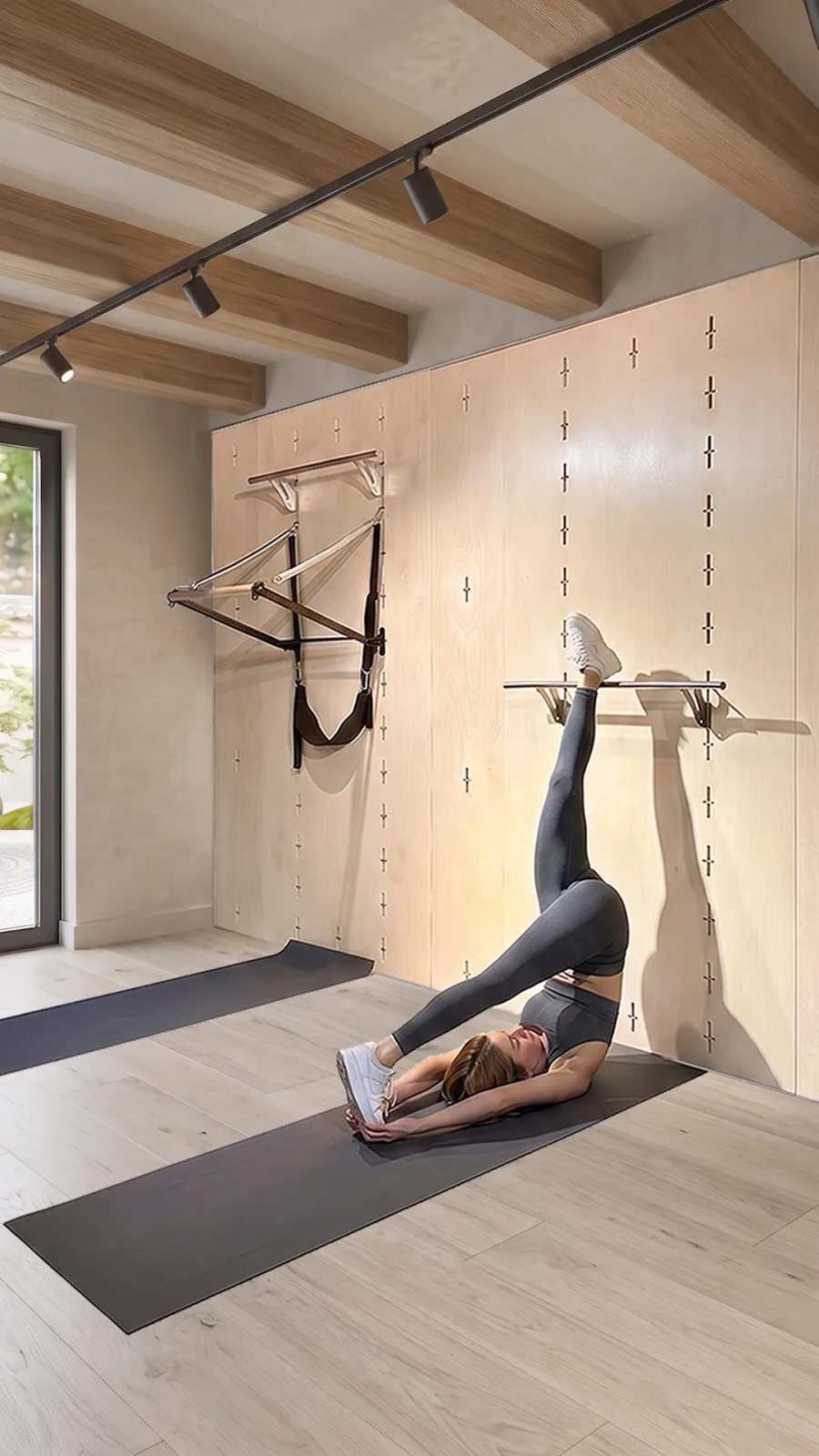
Balasana (Child's Pose) - Rolling Like a Ball
Difficulty: 3/5 — Intermediate PiWall

Balasana (Child's Pose) - Rolling Like a Ball

In Yoga: It is a gravity-surrendered, supported, and inverted version of the traditional mat yoga poses Balasana (Child's Pose) or Karnapidasana (Ear Pressure Pose). It is very similar to the deep resting suspensions (hanging tuck) in Iyengar (Rope) yoga and Aerial Yoga. In Pilates: In terms of spinal mechanics, it is a completely passive and weightless version of the spinal flexion found in the starting position of the "Rolling Like a Ball" or "Open Leg Rocker" movements on the mat. It is a tucked-in variation of the inverted hanging stretches performed with "Fuzzy" suspension straps on the Cadillac.

Works  This posture is based on creating a deep stretch and fascial release by surrendering the body to gravity, rather than producing active power (concentric contraction). However, some muscles are engaged to hold the body in this form: · Stretching and Lengthening Muscles (Primary Target) · Mildly Active Muscles

Read the full breakdown
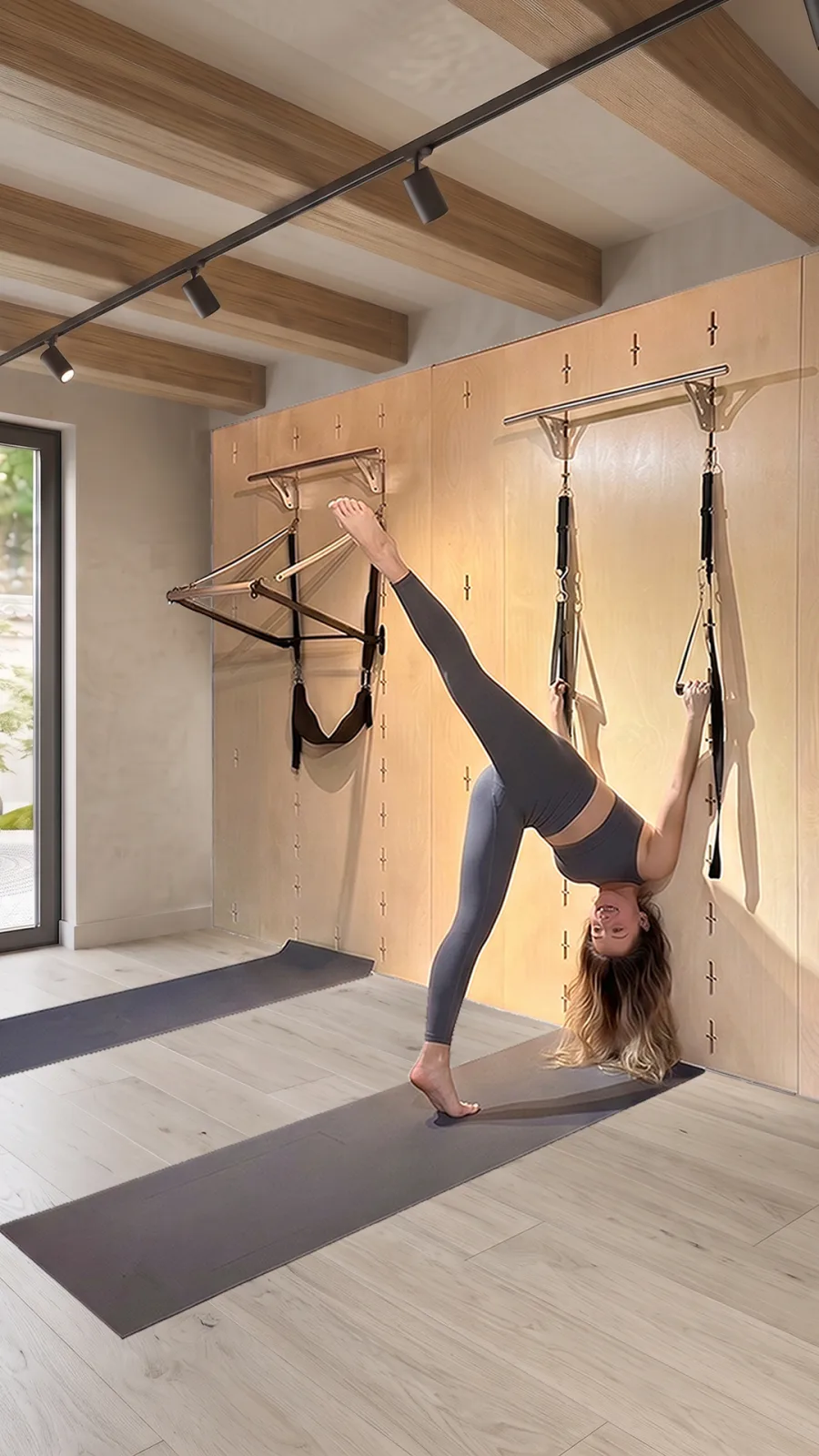
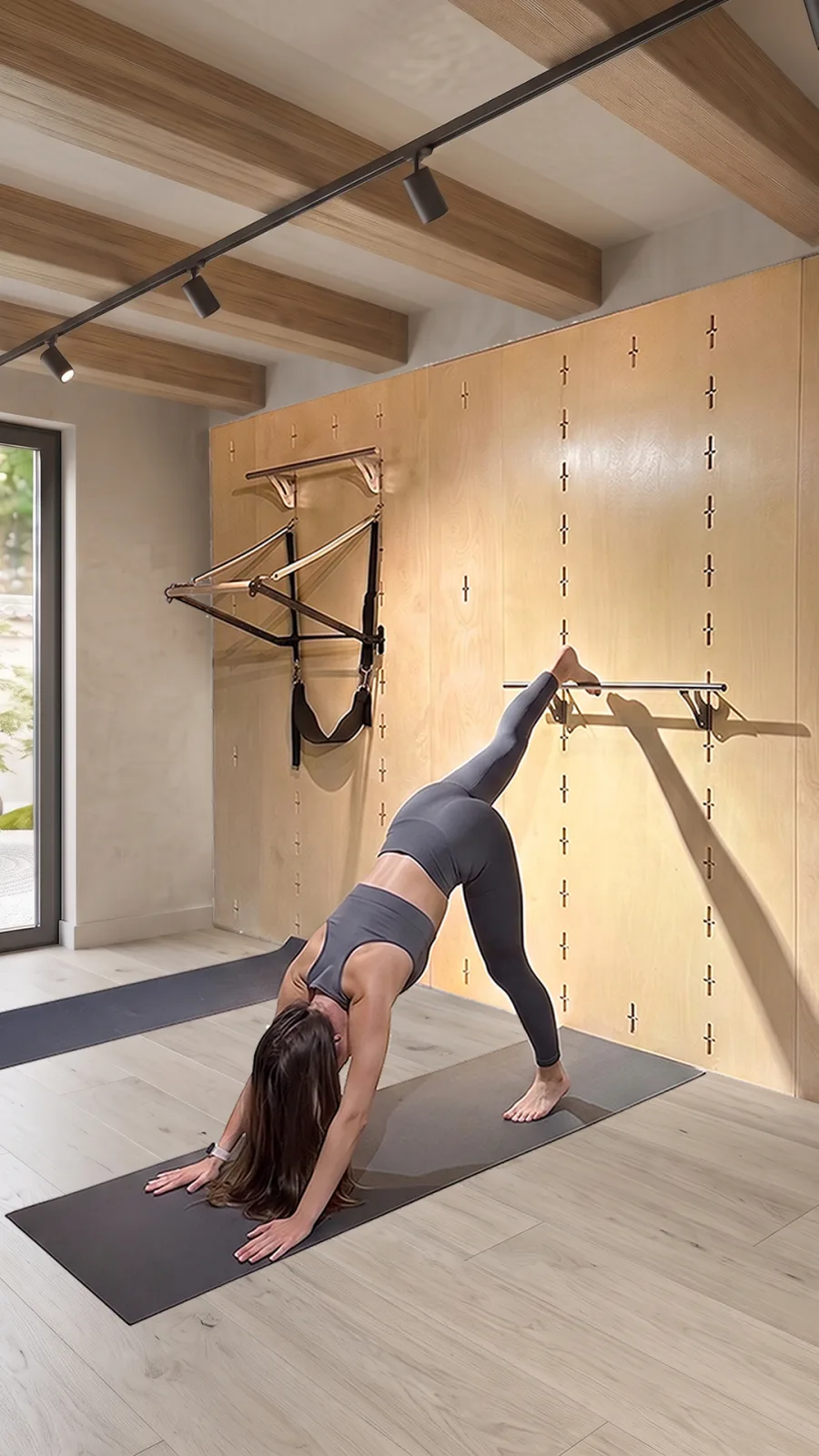
Standing Split - Hanging Splits
Difficulty: 3/5 — Intermediate PiWall

Standing Split - Hanging Splits

In Yoga: It is a tremendous gravity adaptation of the Urdhva Prasarita Eka Padasana (Standing Split) pose, inverted and supported by wall straps. It also exactly resembles the inverted suspension and stretching sequences performed using a wall and ropes (plumb lines) in Iyengar yoga. In Pilates: It is a much deeper, standing, and wall-adapted variation of the "Hanging Splits" performed with "Fuzzy" suspension straps on the Cadillac apparatus, or the "Control Balance" movement on the mat.

Works  By utilizing gravity and the support of the wall, this exercise creates intense contraction (strength) in one half of the body while providing a deep fascial elongation (flexibility) in the other half: · Gluteus Maximus (Glutes) · Gastrocnemius and Soleus (Calves) · Back and Arm Muscles

Read the full breakdown
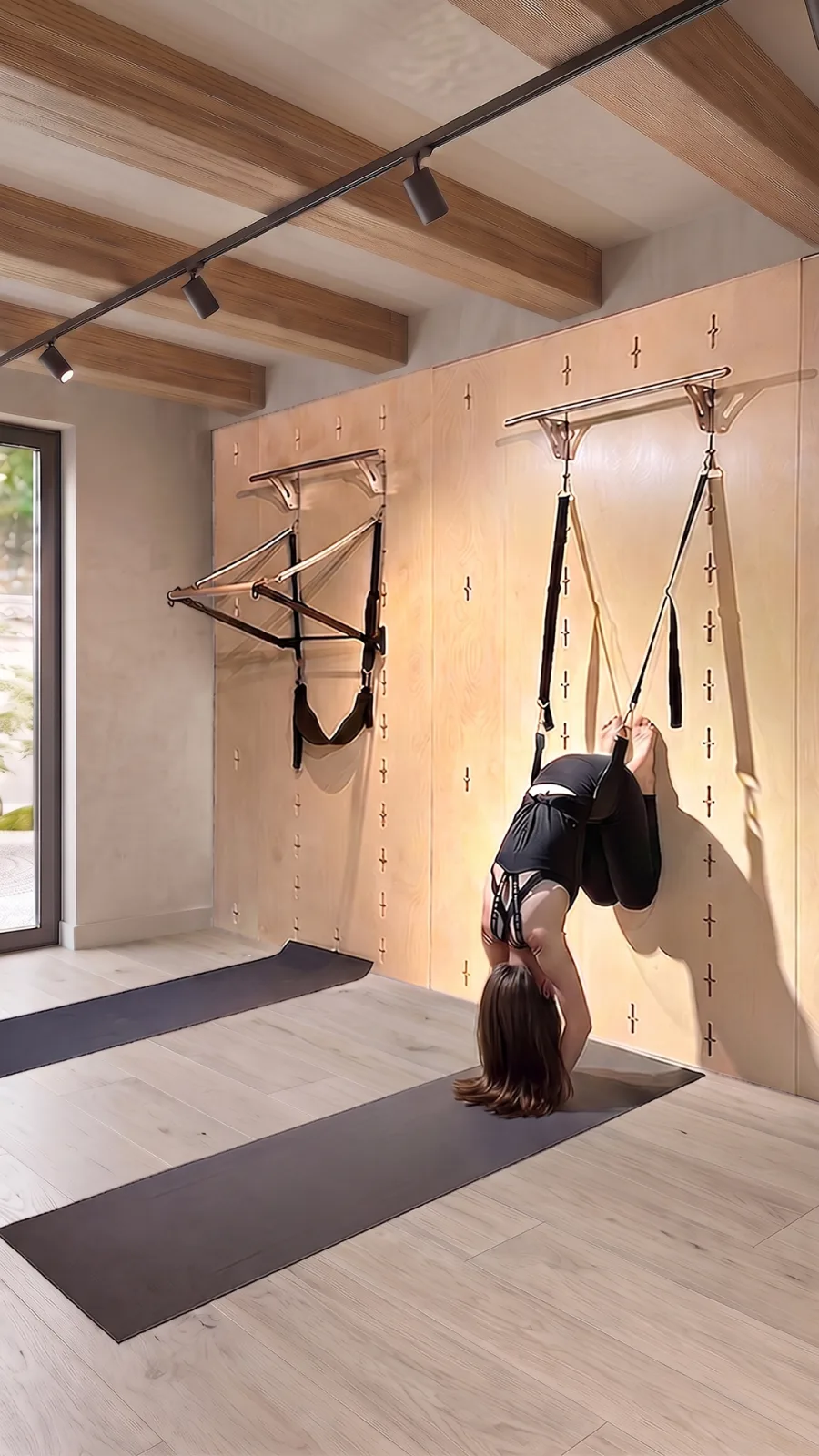
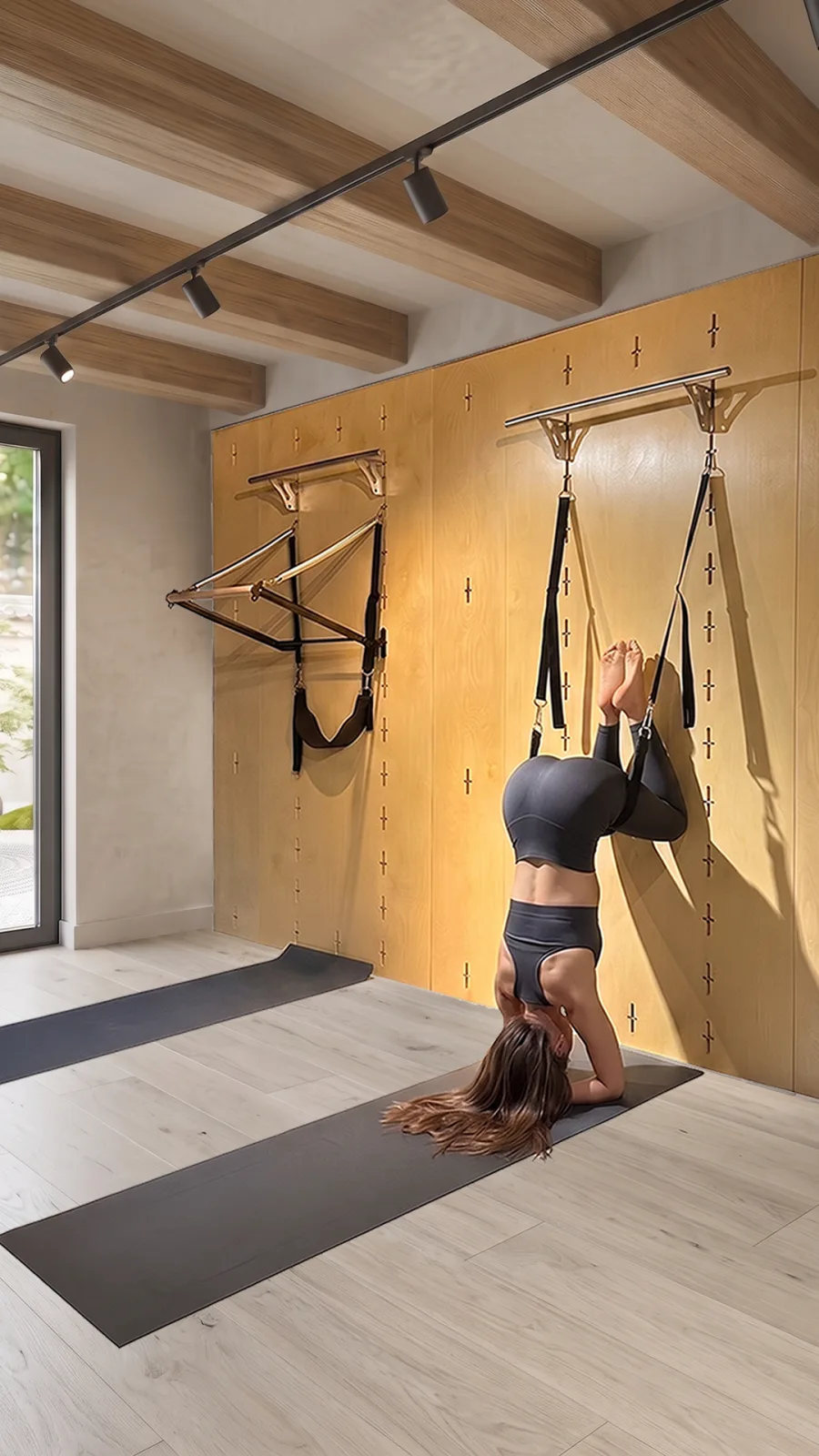
Rope Headstand - Inverted Butterfly
Difficulty: 5/5 — Very advanced PiWall

Rope Headstand - Inverted Butterfly

In Yoga: Fundamentally, it is a tremendous hybrid of the "Rope Sirsasana" (Rope Headstand) or Pincha Mayurasana (Forearm Stand) preparatory poses performed with wall ropes (Yoga Kurunta) in Iyengar yoga, combined with the legs of Baddha Konasana (Bound Angle / Butterfly Pose). Furthermore, it is the exact wall equivalent of the "Inverted Butterfly" pose in Aerial Yoga. In Pilates: Although not directly a classic mat exercise, it can be thought of as a floor- and wall-supported version of the upside-down hanging and spinal decompression practices performed with "Fuzzy" suspension straps on the Cadillac apparatus.

Works  This movement provides a deep opening (passive stretch) in the lower part of the body while demanding safe support (active stabilization) in the upper part: · Stretching and Lengthening Muscles (Passive Focus) · Shoulder and Arm Muscles (Active Support) · Hip External Rotators

Read the full breakdown

How the difficulty scale works

Every movement is rated from 1 to 5 on its biomechanical demands: core activation, upper-body strength, and the balance and flexibility it asks for.

Very easy
Fully supported, passive stretches performed on the floor.
Easy
Basic pulling, pushing and stretching from a stable base — seated, kneeling, or standing with support.
Intermediate
Exercises calling for active balance, moderate flexibility, or genuine core control.
Advanced
Active inversions, plank and flight shapes carried on full body weight — high core activation, shoulder mobility, and spatial awareness.
Very advanced
Acrobatic and gymnastic shapes demanding elite upper-body and abdominal strength to hold body weight stable against gravity.