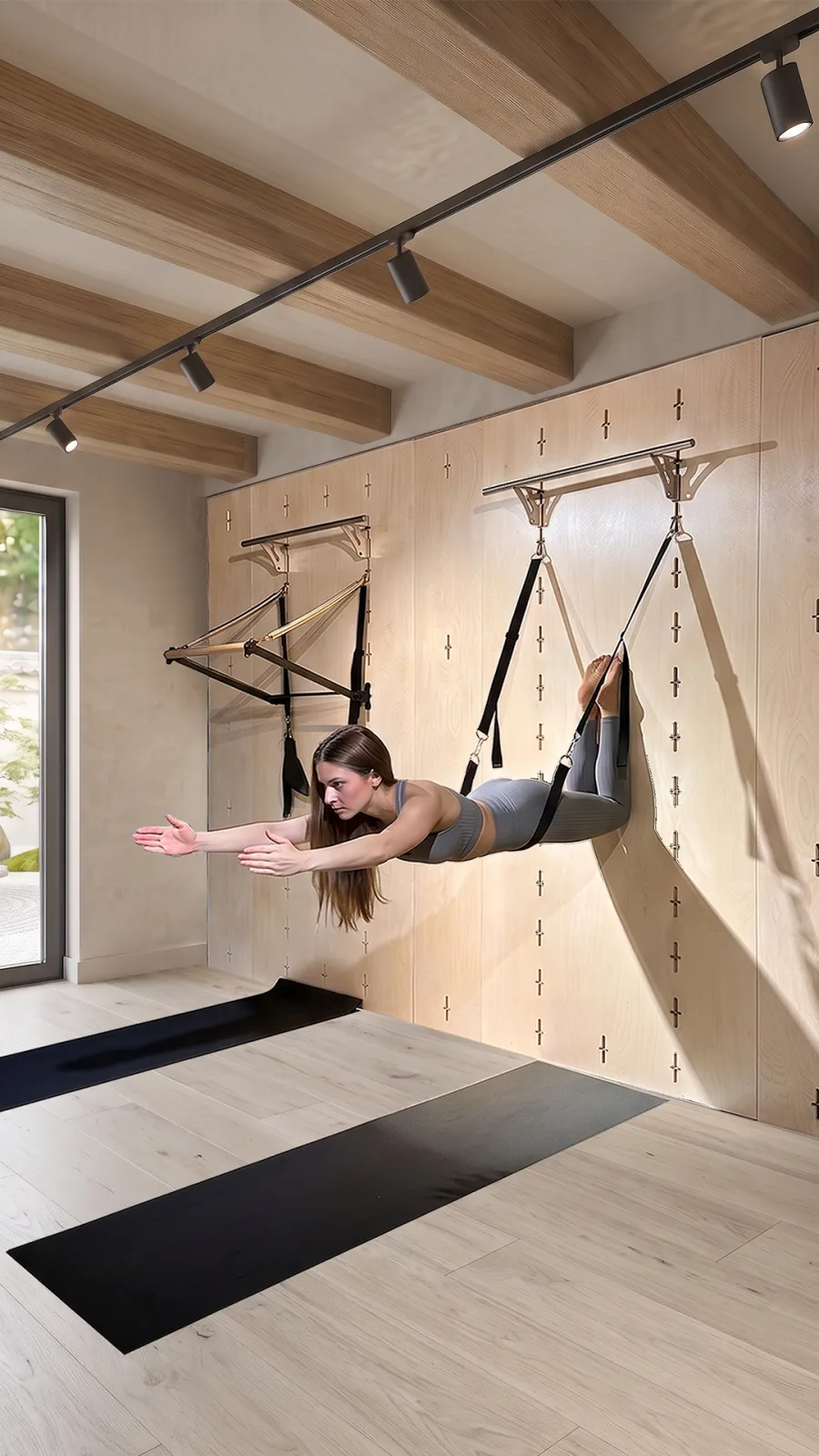
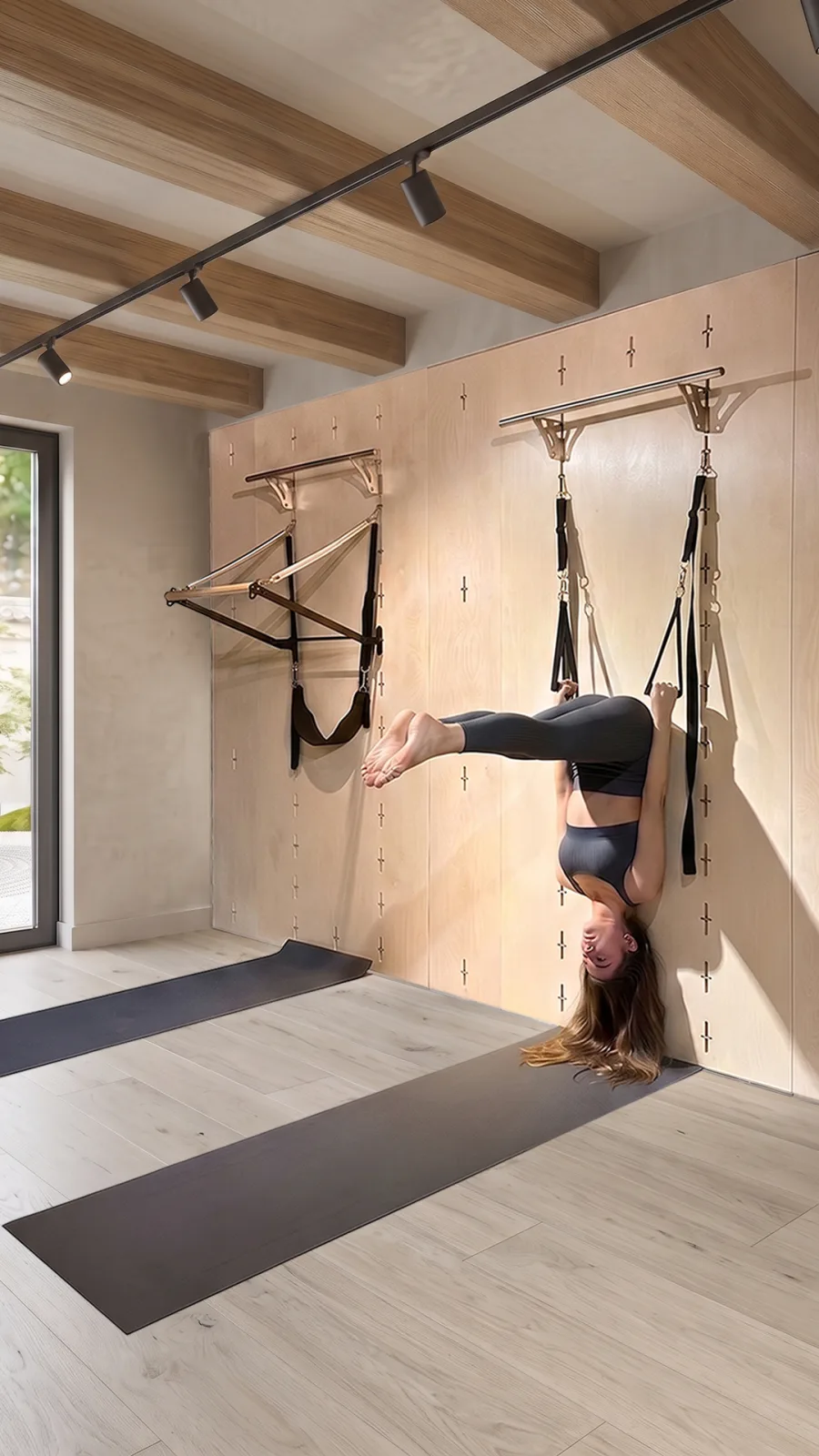
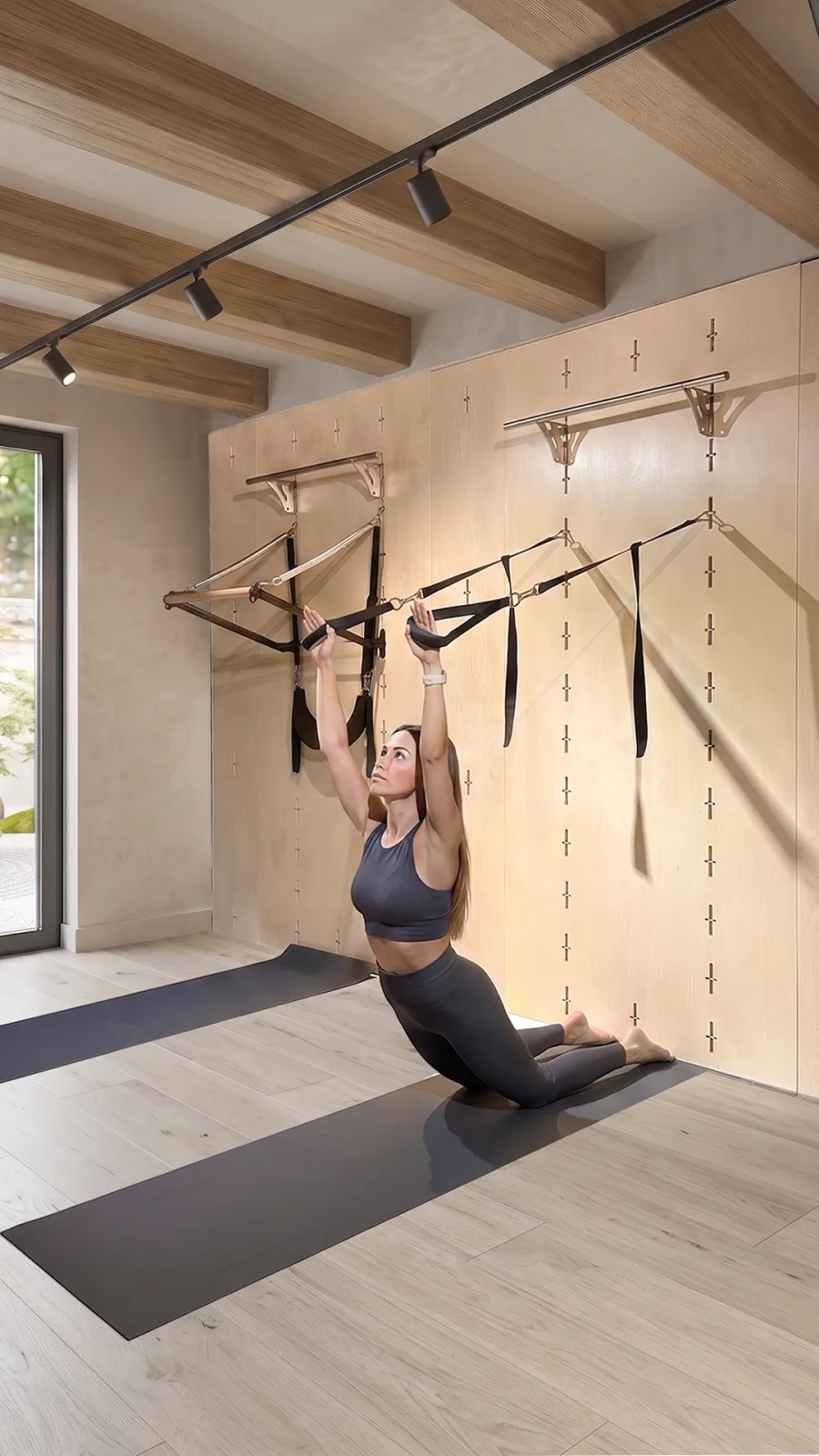
Standing Split - Hanging Splits
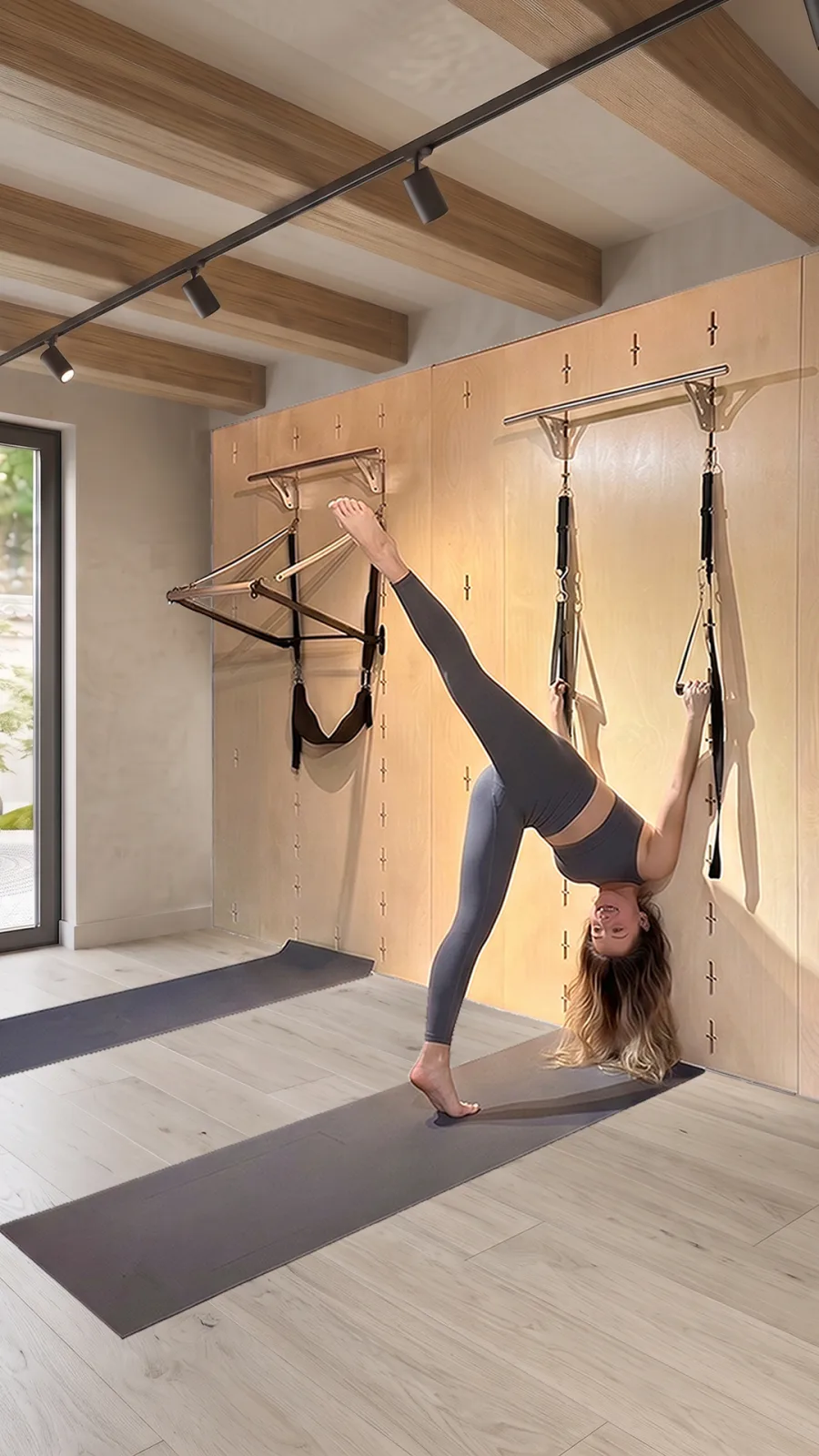
In Yoga: It is a tremendous gravity adaptation of the Urdhva Prasarita Eka Padasana (Standing Split) pose, inverted and supported by wall straps. It also exactly resembles the inverted suspension and stretching sequences performed using a wall and ropes (plumb lines) in Iyengar yoga. In Pilates: It is a much deeper, standing, and wall-adapted variation of the "Hanging Splits" performed with "Fuzzy" suspension straps on the Cadillac apparatus, or the "Control Balance" movement on the mat.
Muscles worked
- By utilizing gravity and the support of the wall, this exercise creates intense contraction (strength) in one half of the body while providing a deep fascial elongation (flexibility) in the other half:
- Gluteus Maximus (Glutes) — The glute muscle of the upper leg contracts at a maximum level (concentrically) to keep the straight, upward-extended leg at that angle against gravity.
- Gastrocnemius and Soleus (Calves) — The calf and ankle stabilizers of the leg rising on the tiptoes (relevé) on the ground are very active in pushing the body upward.
- Back and Arm Muscles — The Latissimus Dorsi (lats) and forearm (grip) muscles, which control the body's weight and free fall by holding the straps, are engaged.
- Core Muscles — The abdominal muscles work as stabilizers to keep the spine straight and parallel to the wall in an inverted and asymmetrical position.
- Deep Stretching Muscles — The Hamstrings (back of the leg) of the grounded leg and the Iliopsoas (hip flexors) of the elevated leg undergo a very intense stretch in opposite directions (split opening).
What it gives you
- Benefits of Inversion Without Neck Pressure — Unlike poses like the Headstand (Sirsasana) that place risky loads on the shoulders and cervical vertebrae, the neck is completely free here, and the spine elongates downward with gravity (traction/decompression). The discs are relieved.
- Deep and Supported Hip Mobility — By using the body's own weight, the straps, and wall alignment, it safely allows reaching a much more advanced point of flexibility than an unsupported split pose (on a mat).
- Improved Balance and Proprioception — Balancing upside down and on a single tiptoe surprises the nervous system, incredibly sharpening the body's ability to perceive its position in space (proprioception).
- Increased Blood Circulation and Mental Clarity — Having the heart above and the head below maximizes the flow of fresh, oxygenated blood to the brain. It revitalizes the mind, increases focus, and nourishes the skin through the increased blood flow to the face.
Why it is rated Intermediate
A scorpion/downward-facing dog variation with one leg suspended, requiring shoulder stabilization and hip flexibility.