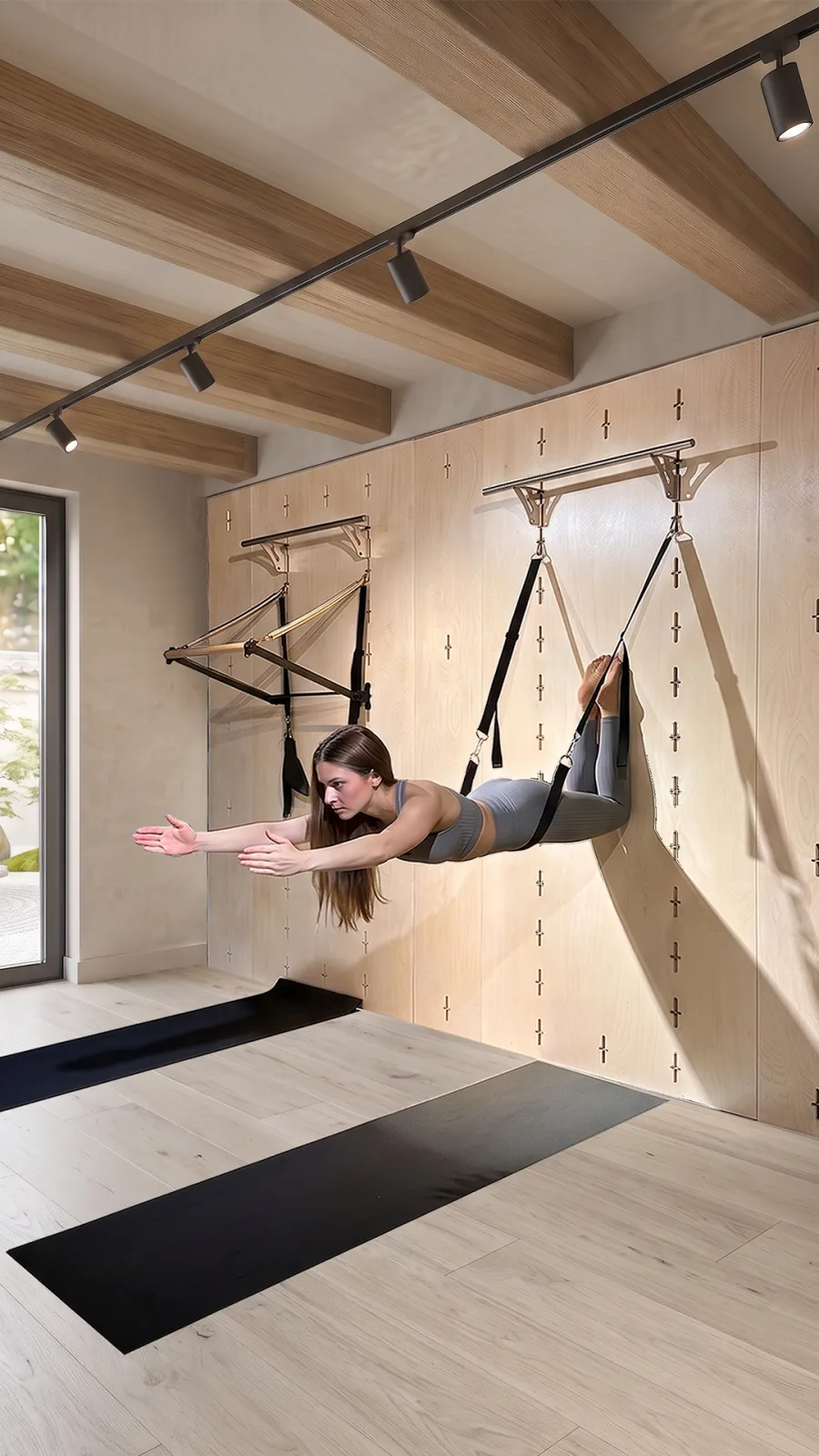
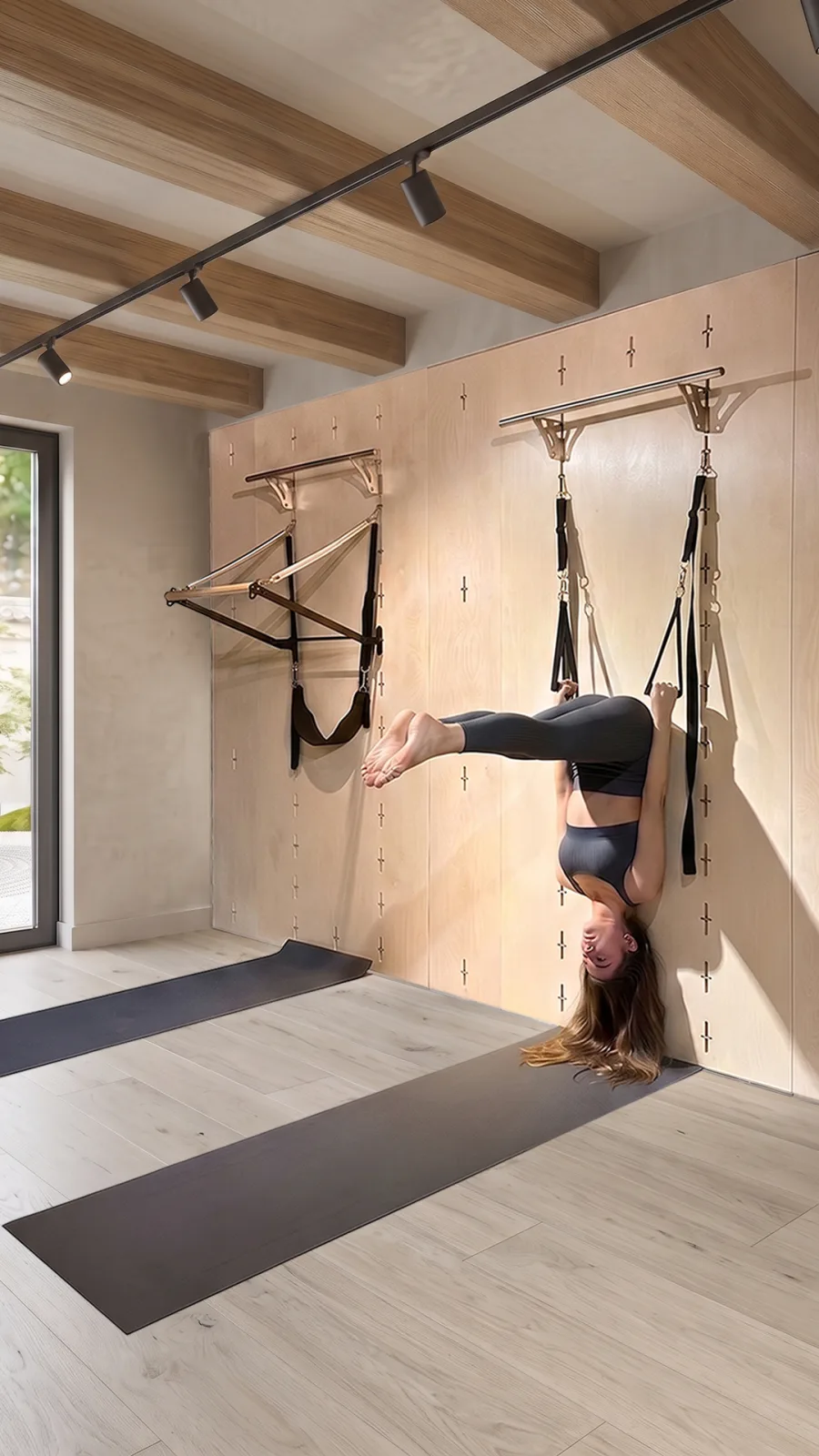
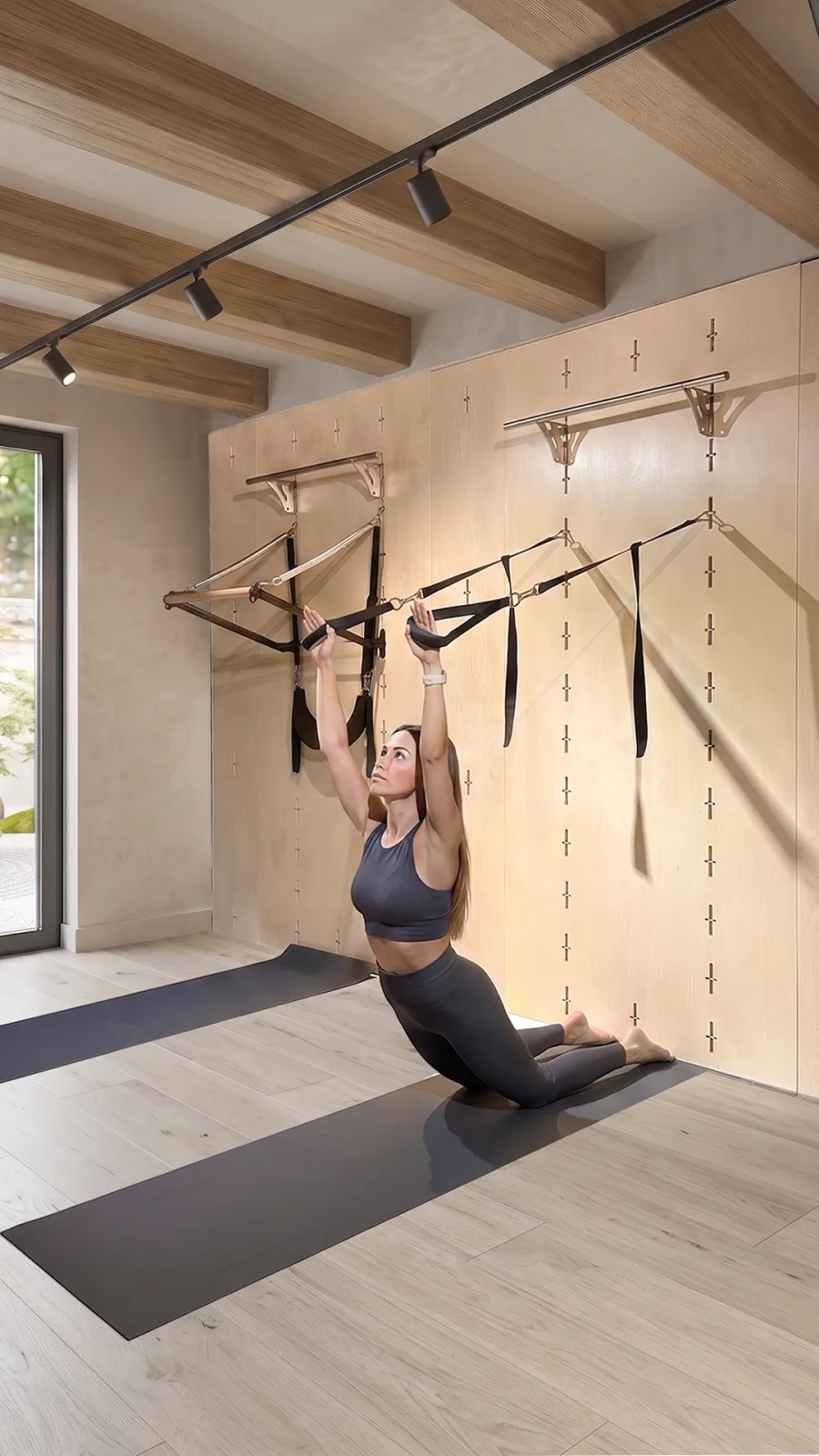
Teaser - Navasana - Hanging Leg Raise
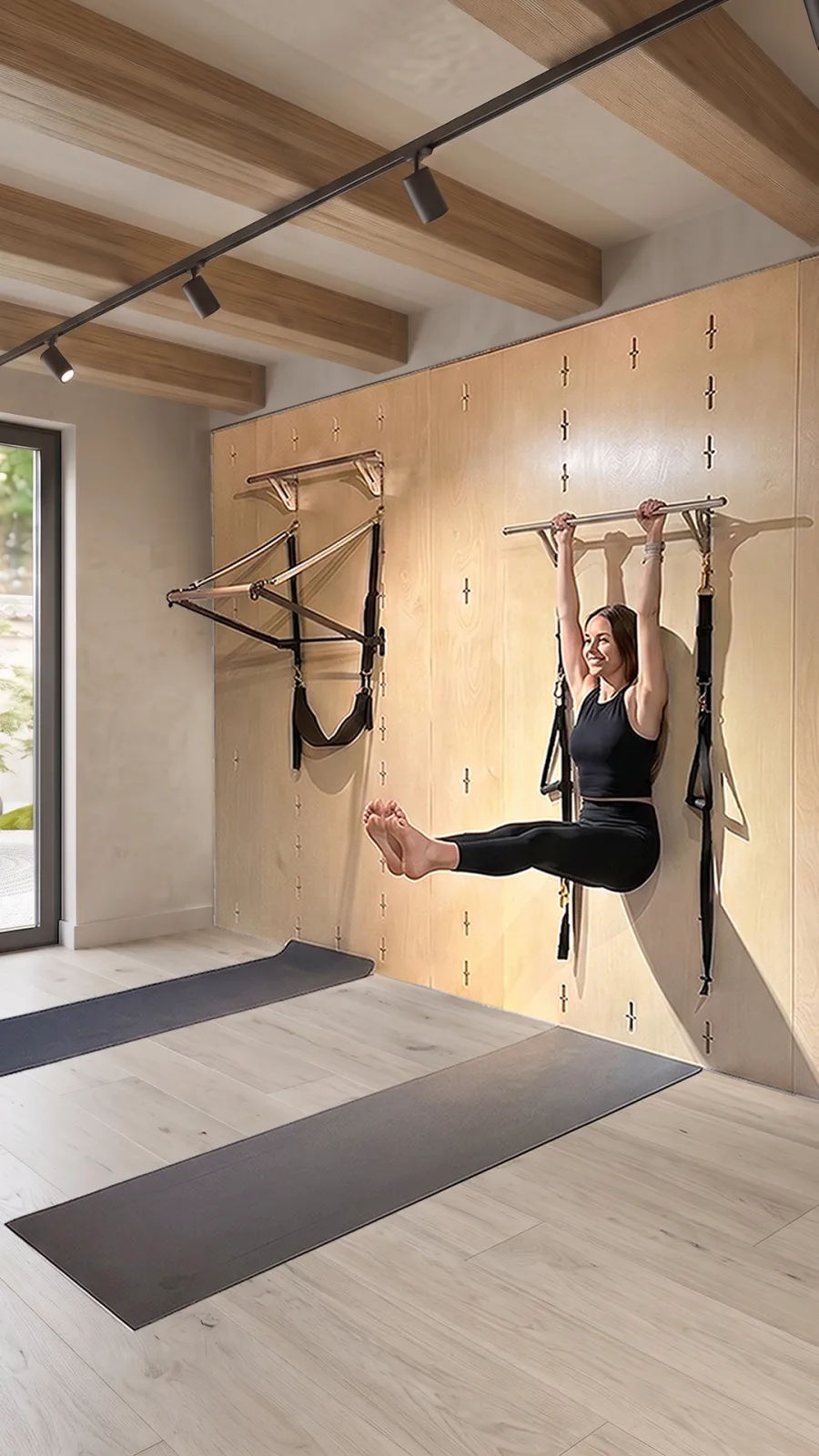
In Pilates: It is a suspended, anti-gravity version of the "Teaser" exercise, which is performed on the mat and is one of the most challenging movements for the core region. Furthermore, it bears a direct resemblance to the "Hanging Leg Lifts" series performed by hanging from the upper bars of the Cadillac (Trapeze Table) apparatus. In Yoga: Visually and in terms of muscle activation, the logic behind the use of the hip and abdominal muscles is the exact same as in Navasana (Boat Pose). It is a suspended and more accessible adaptation of gymnastics-based yoga asanas like Brahmacharyasana (L-Sit) or Tolasana (Scale Pose), where the legs are held in the air by pushing the floor with the hands. In General Fitness: It is the classic "Hanging Leg Raise" performed on a pull-up bar; however, because the wall support here prevents swinging (the use of momentum), it is executed in a much stricter and more isolated form.
Muscles worked
- This movement is a high-level test of strength and endurance, requiring the upper body to remain suspended while locking the lower body in the air against gravity:
- Core Muscles — The Rectus Abdominis (abdominal muscles, especially the lower abs) and Transversus Abdominis (deep abdominal muscle) work isometrically (statically) at a maximum level to carry the weight of the legs and keep the pelvis curled upward.
- Iliopsoas and Quadriceps (Hip Flexors and Front Thighs) — The hip flexors and front thigh muscles contract very intensely to bend the legs at a 90-degree angle from the hips and lock the knees completely straight.
- Back and Grip Muscles — The hands and forearms (grip strength) are constantly active to carry the body weight on the bar. To prevent the body from collapsing into the shoulders, the Latissimus Dorsi (lats) and Trapezius (back/shoulder) muscles pull the shoulder girdle downward and backward.
What it gives you
- Maximum Core Strength Without Neck Strain — In classic crunch-type exercises performed on the floor, stress can be placed on the cervical vertebrae. In this suspended position, the neck is completely free, while the load placed on the abdominal muscles (especially the lower abdominal region) and the rate of strengthening are much higher compared to floor exercises.
- Isolated Workout Without Momentum — Resting the back against the wall completely eliminates the cheating mechanism of swinging and using momentum found in hanging leg raises performed on a free-hanging pull-up bar. The muscles are forced to perform the movement with 100% of their own strength.
- Spinal Decompression — While the abdominal and hip muscles are working intensely, suspending the body weight from above through the arms releases the spine. The pressure between the discs decreases, and the spine is relieved (traction effect).
- Development of Grip Strength — Supporting your own body weight with your hands in a suspended position for a prolonged period significantly increases the wrist and forearm strength that is highly needed in daily life and other exercises.
Why it is rated Very advanced
A free-hanging L-Sit position from a high bar; it requires a very high degree of core, hip flexor, and upper body strength.