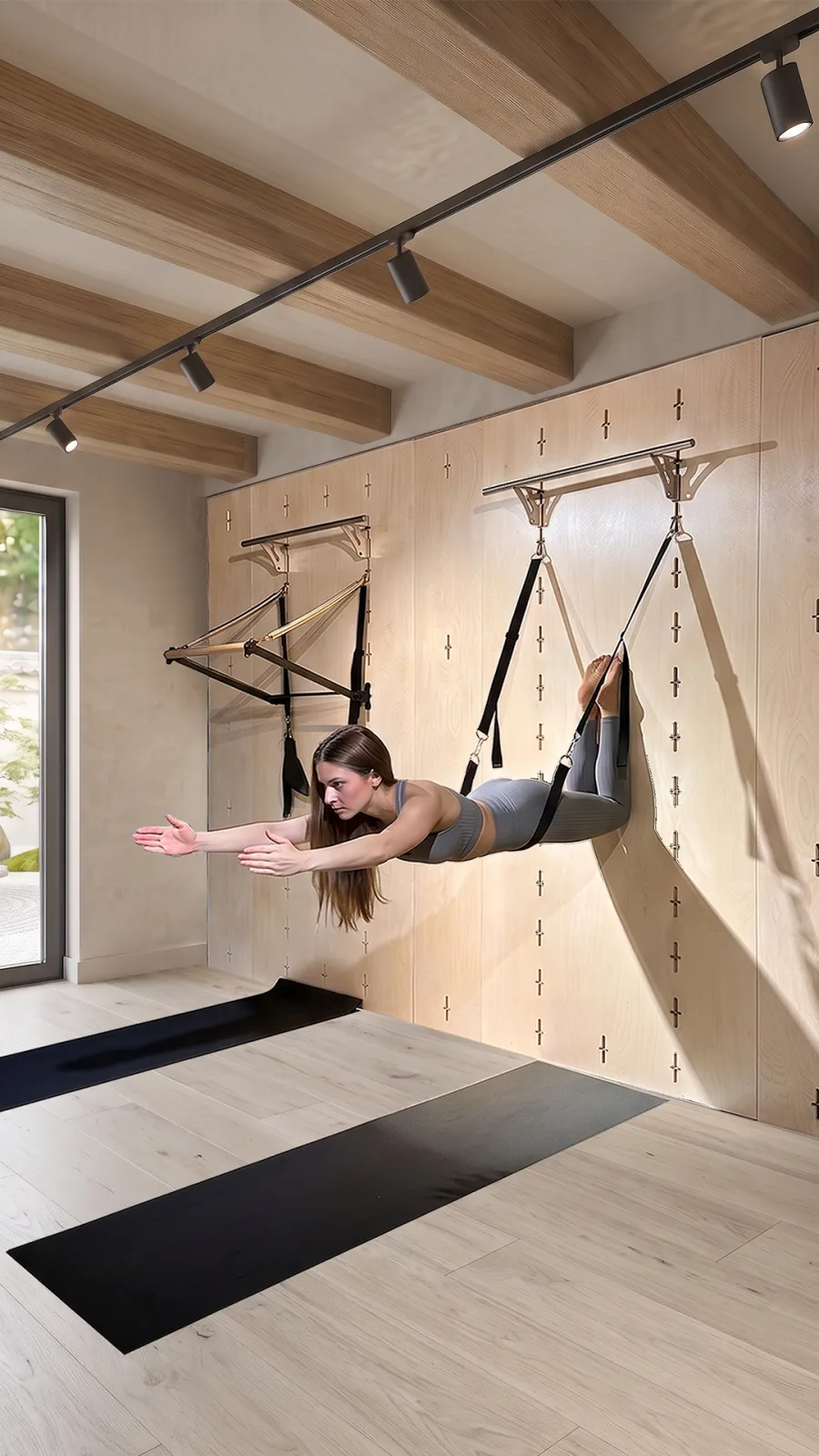
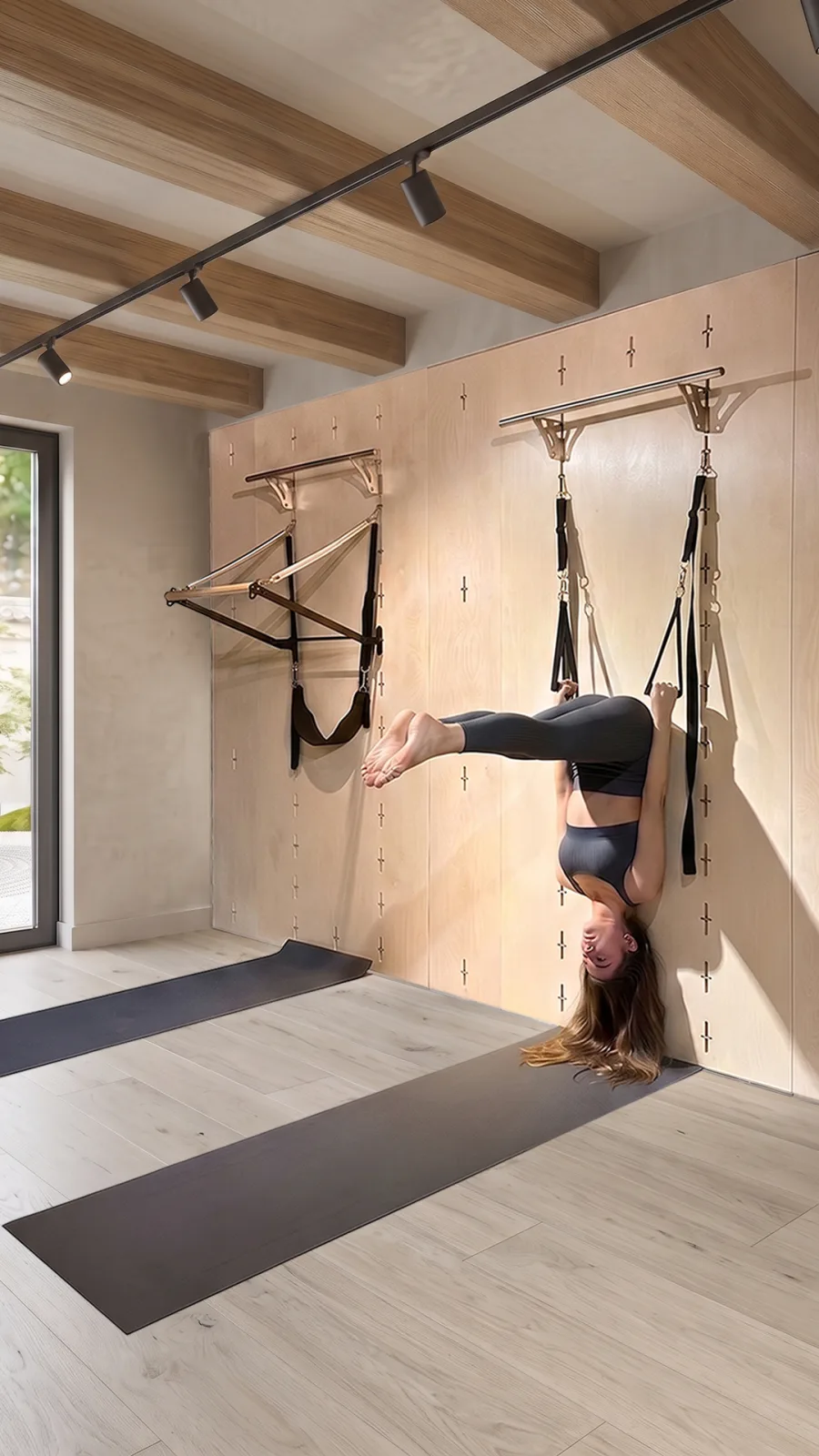
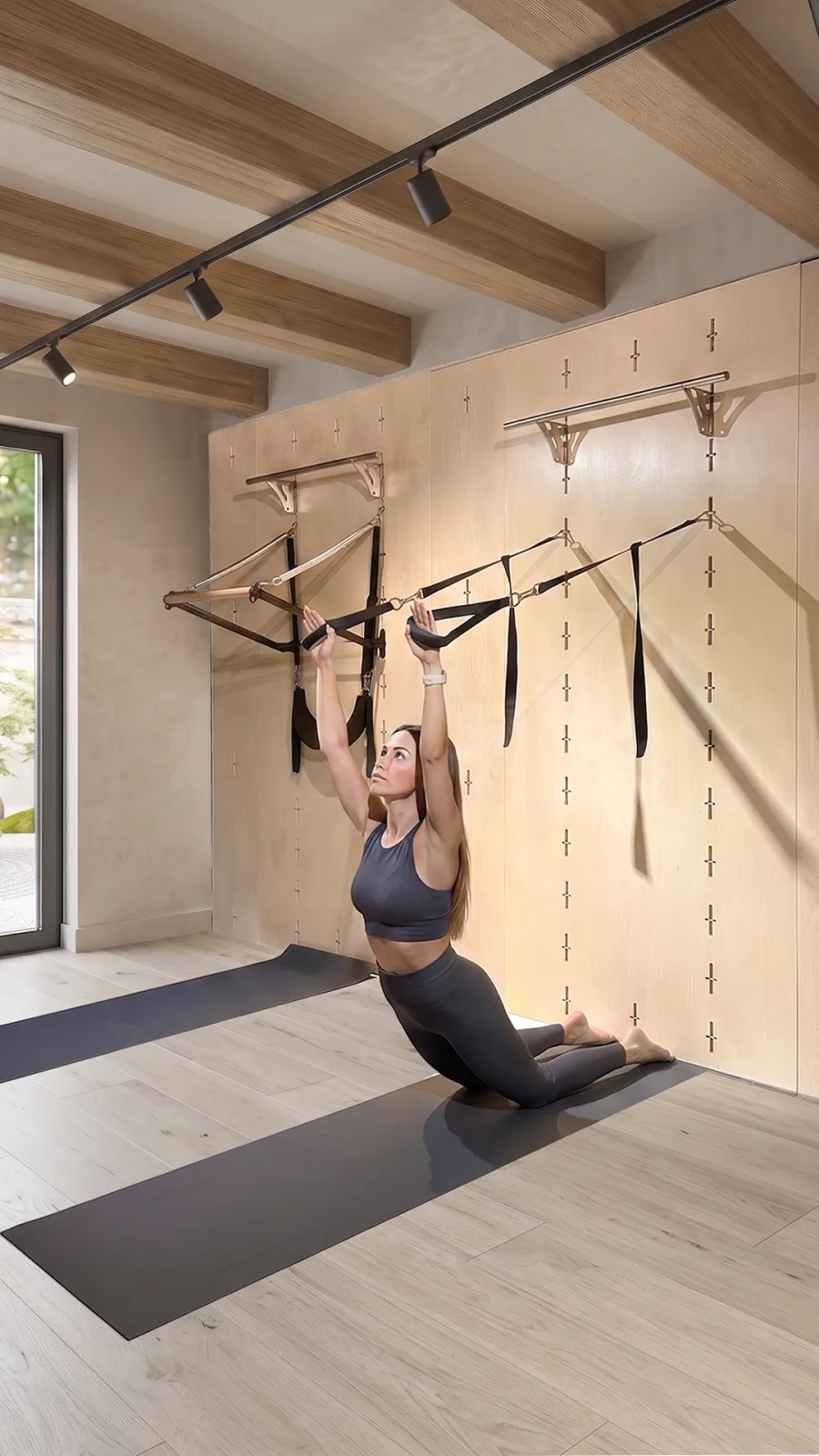
Eka Pada Adho Mukha Svanasana - Single Leg Elephant
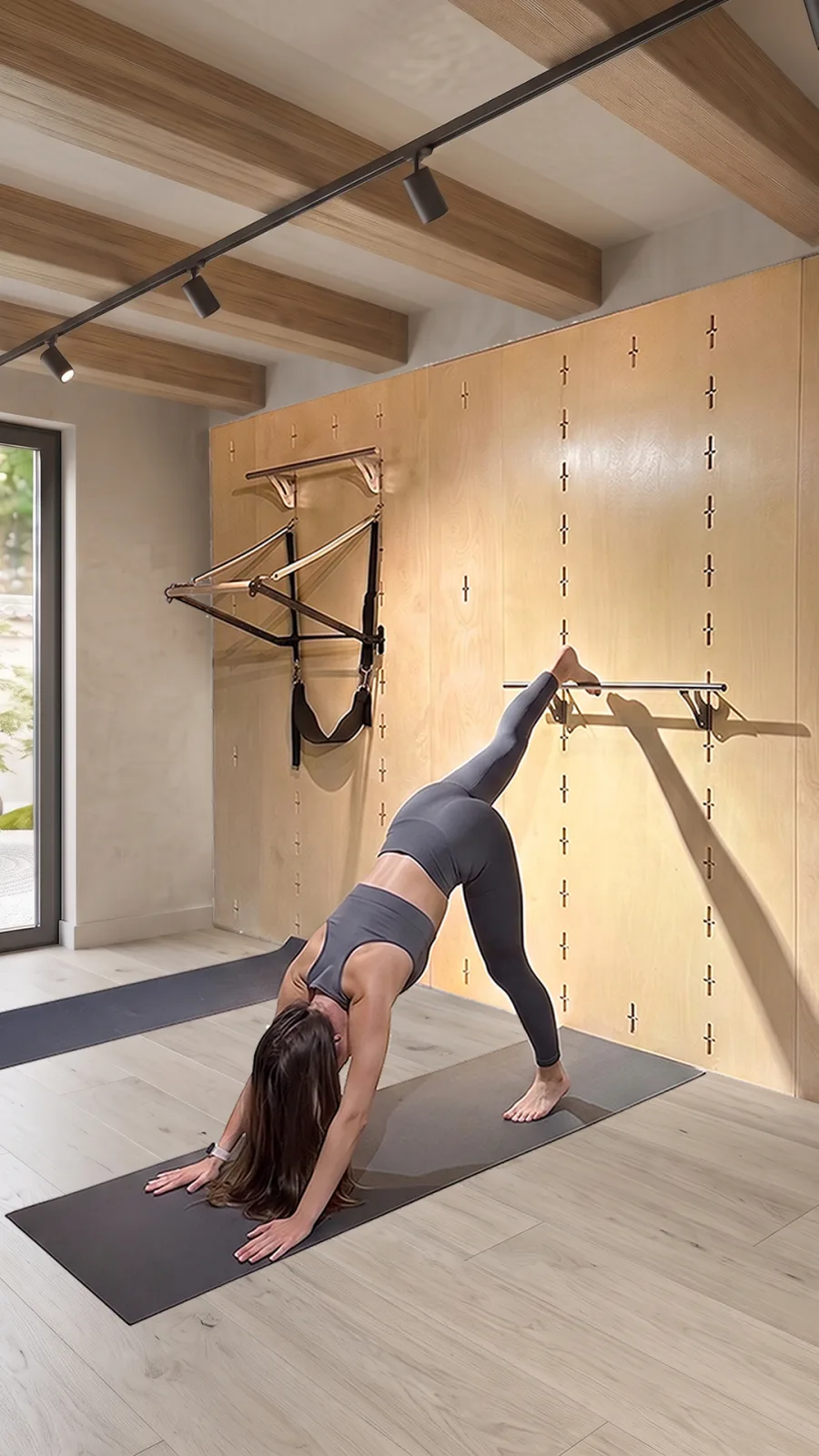
In Yoga: Fundamentally, it is a wall-supported version of the Eka Pada Adho Mukha Svanasana (Three-Legged / One-Legged Downward-Facing Dog) pose. Placing the leg—which is normally held in the air—on the bar eliminates the struggle for balance against gravity, allowing the focus to shift to the stretching (split) dynamics of the pose. In Pilates: It is mechanically and in terms of spinal angle very similar to the "Single Leg Elephant" movement performed on the Reformer and the "Arabesque" stretching series performed on the Cadillac (Trapeze Table).
Muscles worked
- This movement provides an asymmetrical opening in the lower body while operating on the principle of elongating the spine by pushing against the floor with the upper body:
- Hamstrings and Calves — The entire posterior chain of the grounded leg stretches very intensely and actively.
- Shoulder and Chest Girdle (Pectoralis, Latissimus Dorsi) — Pushing the body backward through the arms deeply opens the shoulder joint and armpits (sides of the rib cage).
- Iliopsoas (Hip Flexors) — The front hip region of the leg placed on the bar elongates and stretches.
- Shoulders (Deltoids) and Triceps (Back of the Arms) — They work to prevent the body from collapsing into the shoulders by actively pushing against the floor.
- Core Muscles — The Transversus Abdominis (deep abs) contract isometrically to prevent the hips (pelvis) from rotating to the right or left, to keep the torso in a square form, and to prevent excessive arching of the lower back.
- Gluteus Maximus (Glutes) — The glute muscle of the leg resting on the bar engages to keep that leg straight and active.
What it gives you
- Advanced Flexibility (Supported Split) — Supporting the leg on the bar eliminates the nervous system's anxiety of "falling/losing balance." The muscles turn off their defense mechanism, allowing for a much deeper and safer stretch (split preparation).
- Excellent Spinal Elongation (Axial Extension) — The force generated by the hands pushing against the floor is transmitted through an uninterrupted line up to the hips (pelvis). This reduces the pressure between the vertebrae, providing significant relief in the upper and lower back regions.
- Shoulder Mobility and Posture Correction — Extending the arms completely straight past the ears increases the range of motion (ROM) in the shoulder joint and opens the rib cage against the tendency to hunch (kyphosis).
- Benefits of Inversion — This posture, where the head is below the heart, accelerates the flow of fresh, oxygenated blood to the brain, facial region, and eyes, thereby revitalizing the mind and increasing focus.
Why it is rated Easy
A bar-supported downward-facing dog pose with slightly elevated feet.