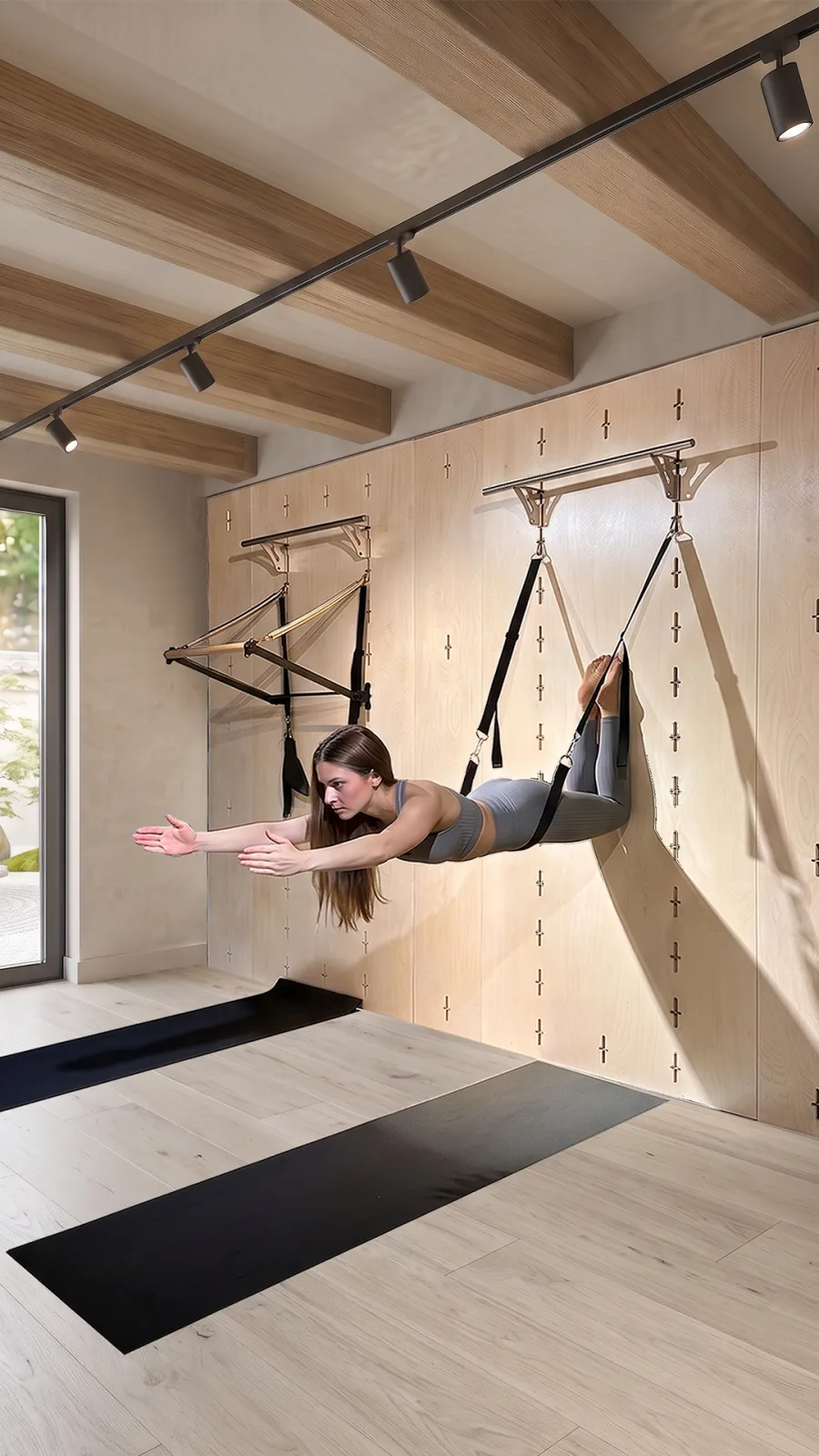
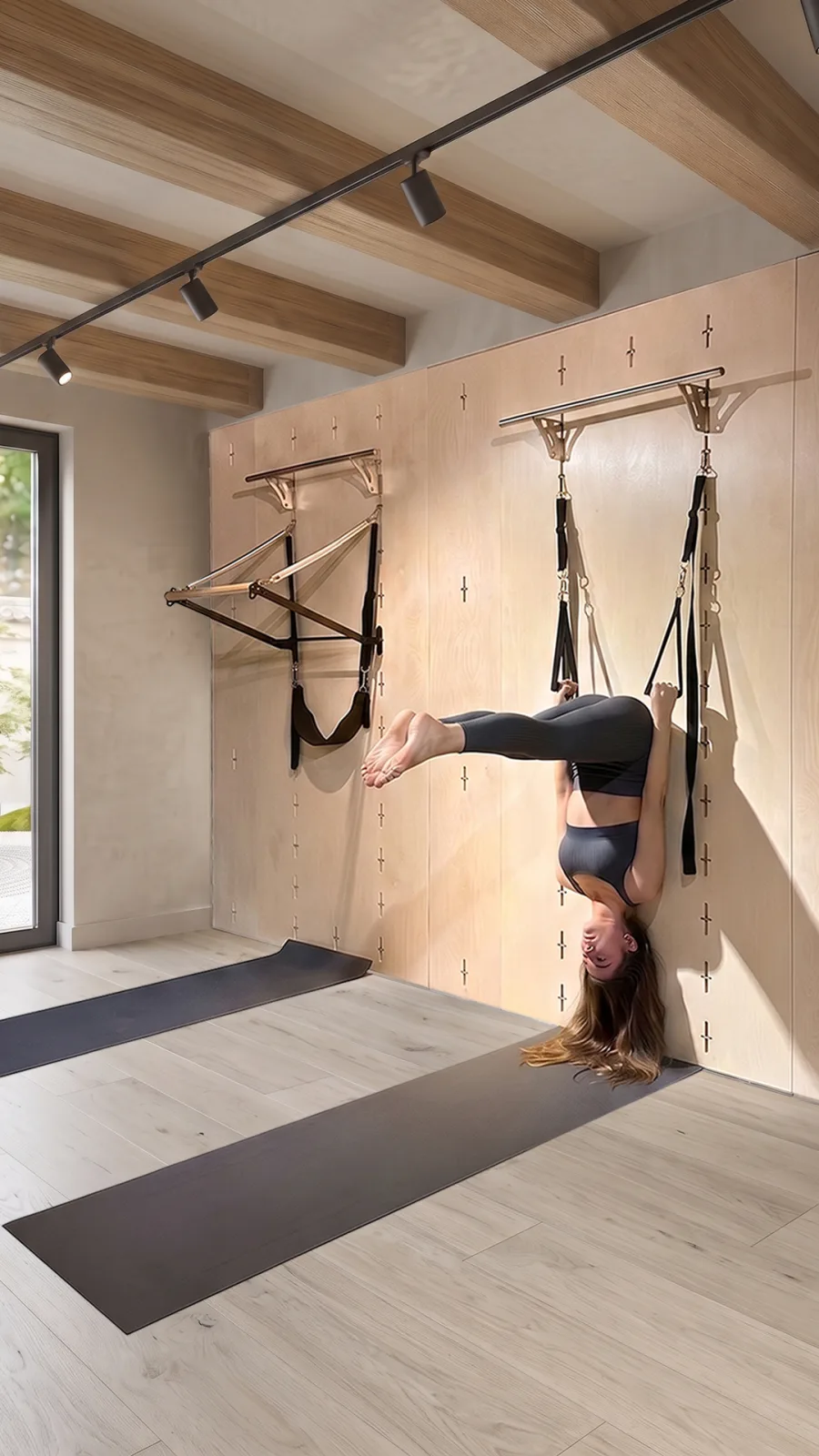
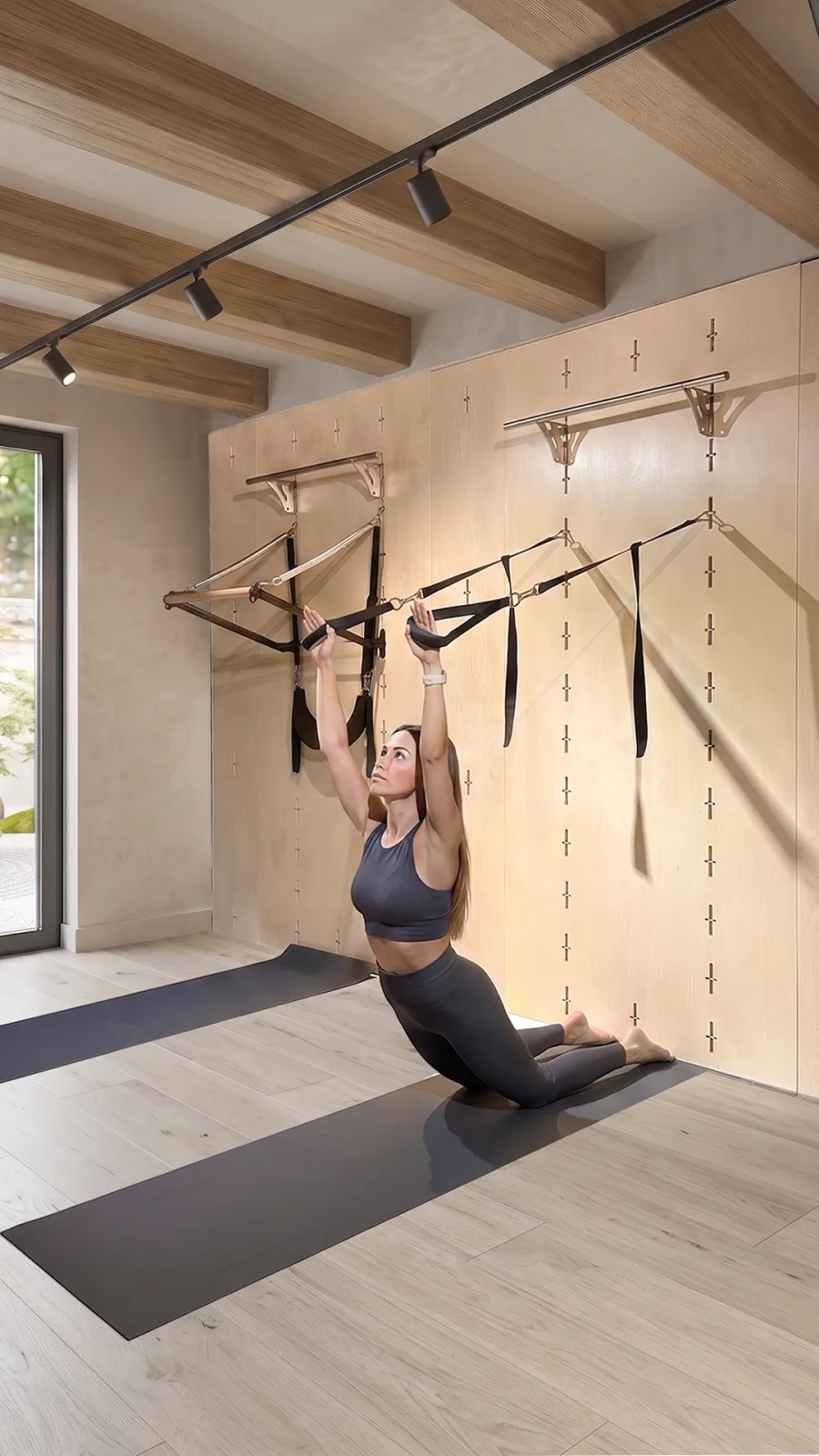
Balasana (Child's Pose) - Rolling Like a Ball
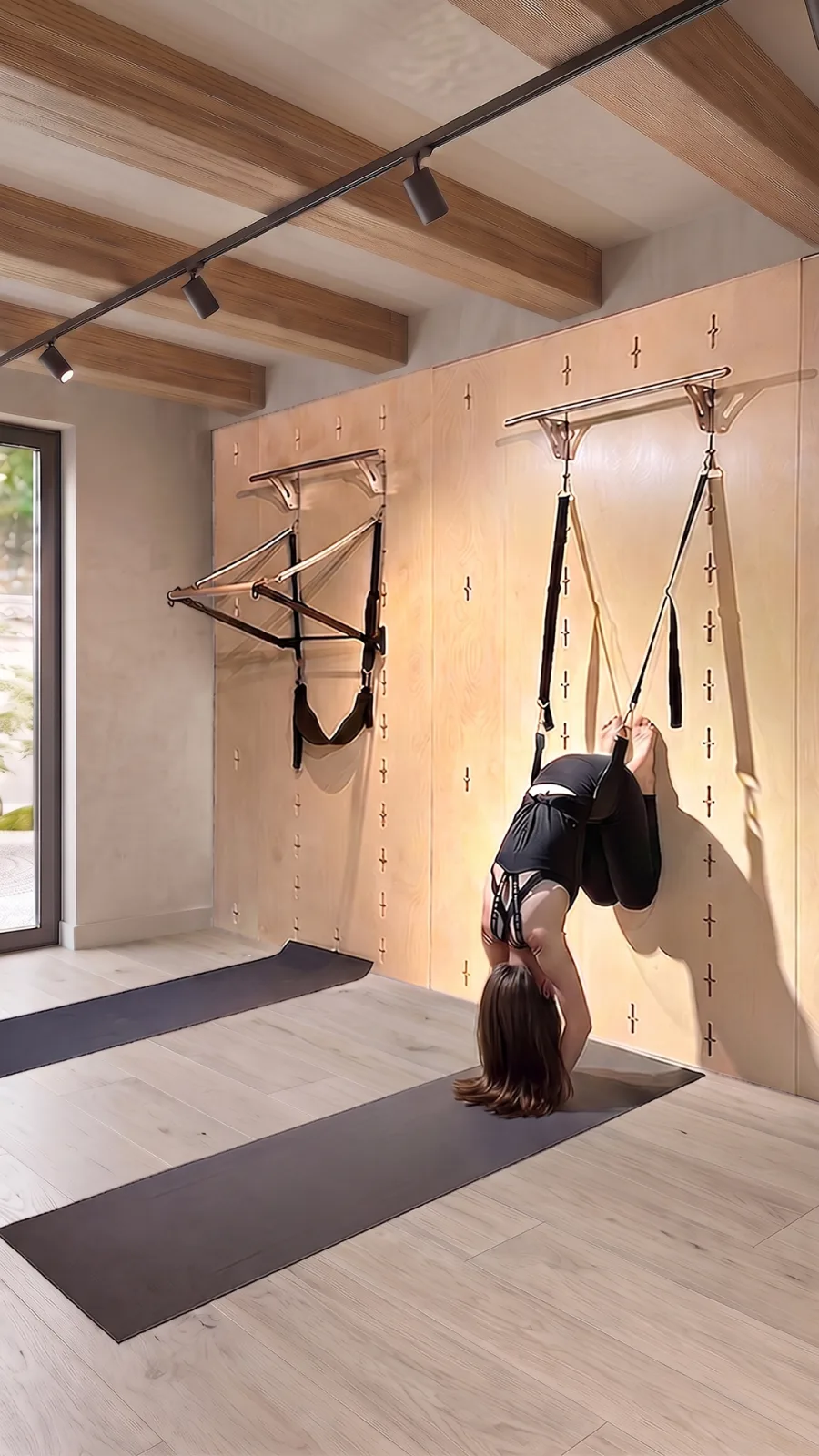
In Yoga: It is a gravity-surrendered, supported, and inverted version of the traditional mat yoga poses Balasana (Child's Pose) or Karnapidasana (Ear Pressure Pose). It is very similar to the deep resting suspensions (hanging tuck) in Iyengar (Rope) yoga and Aerial Yoga. In Pilates: In terms of spinal mechanics, it is a completely passive and weightless version of the spinal flexion found in the starting position of the "Rolling Like a Ball" or "Open Leg Rocker" movements on the mat. It is a tucked-in variation of the inverted hanging stretches performed with "Fuzzy" suspension straps on the Cadillac.
Muscles worked
- This posture is based on creating a deep stretch and fascial release by surrendering the body to gravity, rather than producing active power (concentric contraction). However, some muscles are engaged to hold the body in this form:
- Stretching and Lengthening Muscles (Primary Target) — The Erector Spinae (back and lumbar muscles running along the entire spine) undergo an uninterrupted stretch from the tailbone to the base of the skull. Additionally, accumulated tension in the Trapezius and neck muscles is completely released.
- Mildly Active Muscles — The Iliopsoas (hip flexors) work in a very light, isometric tone to keep the knees close to the chest (tuck position), as do the deep Core (lower abdominal) muscles to maintain the integrity of the posture.
What it gives you
- Maximum Spinal Decompression — The support provided by the sling at the pelvis and the body hanging downward, curled like the letter "C", separates the discs between the vertebrae. This gravitational traction (pull) incredibly relieves the compressions that cause lower back and mid-back pain.
- Deep Nervous System Soothing — Hanging upside down and turning inward by pulling the knees to the chest stimulates the body's autonomic nervous system, shifting it from the "fight or flight" (sympathetic) mode to the "rest and digest" (parasympathetic) mode. It is a wonderful tranquilizer for stress, anxiety, and insomnia.
- Inversion that Protects the Neck — Unlike traditional inverted poses that place weight on the shoulders and neck, such as the Headstand (Sirsasana), the neck (cervical spine) is under no pressure here; on the contrary, the cervical vertebrae are gently elongated by the weight of the head.
- Improved Mental Focus and Circulation — This position, where the heart does not tire itself pumping blood to the brain, increases the amount of oxygen delivered to the facial muscles and the brain. Closing the eyes and turning the body inward facilitates a deep meditative state.
Why it is rated Intermediate
A passive inversion provides spinal decompression but requires being accustomed to an upside-down position.