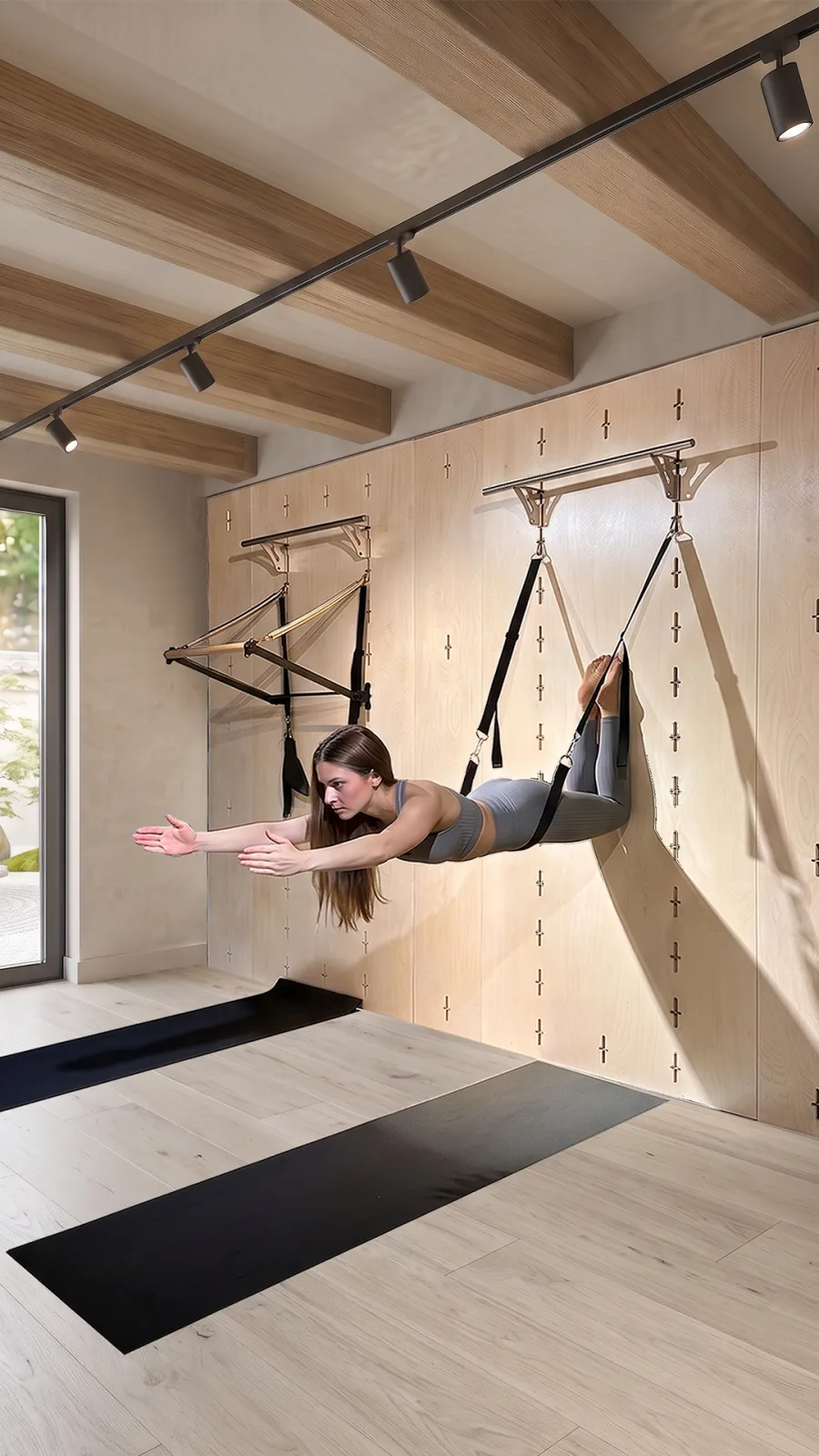
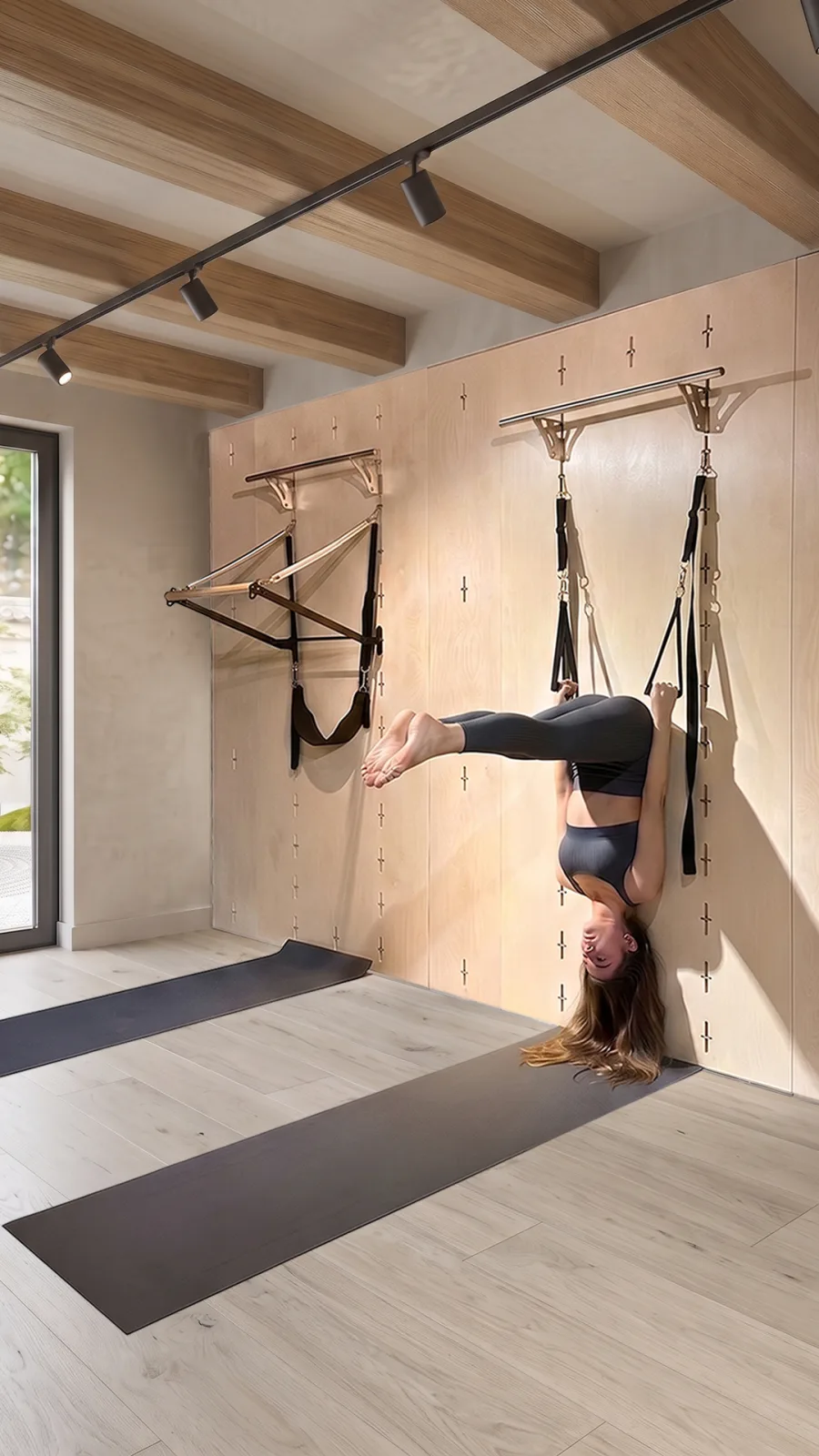
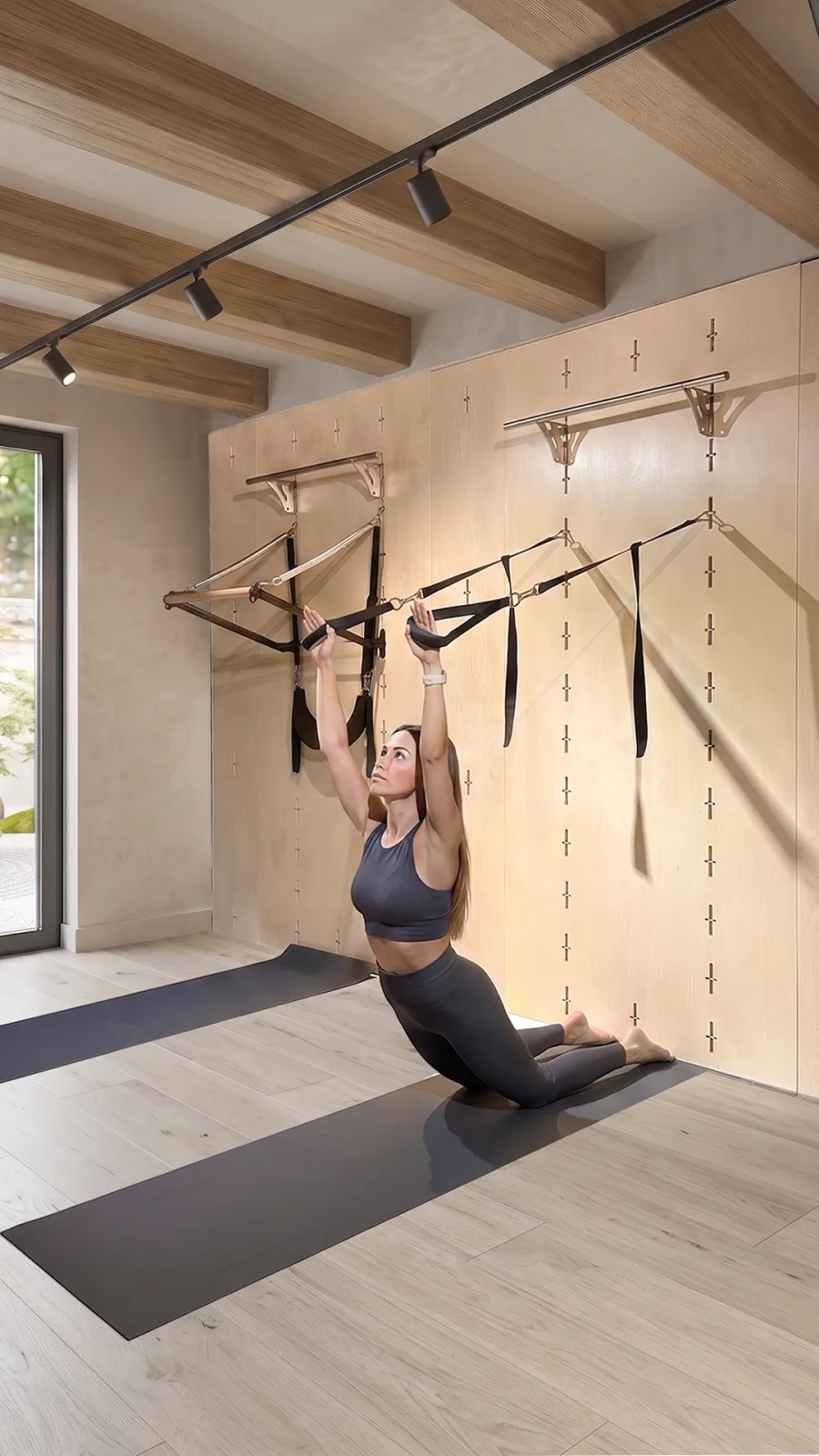
Rope Headstand - Inverted Butterfly
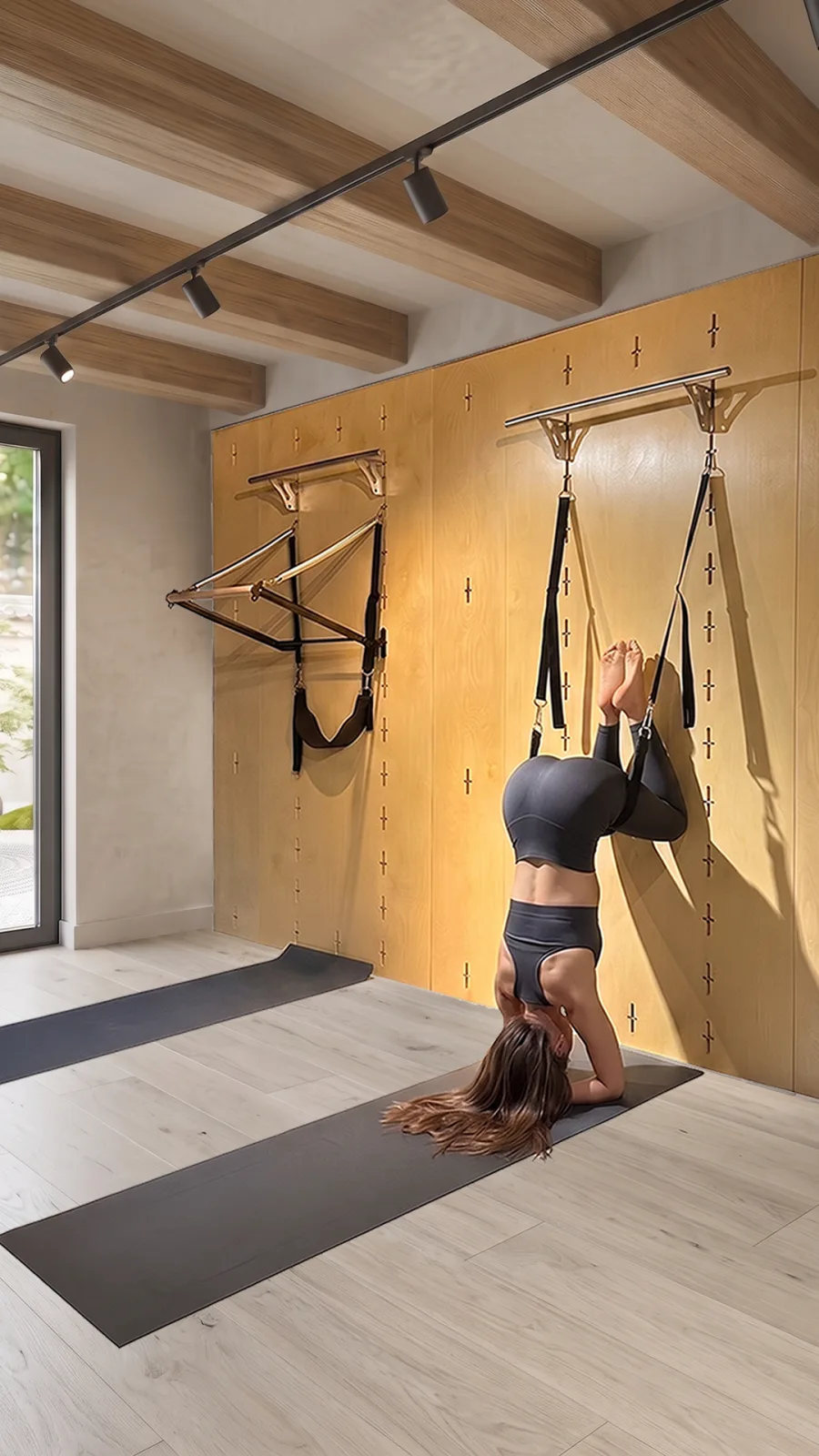
In Yoga: Fundamentally, it is a tremendous hybrid of the "Rope Sirsasana" (Rope Headstand) or Pincha Mayurasana (Forearm Stand) preparatory poses performed with wall ropes (Yoga Kurunta) in Iyengar yoga, combined with the legs of Baddha Konasana (Bound Angle / Butterfly Pose). Furthermore, it is the exact wall equivalent of the "Inverted Butterfly" pose in Aerial Yoga. In Pilates: Although not directly a classic mat exercise, it can be thought of as a floor- and wall-supported version of the upside-down hanging and spinal decompression practices performed with "Fuzzy" suspension straps on the Cadillac apparatus.
Also known as
- In Yoga — Rope Headstand - Inverted Butterfly
Muscles worked
- This movement provides a deep opening (passive stretch) in the lower part of the body while demanding safe support (active stabilization) in the upper part:
- Stretching and Lengthening Muscles (Passive Focus) — Because the sling carries the body's weight from the pelvic region, the muscles around the spine (Erector Spinae) completely release and elongate in the direction of gravity. Due to the butterfly form of the legs, a deep, gravity-assisted stretch occurs in the Adductor (inner thigh/groin) muscles.
- Shoulder and Arm Muscles (Active Support) — While the forearms are on the mat, it is necessary to actively push against the floor (or take support) with the Serratus Anterior, Deltoids (shoulders), and Triceps muscles to prevent the entire weight of the body from resting on the neck.
- Hip External Rotators — The Gluteus Medius and deep hip external rotator muscles are engaged to keep the knees open to the sides by surrendering to gravity and to direct the soles of the feet towards each other on the wall.
What it gives you
- Inversion with Neck Safety — While a large portion of the load falls on the cervical vertebrae in a normal headstand (Sirsasana), in this supported version, the straps carry the weight. Instead of being compressed, the cervical vertebrae elongate with gravity and are relieved. It allows enjoying all the benefits of an inversion (fresh blood flow to the brain, mental clarity) without the risk of neck hernia or sensitivity.
- Excellent Spinal Decompression (Traction) — Suspending the body from the pelvis pulls the spine downward under the effect of gravity. This pull (traction) opens up the disc spaces between the vertebrae, significantly relieving nerve compressions and lower and mid-back pain.
- Deep Hip Opening — Allowing gravity to pull the legs down and outward stretches the groins and inner thighs much more deeply, safely, and passively compared to a "Butterfly" pose performed on the floor using your own muscle power.
Why it is rated Very advanced
A forearm stand (Pincha Mayurasana); even with wall support, it requires significant shoulder strength and advanced balance.