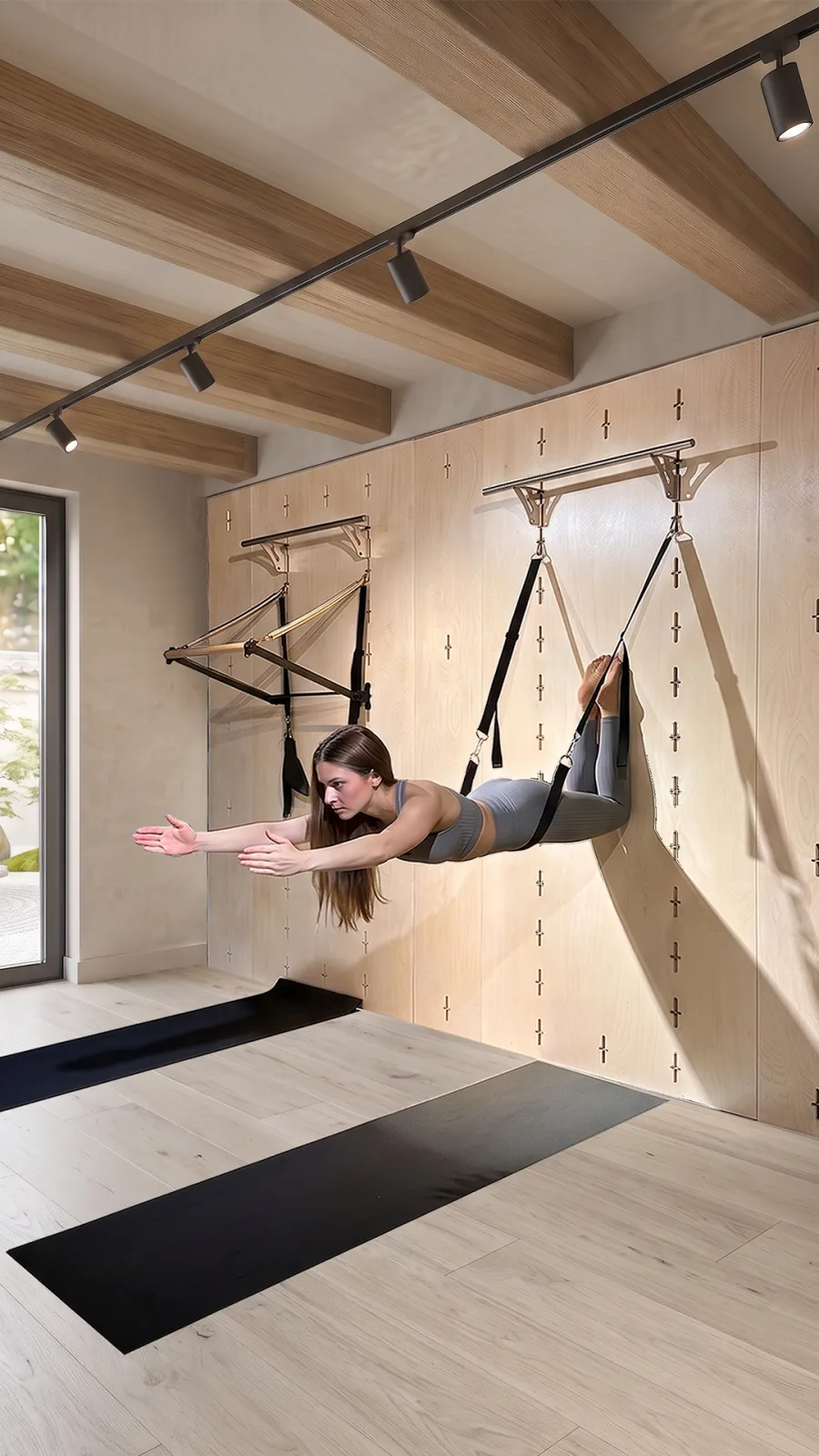
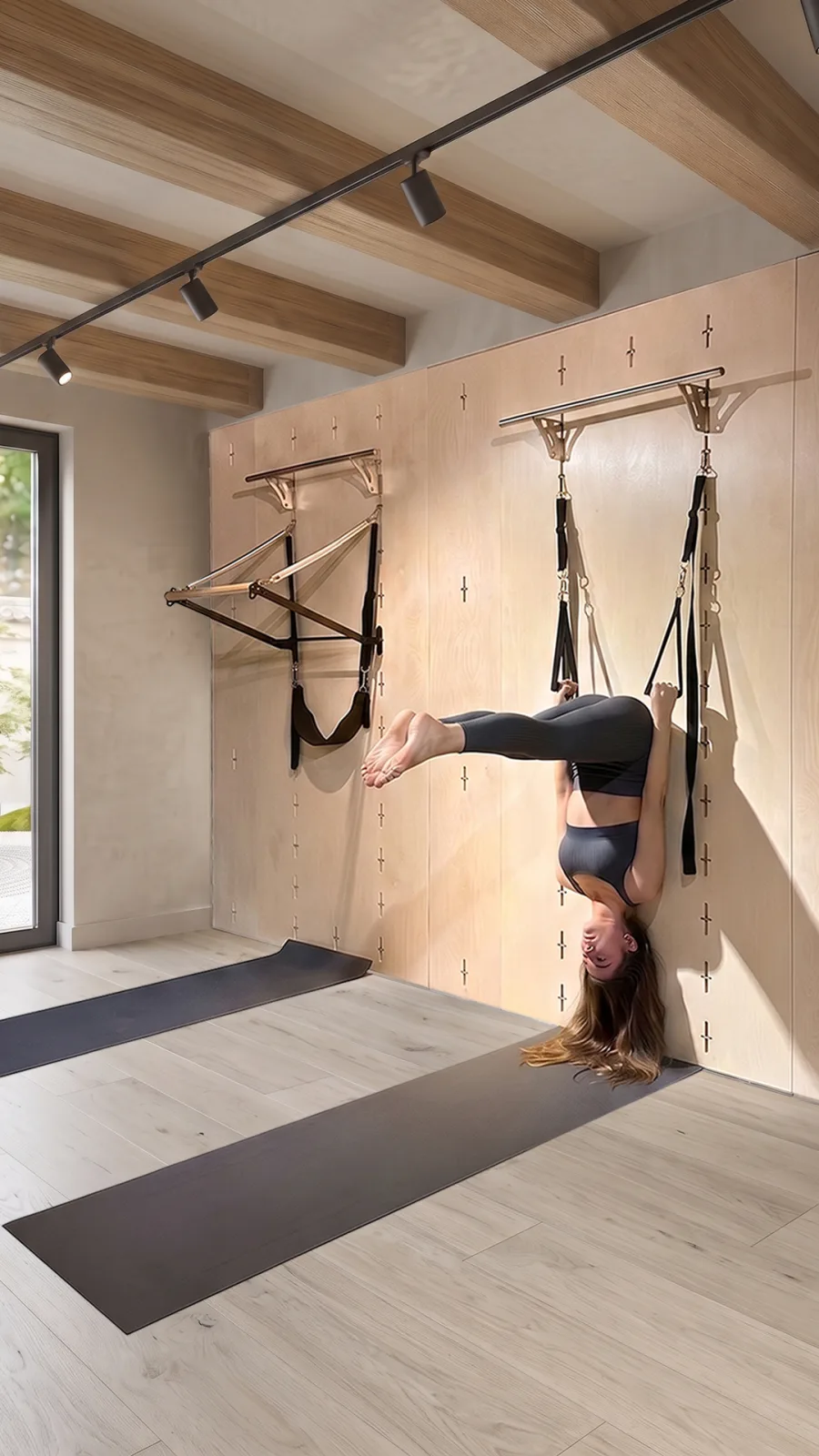
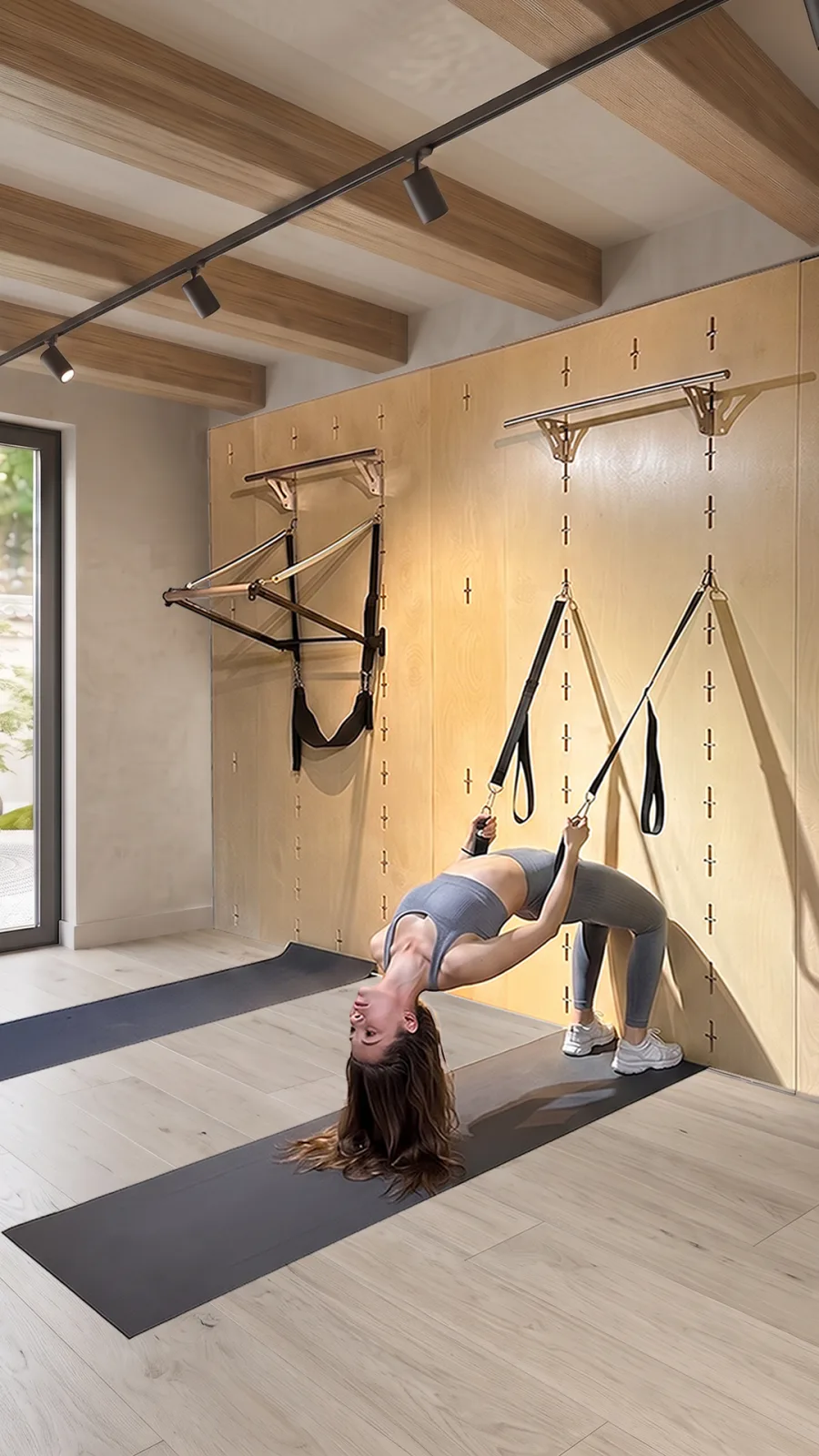
Thigh Stretch - Ustrasana (Camel Pose)
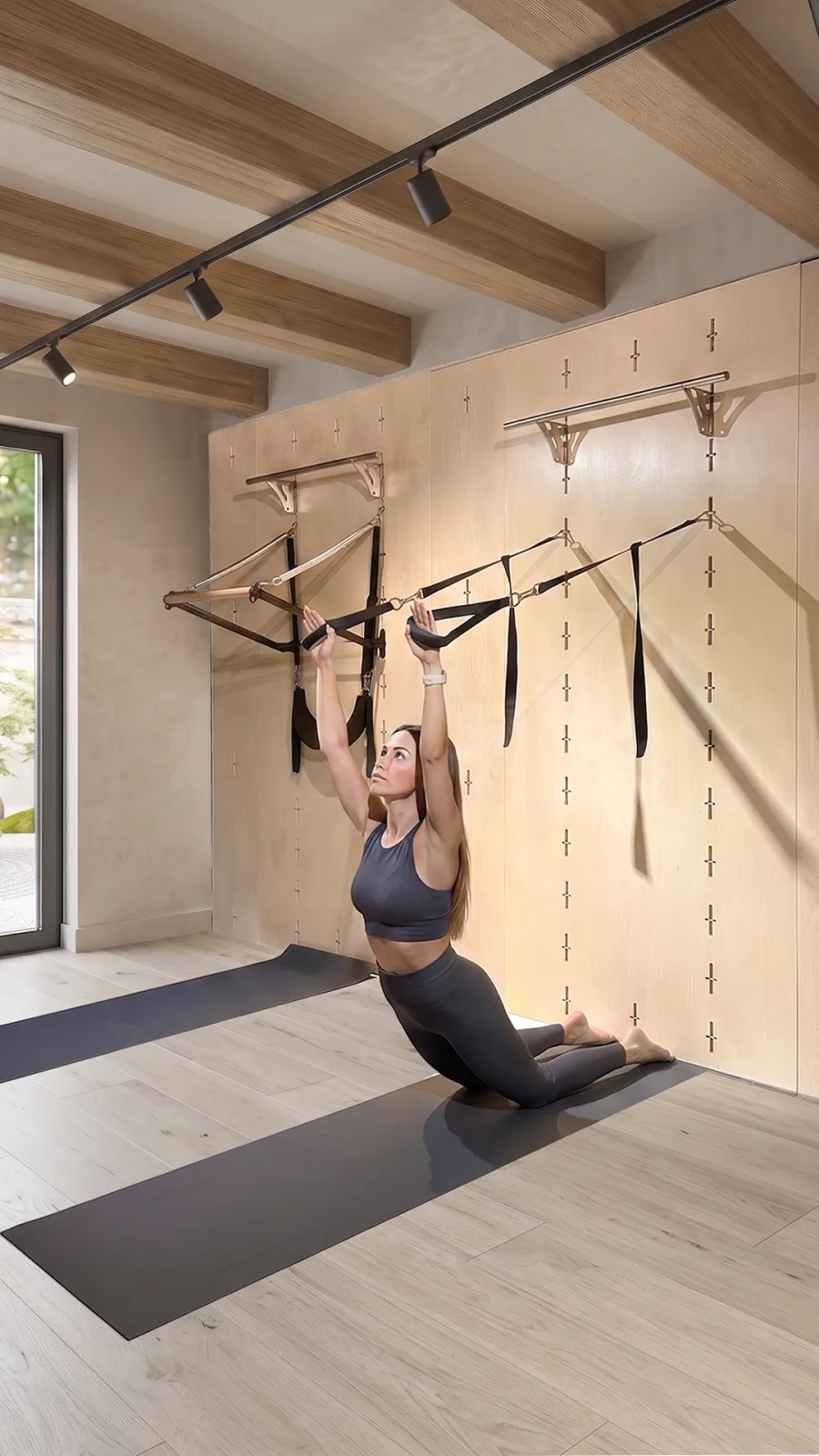
In Pilates: It is most similar to the "Thigh Stretch" exercise commonly performed on the Cadillac or Reformer. While this movement is typically performed against the resistance of springs or a Roll-Down bar, here it is performed against body weight with the support provided by the yoga wall straps. In Yoga: It resembles the preparatory phase of Ustrasana (Camel Pose) or dynamic kneeling backbend sequences. While traditional Ustrasana involves touching the heels, the goal here is to work against gravity while keeping the torso straight. In General Fitness: It is an assisted version of the famous "Reverse Nordic Curl" exercise, known for promoting knee health and leg strength.
Also known as
- In Pilates — Thigh Stretch
- In Yoga — Ustrasana (Camel Pose)
- In General Fitness — Reverse Nordic Curl
Muscles worked
- This movement is a serious test of endurance and control, especially for the front of the legs and the core region:
- Quadriceps (Front Thigh Muscles) — This is the primary target of the movement. As the torso leans backward, the thigh muscles contract intensely eccentrically (lengthening) against gravity to prevent the body from falling.
- Core Muscles — The Rectus Abdominis (abdominal muscles) and Transversus Abdominis (deep abdominal muscle) provide maximum isometric contraction to prevent excessive arching of the lower back (hyperextension) during the backward lean and to keep the spine in a straight (neutral) alignment.
- Gluteus Maximus (Glutes) — They actively work to keep the hip joint in a fully open (extended) position without bending at the hips.
- Upper Body (Shoulders, Back, Arms) — The Latissimus Dorsi (lats), shoulder (deltoid), and arm muscles act as stabilizers by holding the straps and helping keep the rest of the body balanced.
What it gives you
- Eccentric Quadriceps Strength and Knee Health — Strengthening the quadriceps muscles as they lengthen incredibly increases the stability of the knee joint and specifically helps preserve patellar tendon health.
- Active Hip Flexor Stretch — It actively lengthens and stretches the hip flexors (iliopsoas) and upper leg muscles, which often become shortened and tight from sitting all day.
- Improved Core Control — It trains the abdominal muscles to keep the torso straight and stable while in motion (on a dynamic plane).
- Safe and Controlled Progression — Thanks to the yoga wall and straps, the individual can decide how far back to lean. In cases where an unsupported "Reverse Nordic Curl" might be too challenging, the straps allow the resistance to be perfectly adjusted according to the person's fitness level.
Why it is rated Easy
A strap-supported backbend in a kneeling position on the floor.