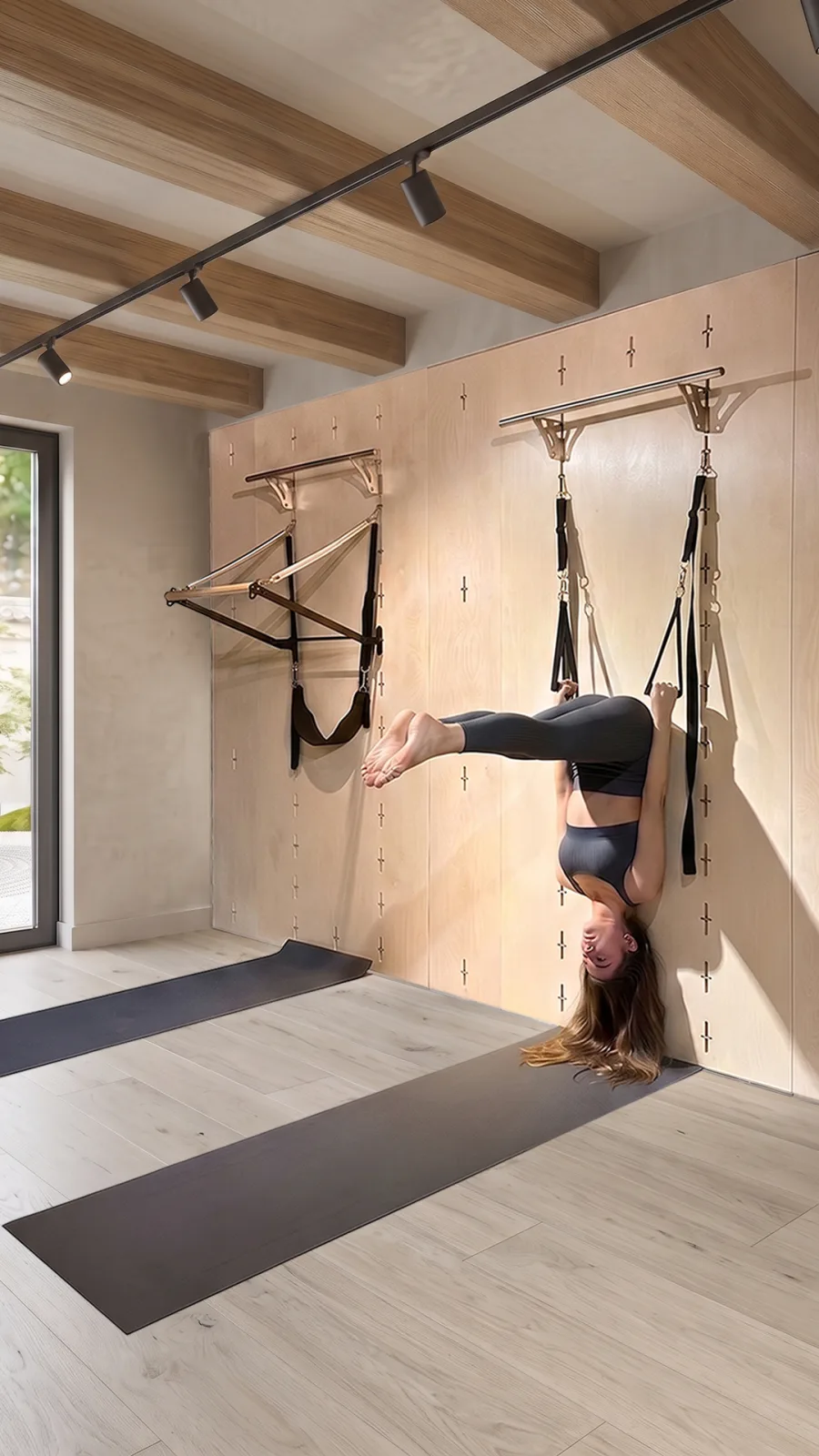
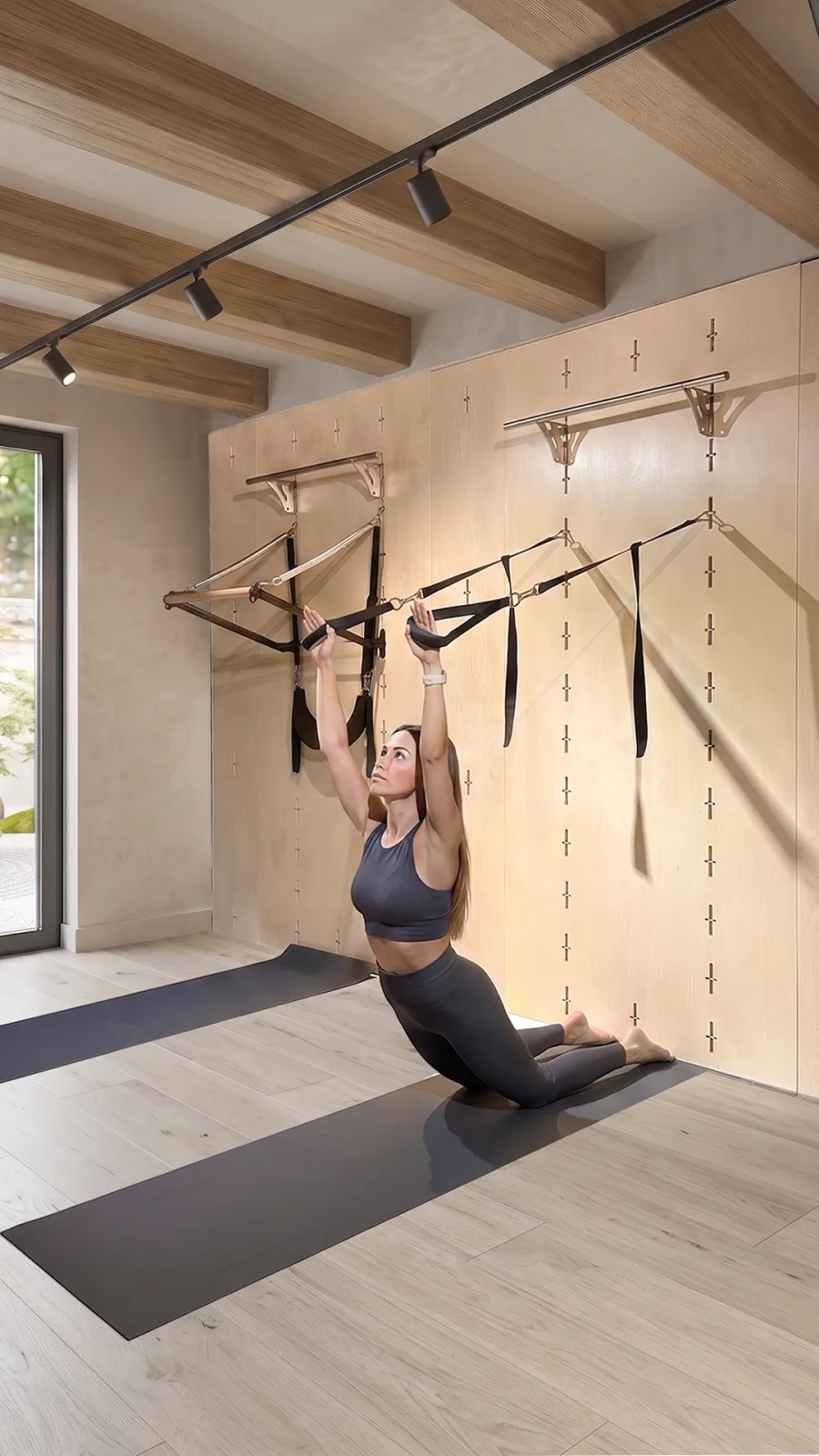
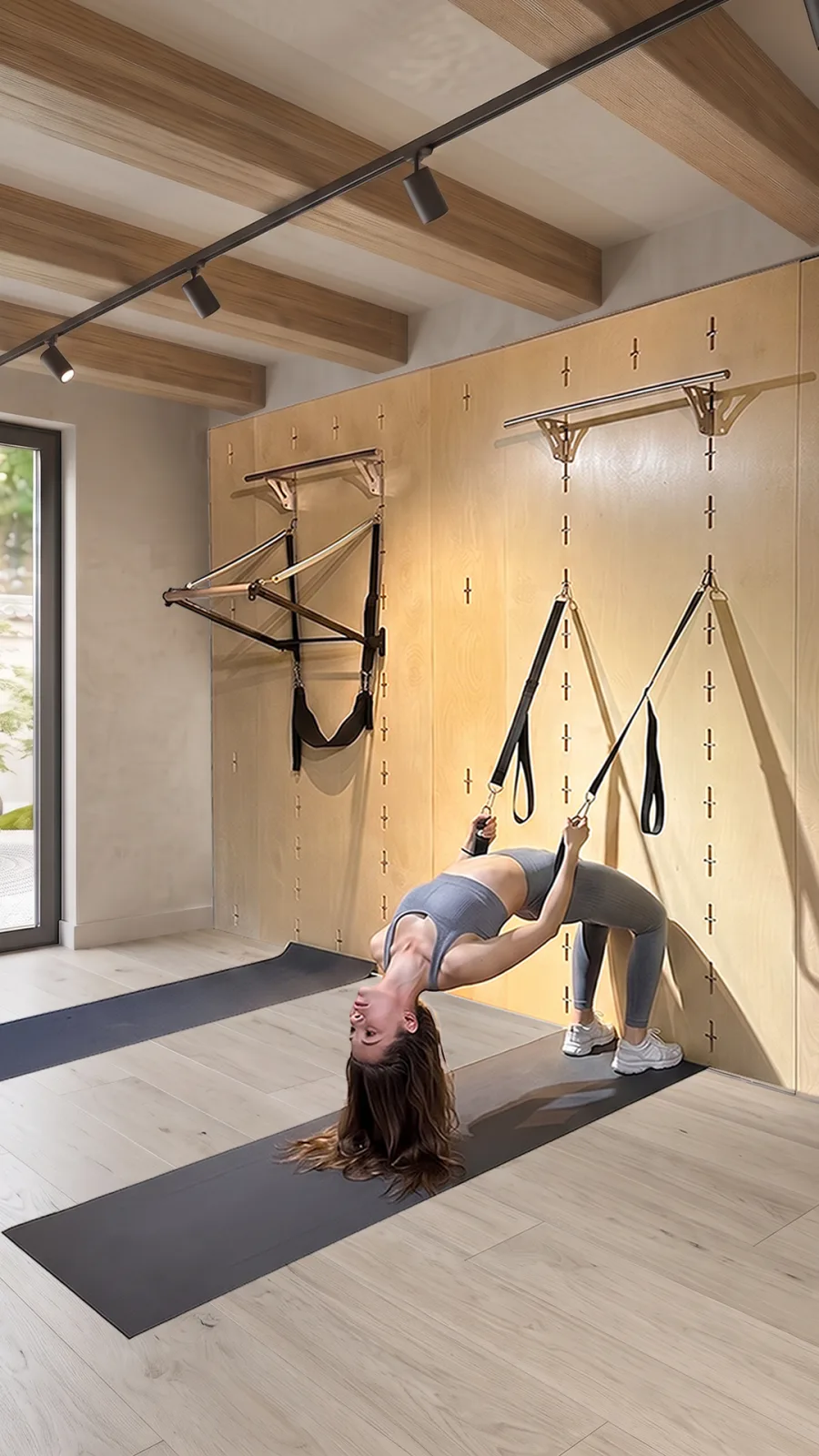
Salabhasana - Swan
Difficulty: 4/5 — Advanced
PiWall
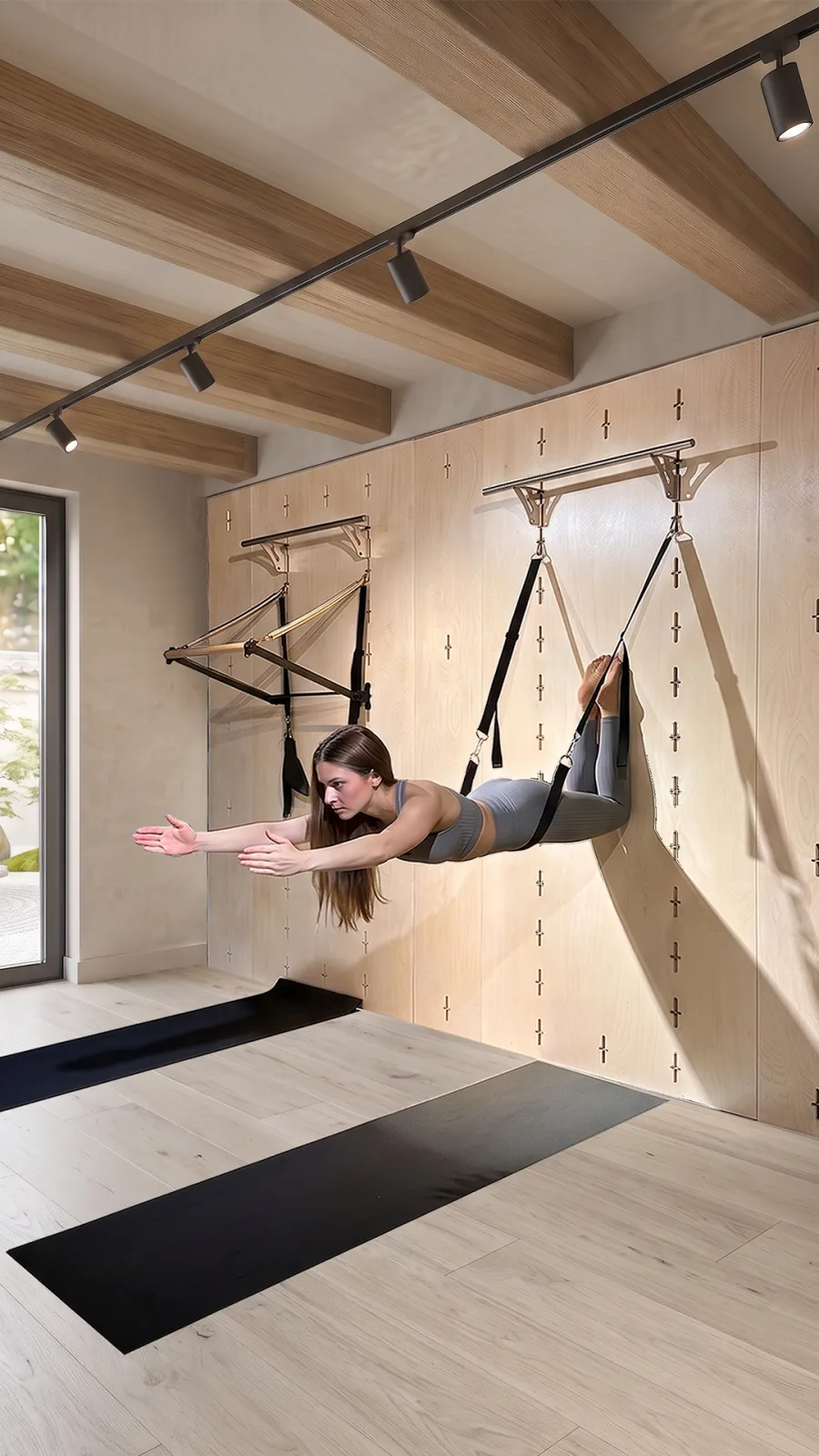
In Yoga: It is fundamentally very similar to the Salabhasana (Locust Pose). Furthermore, because the torso is parallel to the ground and the arms are extended forward, it perfectly reflects the upper body sensation of an unsupported Virabhadrasana III (Warrior III) pose. In Pilates / General Fitness: It is an advanced, suspended variation of the prone Superman exercise or the Pilates Swan series, where the resistance of gravity is felt much more intensely.
Also known as
- In Yoga — Salabhasana (Locust Pose)
- In Pilates / General Fitness — Swan
Muscles worked
- Since this movement requires holding the body in a straight line on a horizontal plane against gravity, it intensely activates the entire posterior chain and core region isometrically (static contraction):
- Erector Spinae (Spinal Erectors) — The back and lower back muscles work at maximum capacity to keep the torso suspended in the air and parallel to the ground.
- Core Muscles — The Transversus Abdominis and Rectus Abdominis, in particular, engage to prevent the torso from sagging and to stabilize the spine in a neutral position.
- Gluteus Maximus (Glutes) and Hamstrings — They actively contract to keep the hips stable and ensure pelvic stabilization while the feet are pressed against the wall with bent knees.
- Anterior Deltoids (Front Shoulders) and Scapular Stabilizers — The muscles around the shoulders and shoulder blades work to keep the arms extended forward at ear level without dropping against gravity.
What it gives you
- Spinal Decompression — The support of the sling/suspension strap at the pelvis/groin area, combined with the weight of the upper body, reduces the pressure between the lumbar vertebrae (creating a traction effect). Compared to back exercises performed on the ground, it provides elongation without compressing the lower back.
- Posture Correction — By opening up the front of the shoulders and strengthening all posterior chain muscles, it helps correct common modern postural issues such as rounded shoulders and hunching (kyphosis).
- Isometric Strength and Endurance Development — Holding the body suspended at a fixed angle incredibly increases the endurance of deep stabilizer muscles. The muscles remain under tension for a prolonged period without changing their length.
- Proprioception and Balance — Trying to maintain alignment in the air without the support of the ground maximizes bodily awareness (proprioception) and brain-muscle coordination.
Why it is rated Advanced
An active flight/plank pose where the entire body weight is supported in the air by the core.