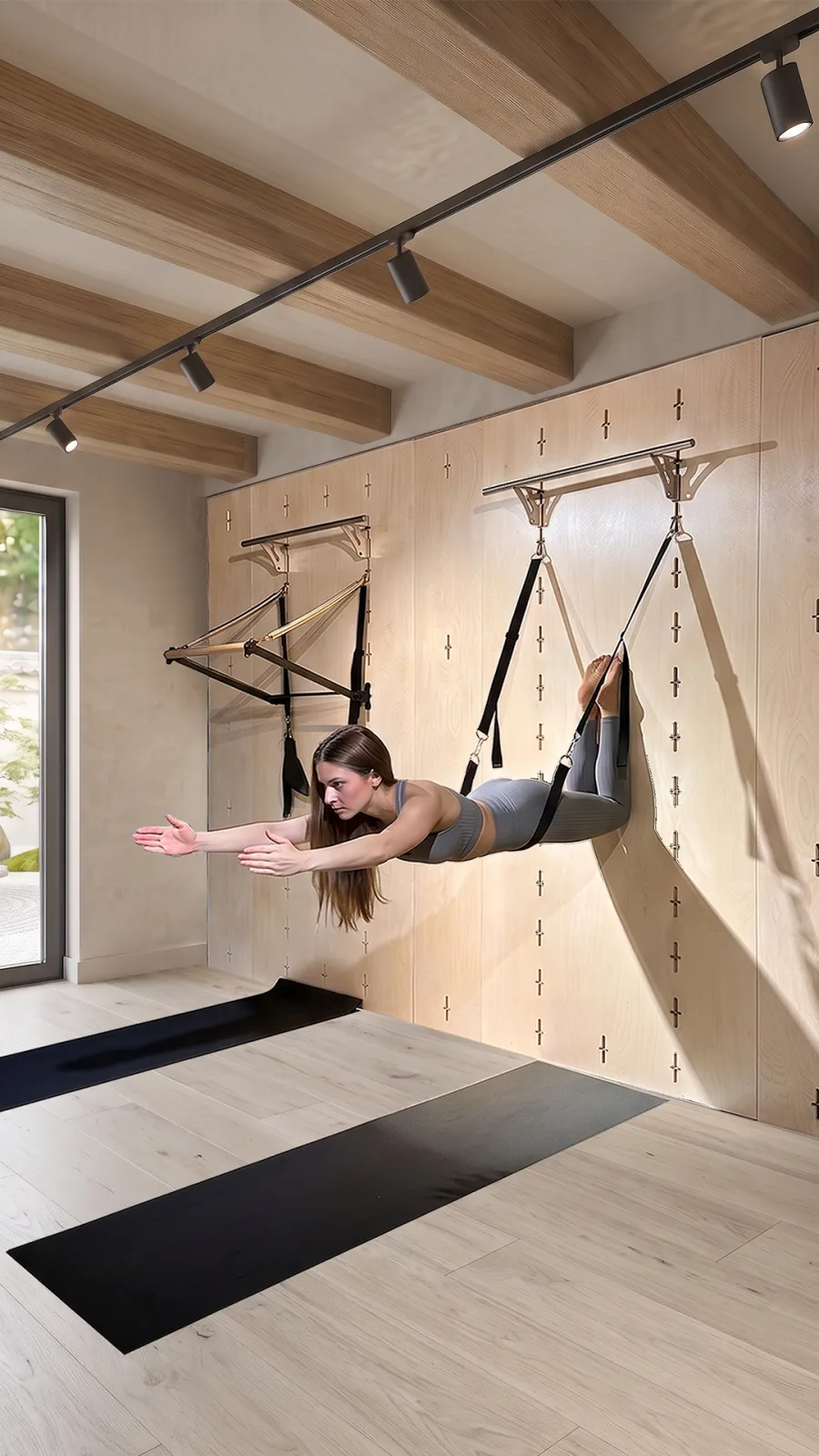
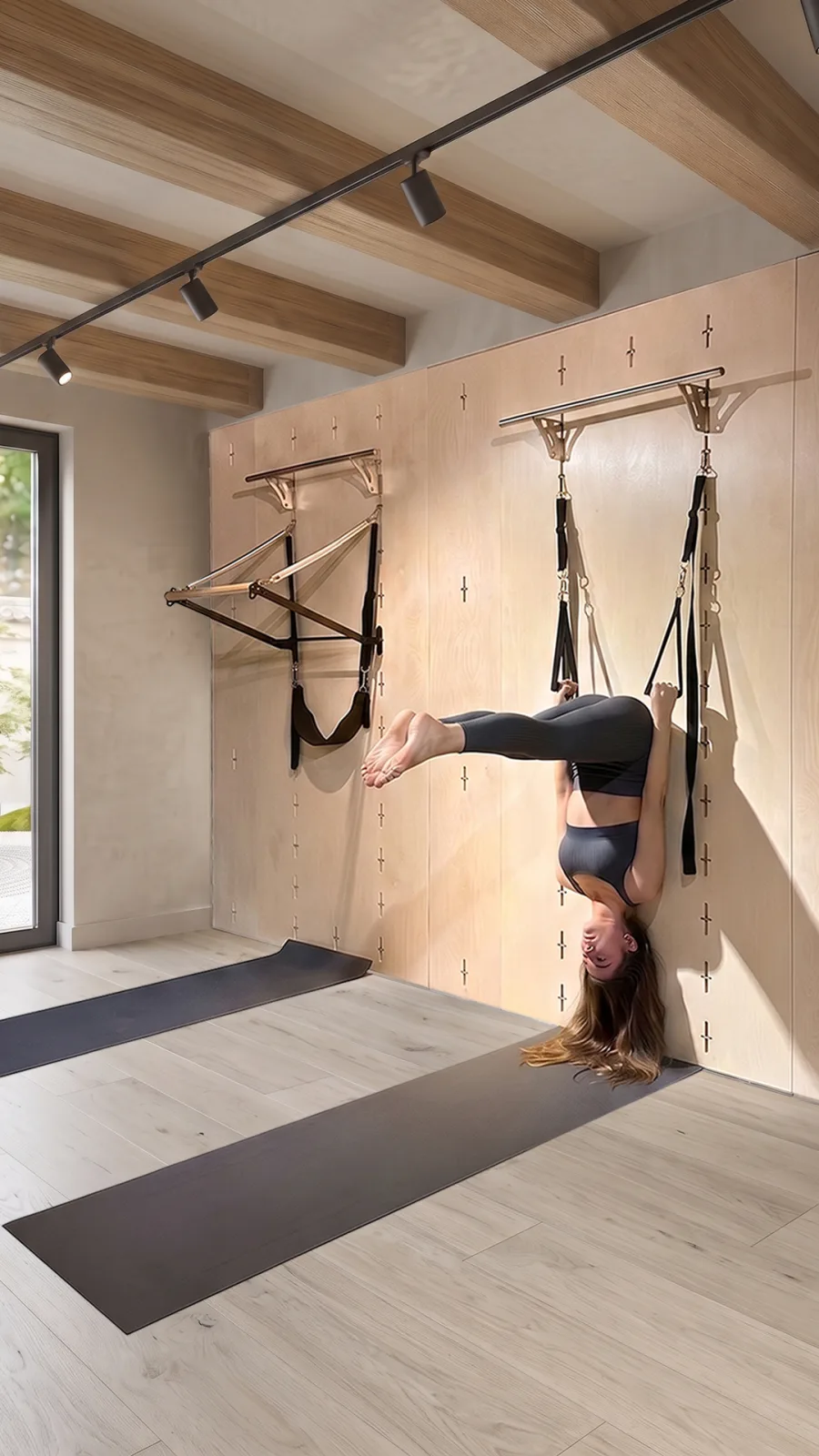
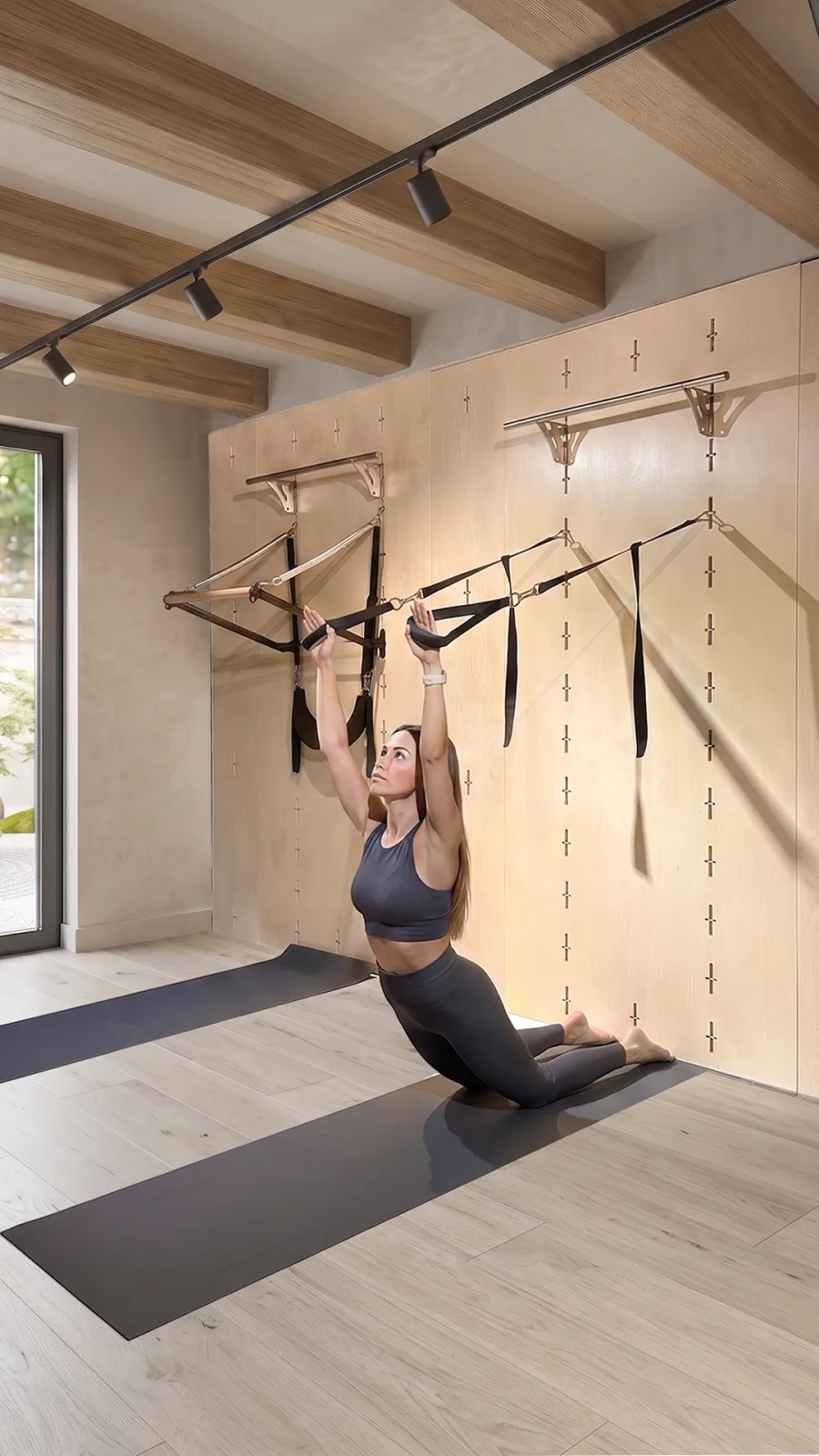
Virabhadrasana II - Standing Lunge
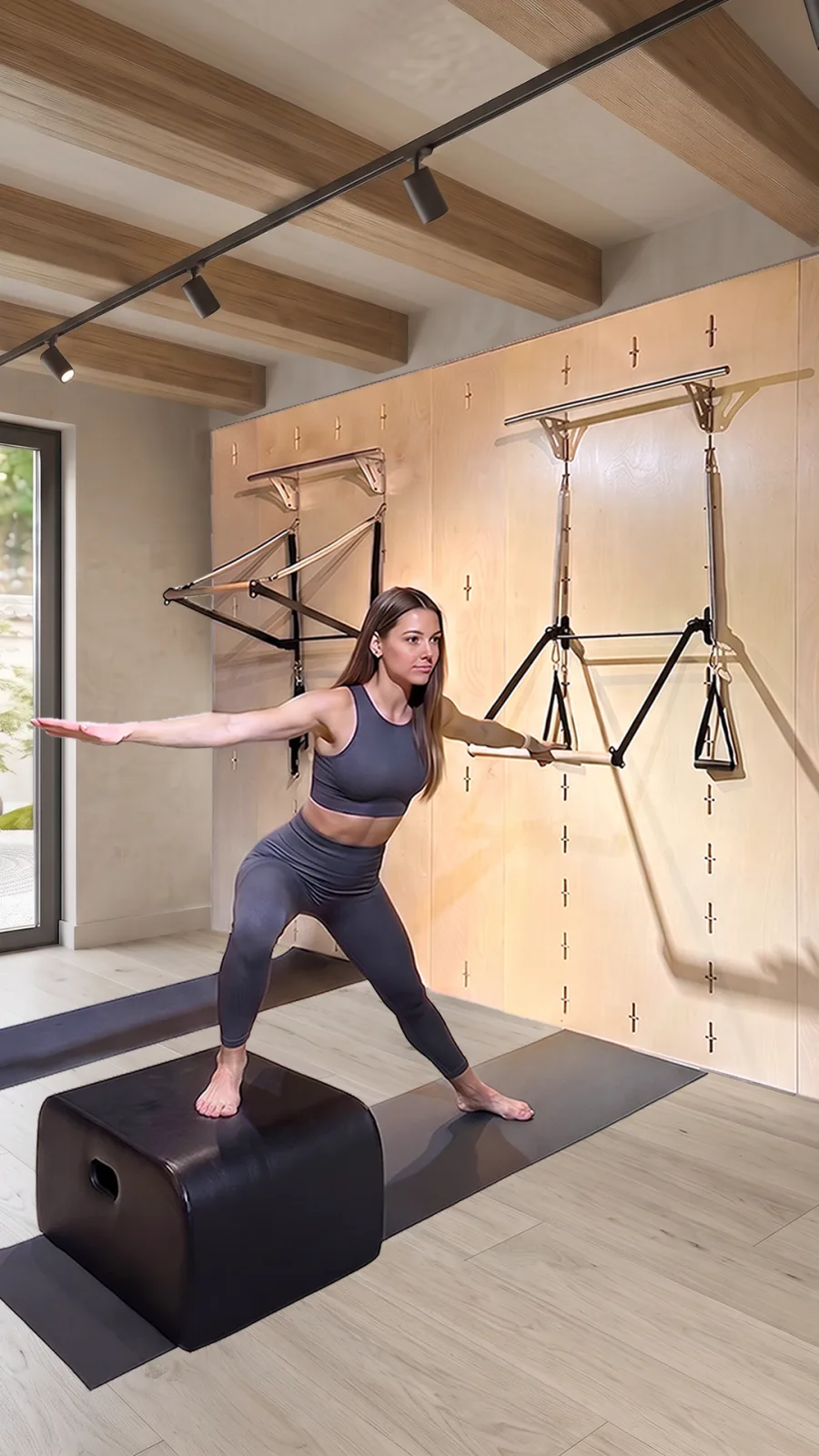
In Yoga: Visually and geometrically, it is most similar to the Virabhadrasana II (Warrior II) pose. This classic posture, where one leg is bent at 90 degrees, the other is extended straight, and the arms are opened parallel to the floor, is taken to a much deeper level with the use of a box. In Pilates: It is similar to the "Side Splits" performed on the Reformer or the "Standing Lunge" series performed with the addition of a box on the Wunda Chair / Reformer. The spring-loaded bar held in the hand perfectly reflects the arm and asymmetrical standing posture integrations performed on the Cadillac (Trapeze Table).
Also known as
- In Yoga — Virabhadrasana II
- In Pilates — Standing Lunge
Muscles worked
- This movement demands flexibility and strength simultaneously in the lower body (dynamic stabilization), while requiring the upper body to resist spring tension:
- Quadriceps (Front Thighs) and Gluteus Maximus (Glutes) — The leg bent on the box carries a large portion of the body weight and works very intensely isometrically (statically) to maintain the position.
- Adductor (Inner Thigh) Muscles — While the inner line of the leg extended straight on the floor stretches deeply, it simultaneously contracts as a support to prevent the hips from collapsing toward the ground.
- Core and Obliques (Side Abs) — In the asymmetrical stance of the torso (one leg up, one leg down), the abdominal muscles play a key role in keeping the body's center upright and preventing the rib cage from tilting to the right or left.
- Deltoids (Shoulders) and Scapular Stabilizers — The back and shoulder muscles are actively engaged to keep the arms parallel to the floor in a "T" shape and to withstand the spring resistance of the bar without shrugging the shoulders upward.
What it gives you
- Asymmetrical Strength Development (Unilateral Training) — Positioning the legs at different levels and angles helps identify and correct strength imbalances (asymmetries) between the right and left legs.
- Deep Hip Mobility and Flexibility — Elevating the front foot on the box increases the stretch angle placed on the inner part of the grounded leg and the hip joint, providing a much deeper opening in the pelvic region than exercises performed solely on the floor.
- Coordination and Proprioception — Trying to balance on different surface heights (box and mat) while simultaneously controlling the resistance of the spring-loaded bar in hand incredibly enhances the brain's ability to perceive the body in space (proprioception).
- Full-Body Integration — By combining the leg opening/lunge dynamics of the lower body with the stabilization task of the upper body in a single movement, it trains the entire body to work in communication with itself rather than in isolated parts.
Why it is rated Easy
A box- and bar-supported, highly stable side lunge and stretch.