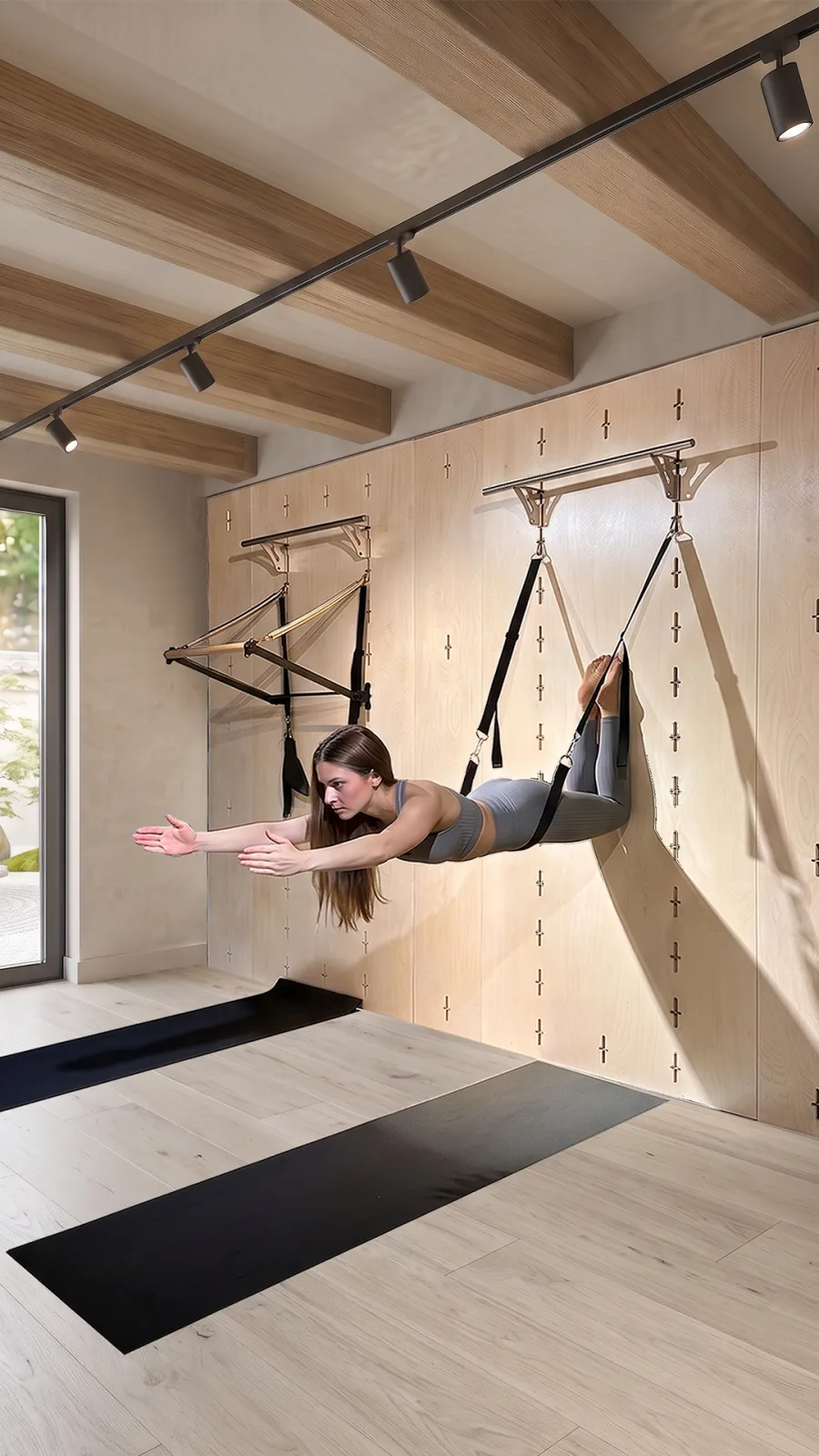
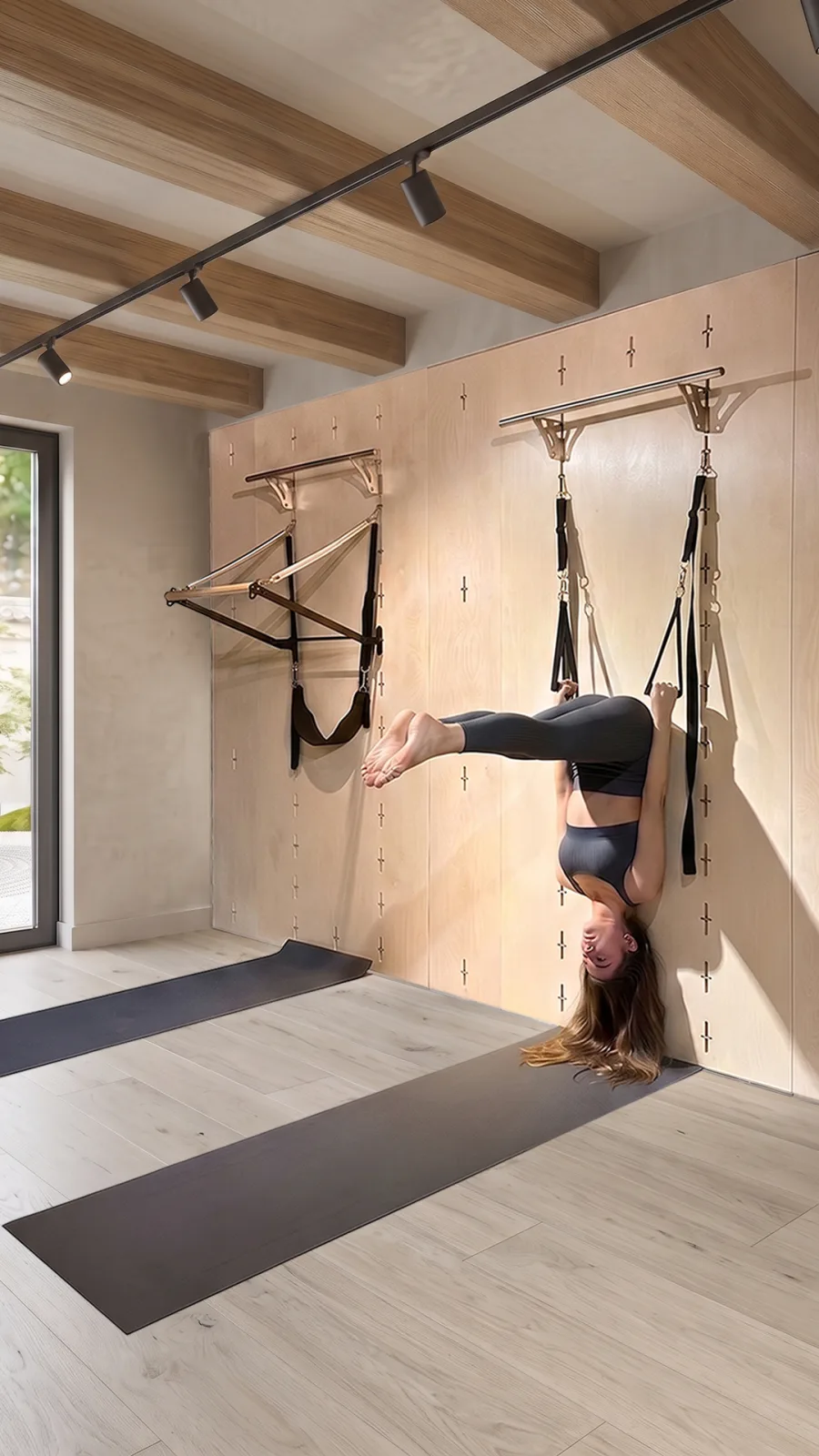
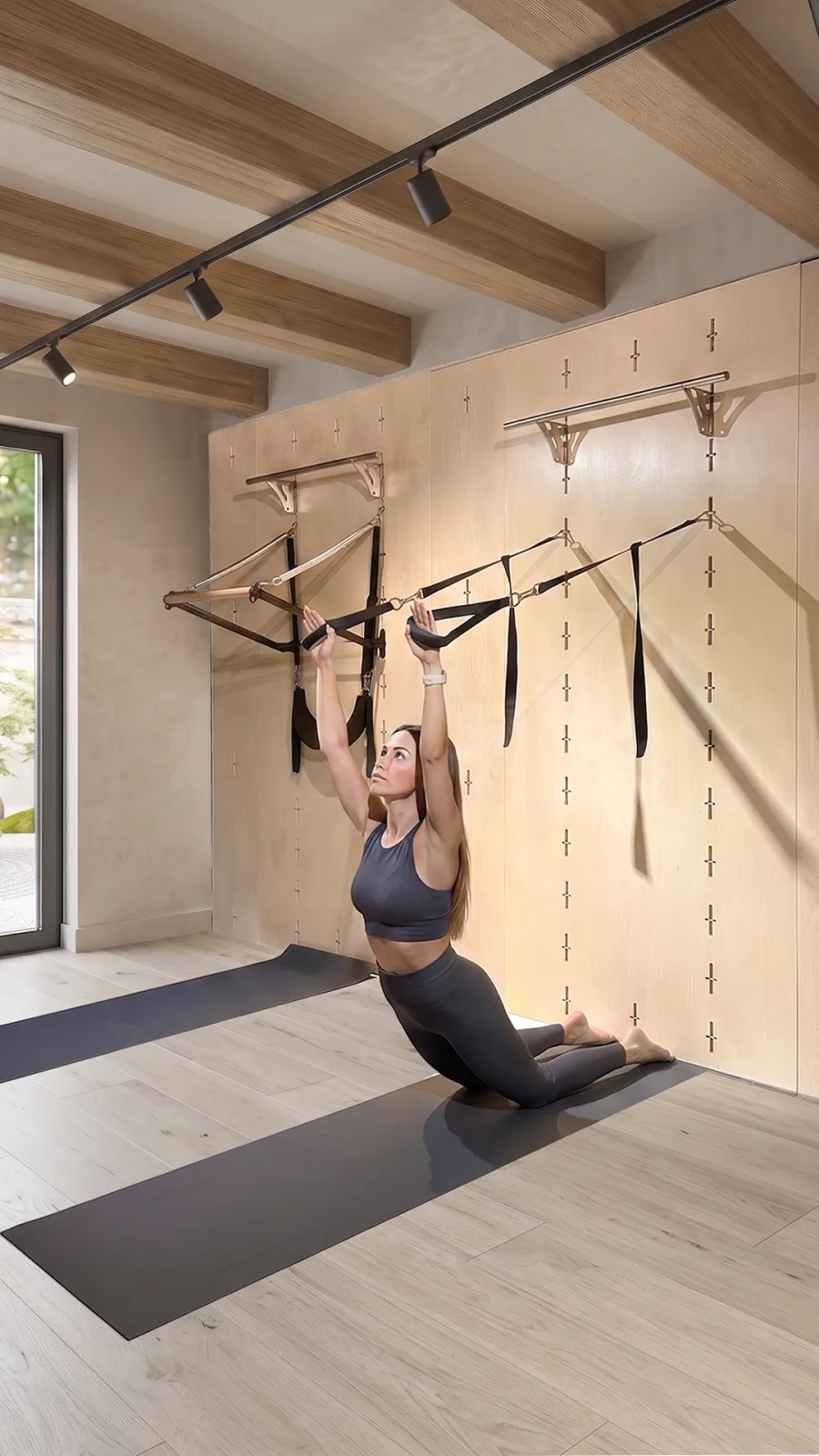
Ustrasana (Camel Pose) - Hanging Backbend
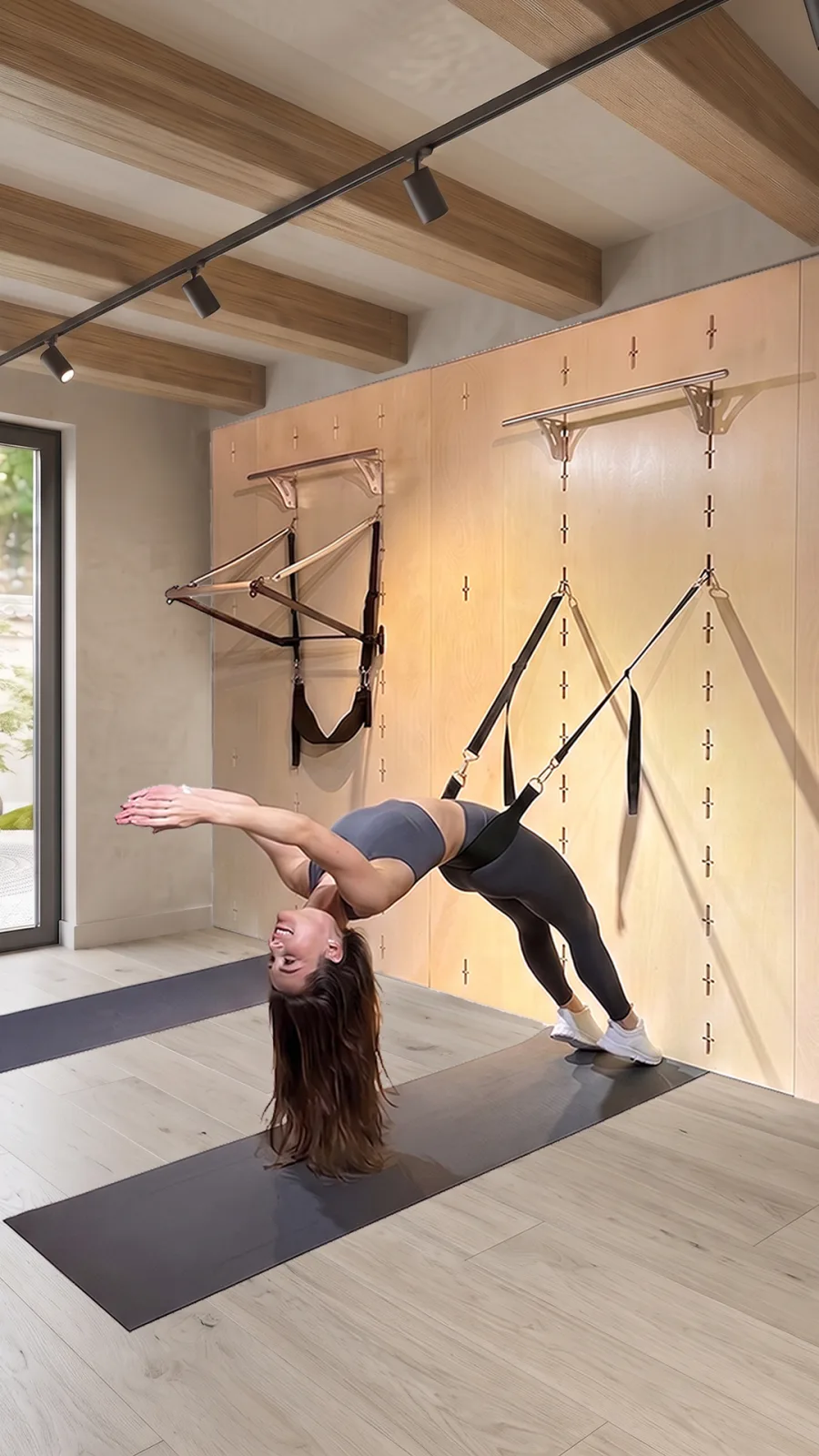
In Yoga: Fundamentally, it is a version of the Ustrasana (Camel Pose) and Urdhva Dhanurasana (Full Bridge / Wheel Pose) performed with unsupported arms, where the weight is surrendered to gravity. Additionally, it is mechanically very similar to the supported Viparita Dandasana (Inverted Staff Pose) or "Dropback" (dropping back into a bridge from a standing position) preparatory practices in Iyengar yoga. In Pilates: It is a wall adaptation of the "Hanging Backbend" movement performed with a trapeze bar or "fuzzies" (suspension loops) on the Cadillac (Trapeze Table), or the full spinal extension stretches performed by lying backward on the Ladder Barrel.
Also known as
- In Yoga — Ustrasana (Camel Pose)
- In Pilates — Hanging Backbend
Muscles worked
- This movement requires active stabilization in the posterior chain of the body while creating a tremendous passive stretch and elongation in the anterior chain:
- Stretching and Lengthening Muscles (Primary Target) — The anterior chain of the body opens completely. A very deep passive stretch occurs in the Rectus Abdominis (abdominal muscles), Pectoralis Major/Minor (chest muscles), Iliopsoas (hip flexors), and anterior cervical (front of the neck) muscles. With the arms opened to the sides, the front of the shoulders (Anterior Deltoids) experience a maximum stretch.
- Active Muscles (Stabilizers) — To plant the feet firmly on the ground and maintain the pose by pushing the pelvis toward the strap, the Gluteus Maximus (glutes), Hamstrings (back of the thighs), and Quadriceps (front thighs) muscles are engaged isometrically.
What it gives you
- Safe and Lower Back-Friendly Backbend — In movements like the bridge performed on the floor, too much load can be placed on the lumbar vertebrae (lower back) or wrists due to limited mobility. The strap support completely removes this load, allowing the rib cage to open at a much deeper angle without compressing the lower back.
- Excellent Posture Correction (Anti-Kyphosis) — It is one of the most effective antidotes against postural disorders (hunching/kyphosis and rounded shoulders) caused by constantly leaning forward at a desk, phone, or computer.
- Spinal Decompression (Traction) — Releasing the head and arms backward creates a soothing pull (traction) in the upper part of the spine (thoracic and cervical) with the help of gravity.
- Increased Lung Capacity — The stretching of the rib cage and intercostal muscles creates more space for the diaphragm, significantly increasing breathing capacity and quality.
Why it is rated Advanced
A suspended forward plank/backbend angle; it is highly challenging to maintain form in the shoulder girdle and core.