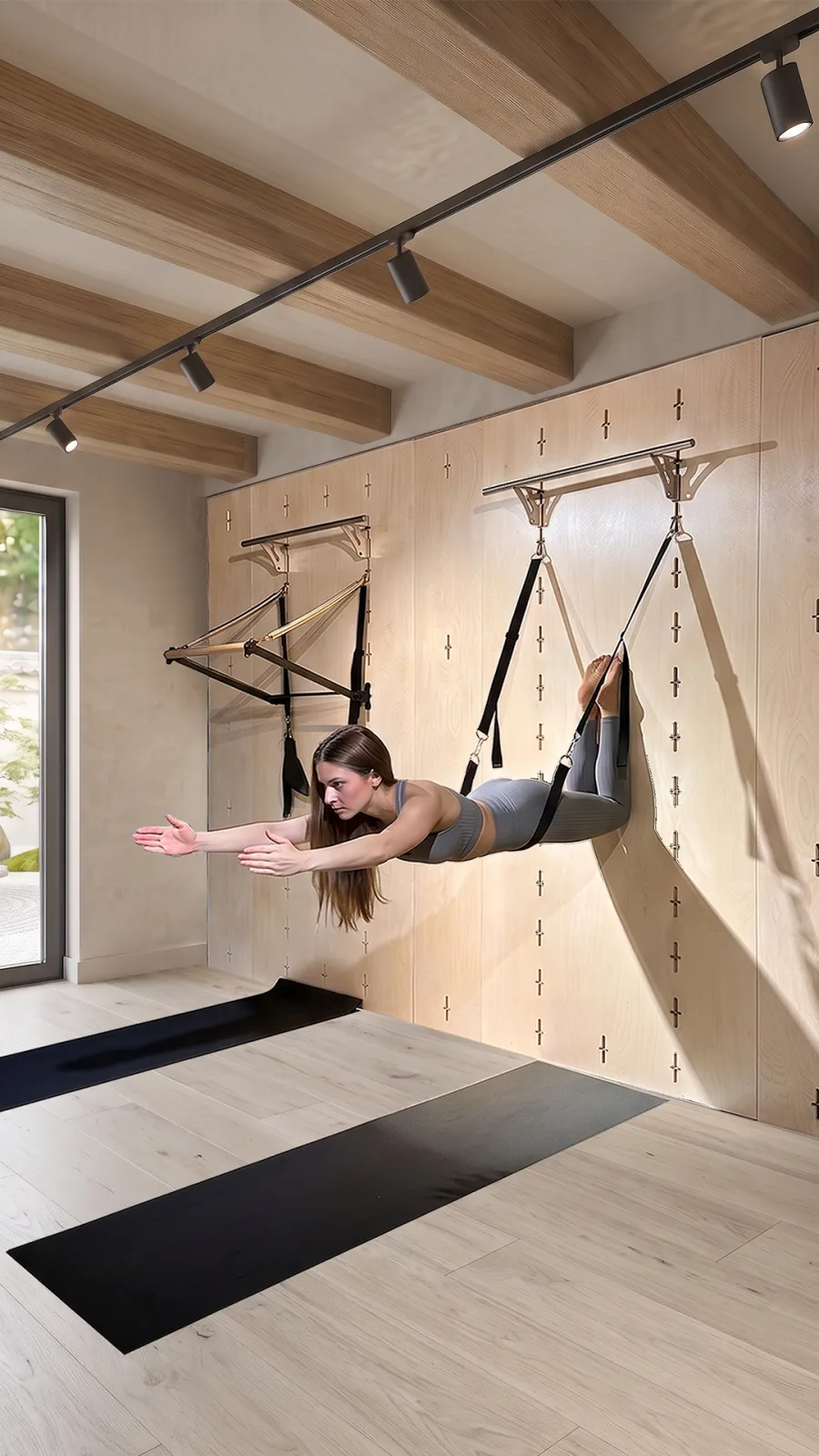
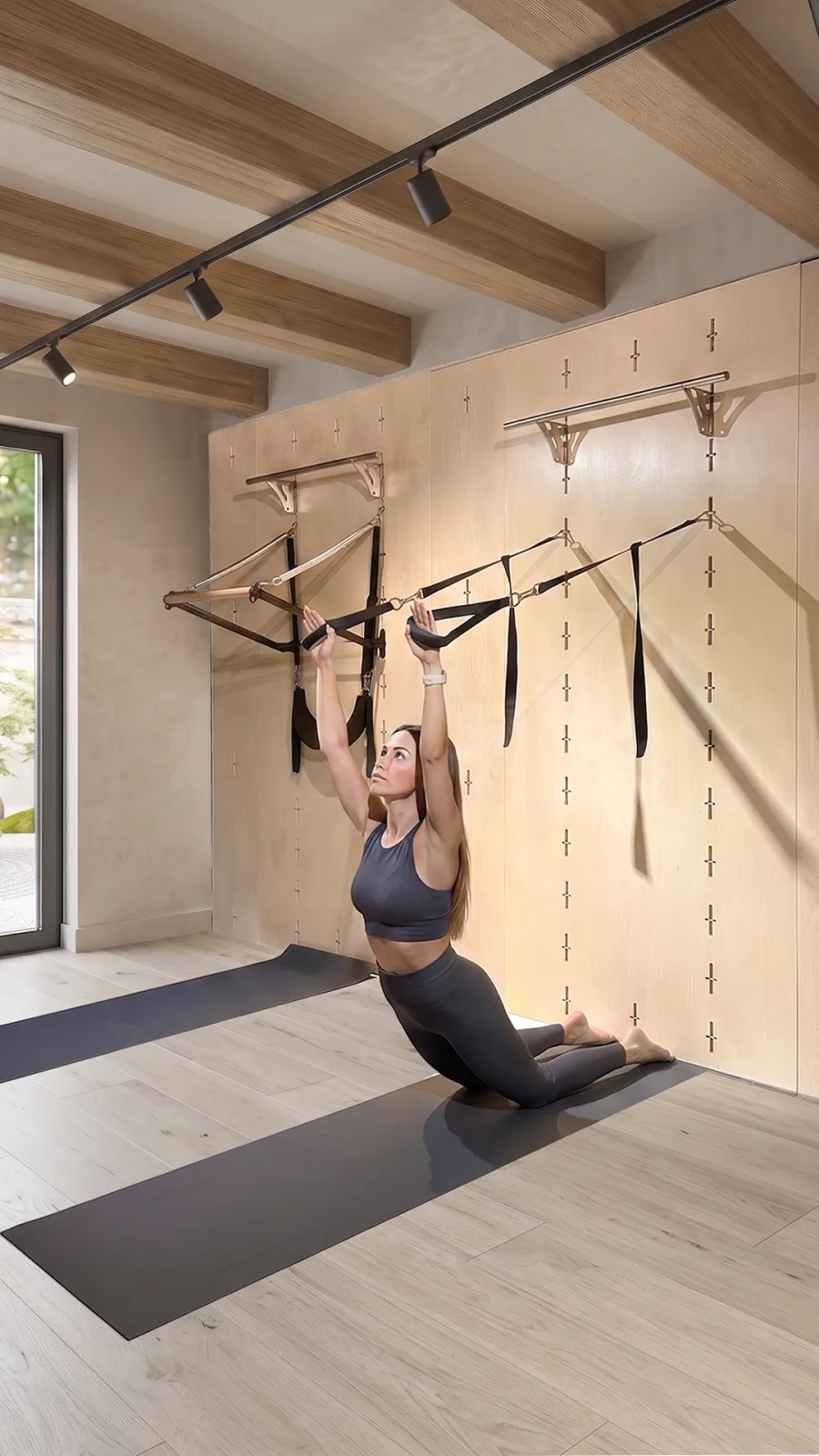
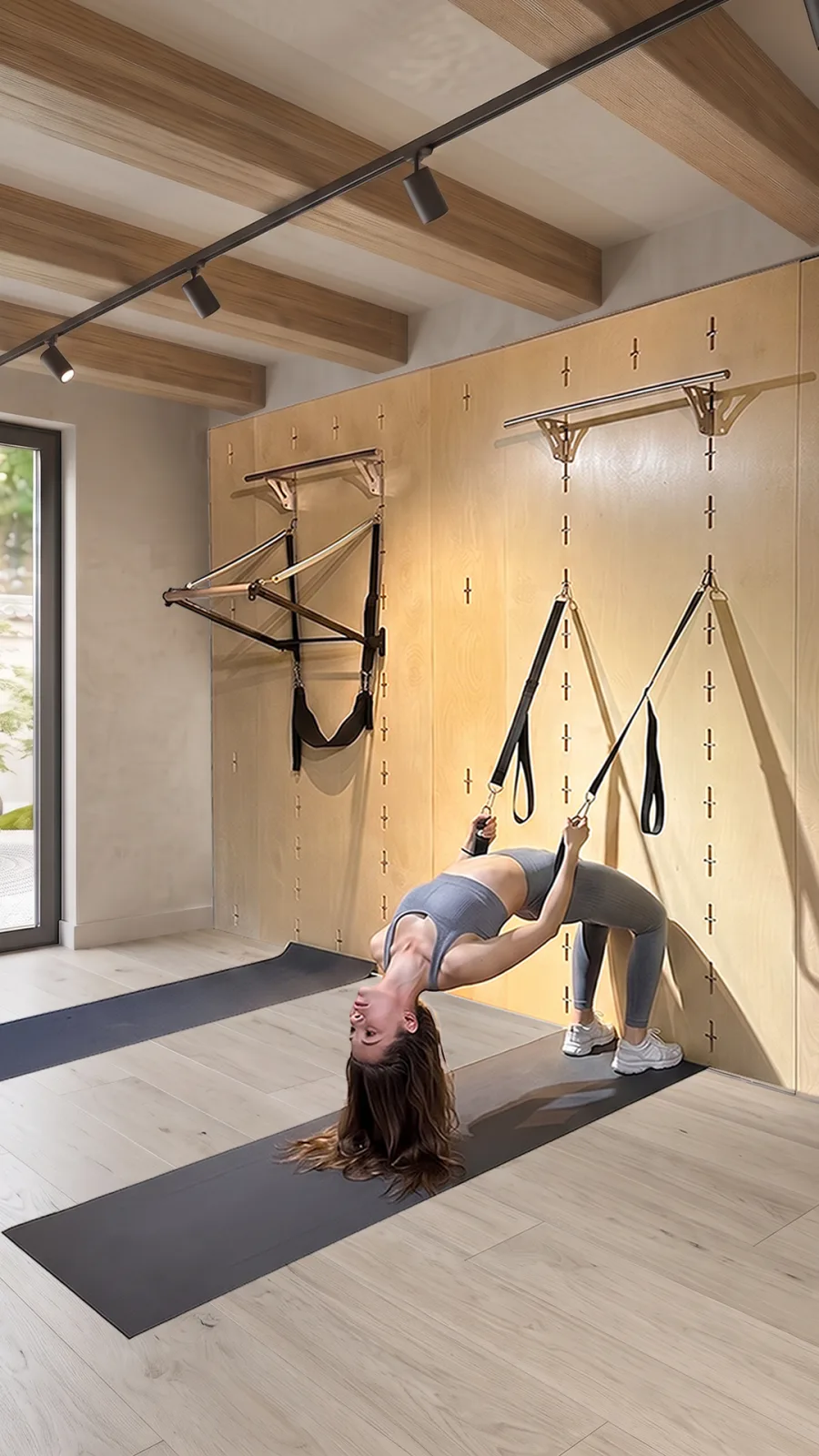
Inverted Pike - Teaser
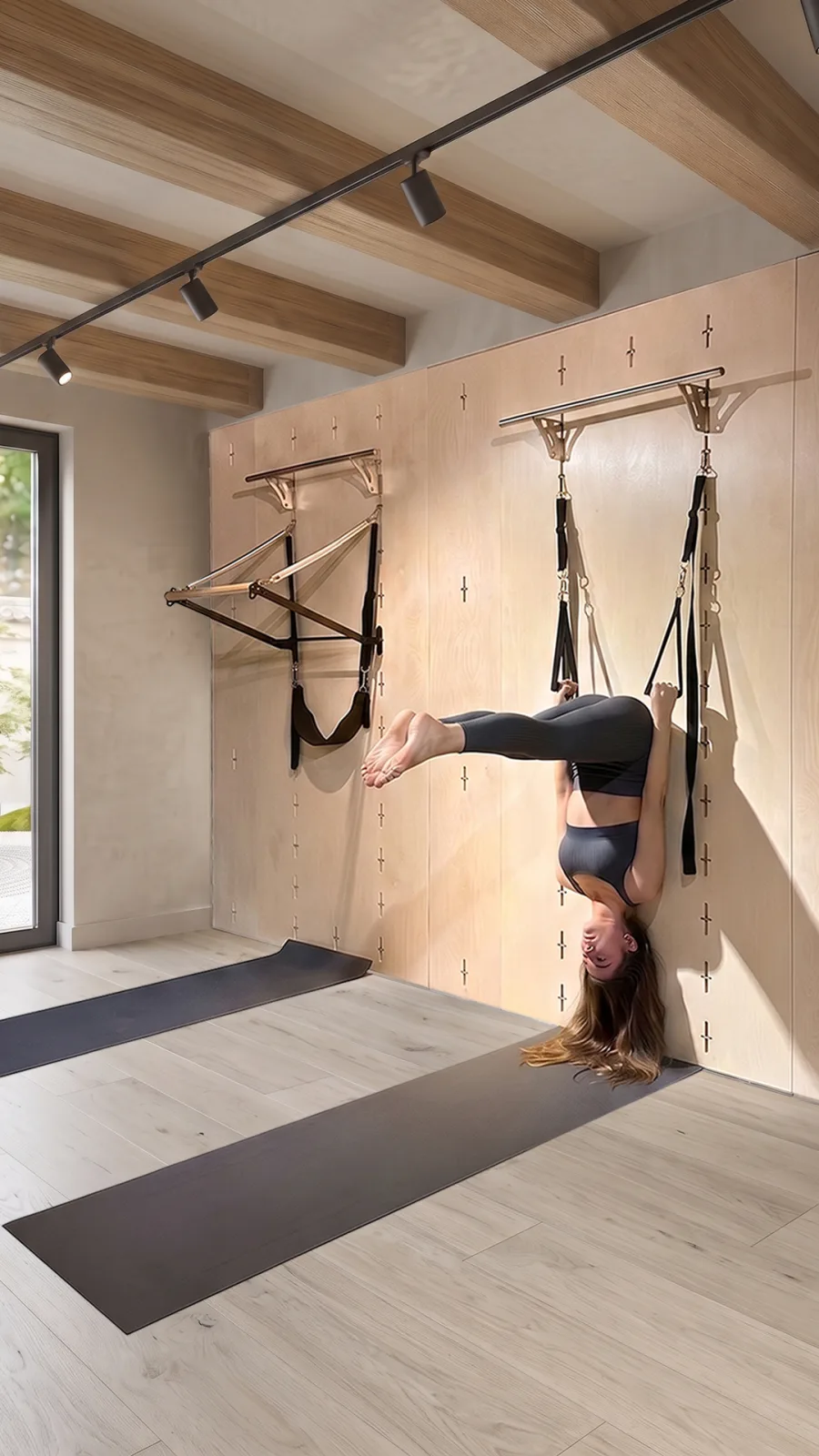
In Yoga: It is most similar to "Inverted Pike" positions in aerial yoga. In traditional mat yoga, it can be thought of as an inverted version of Prasarita Padottanasana (Wide-Legged Forward Bend) or a combination of Sirsasana (Headstand) and Prasarita Padottanasana. Keeping the legs open against a vertical wall in this manner resembles an advanced, wall-supported variation of Sirsasana. In Pilates: It can be seen as a suspended, inverted version of the "Teaser" or "Roll-Over" exercises performed on the Pilates Reformer. It requires an intensity similar to the core and leg stability needed on the Reformer.
Muscles worked
- This movement requires intense core and upper body engagement to balance the body in an inverted position and keep the legs at 90 degrees. The main muscle groups are:
- Core — Extremely intense use of the transversus abdominis, rectus abdominis, and oblique muscles to hold the legs in the air and stabilize the spine.
- Upper Body — The shoulders (deltoids), back muscles (rhomboids and trapezius), and triceps work to keep the body close to the wall and suspended.
- Legs and Hips — The hip flexors (iliopsoas) and quadriceps muscles engage to keep the legs straight and stabilize the pelvis.
What it gives you
- Benefits of Inversion — This position, where the head is below the heart, can improve circulation, increase lymphatic drainage, and enhance mental clarity by improving blood flow to the brain.
- Spinal Decompression — Reversing the effect of gravity can reduce pressure on the spine and provide decompression.
- Core Strength — It builds a strong core by engaging the central region very intensely.
- Body Awareness and Balance — Controlling the legs and keeping the body close to the wall in an inverted position enhances bodily awareness and balance.
- Upper Body Stabilization — It improves upper body stability by strengthening the shoulder and back muscles.
- Hip and Hamstring Flexibility — Trying to keep the legs straight can help stretch the hips and hamstrings.
Why it is rated Advanced
An active and fully vertical inversion requires a sense of direction, spatial awareness, and core control.
Notes
Safety Note: This is an advanced-level movement. It should be performed under the supervision of a qualified instructor. It may not be suitable for individuals with neck or spinal issues.