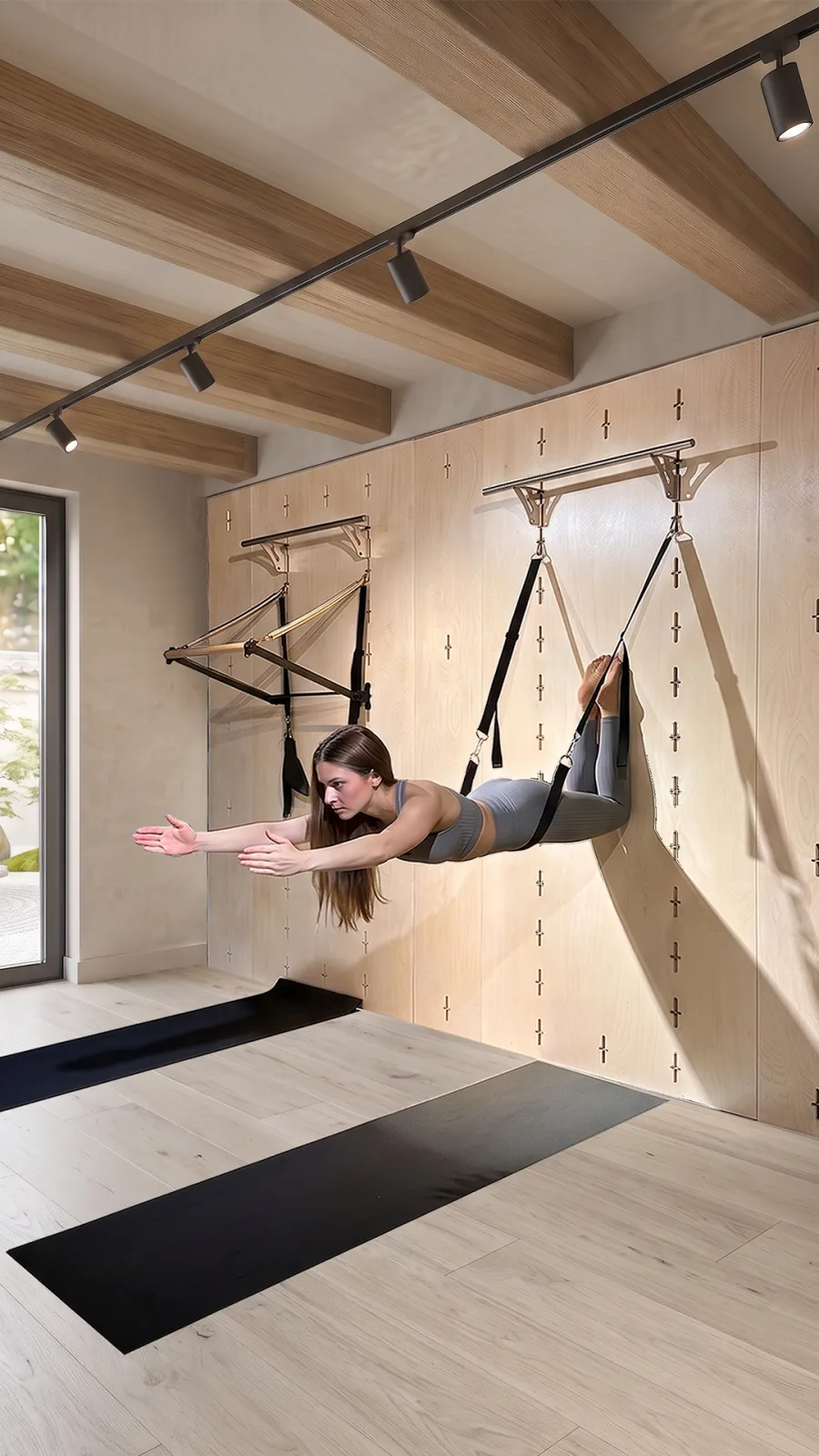
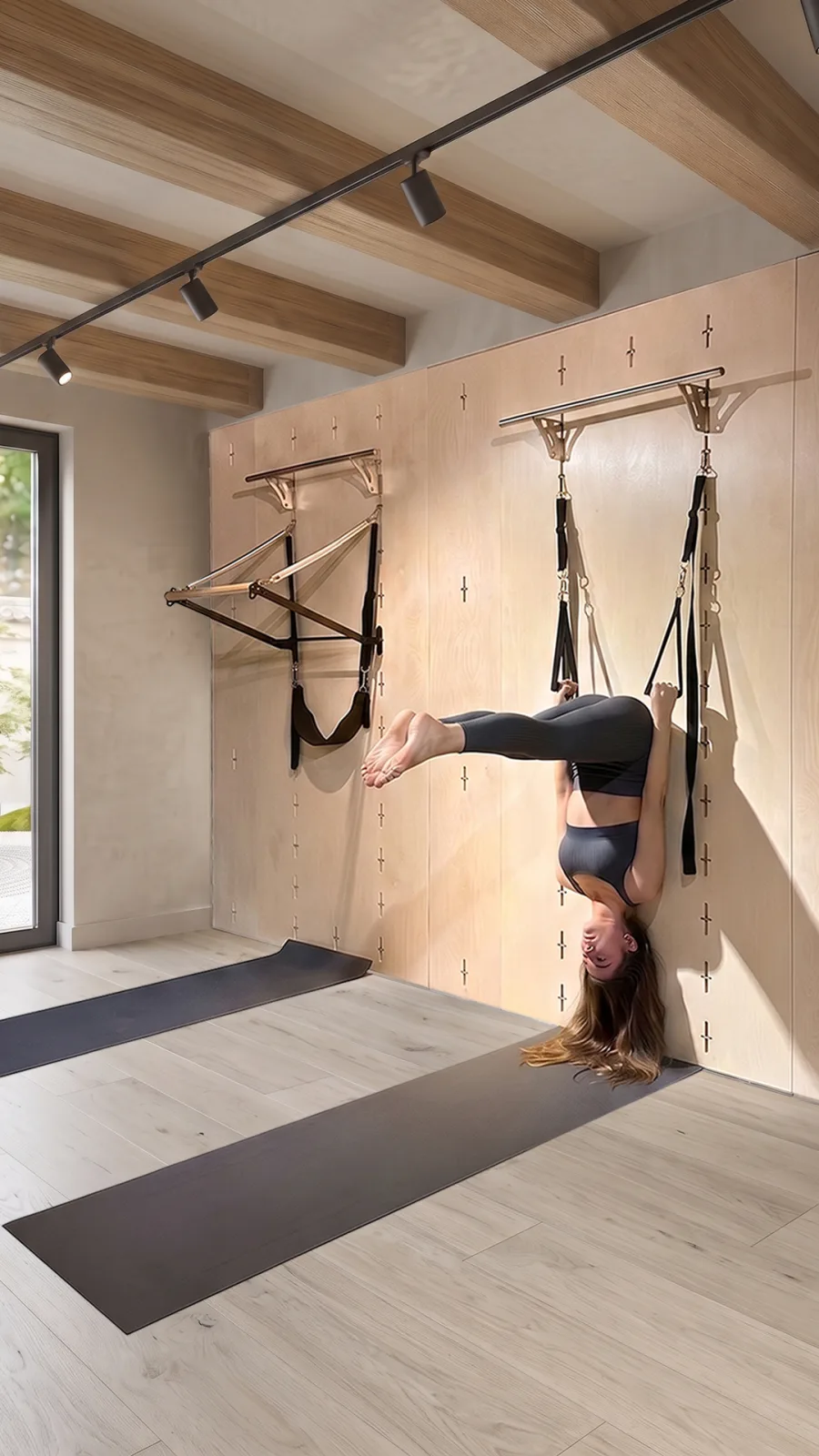
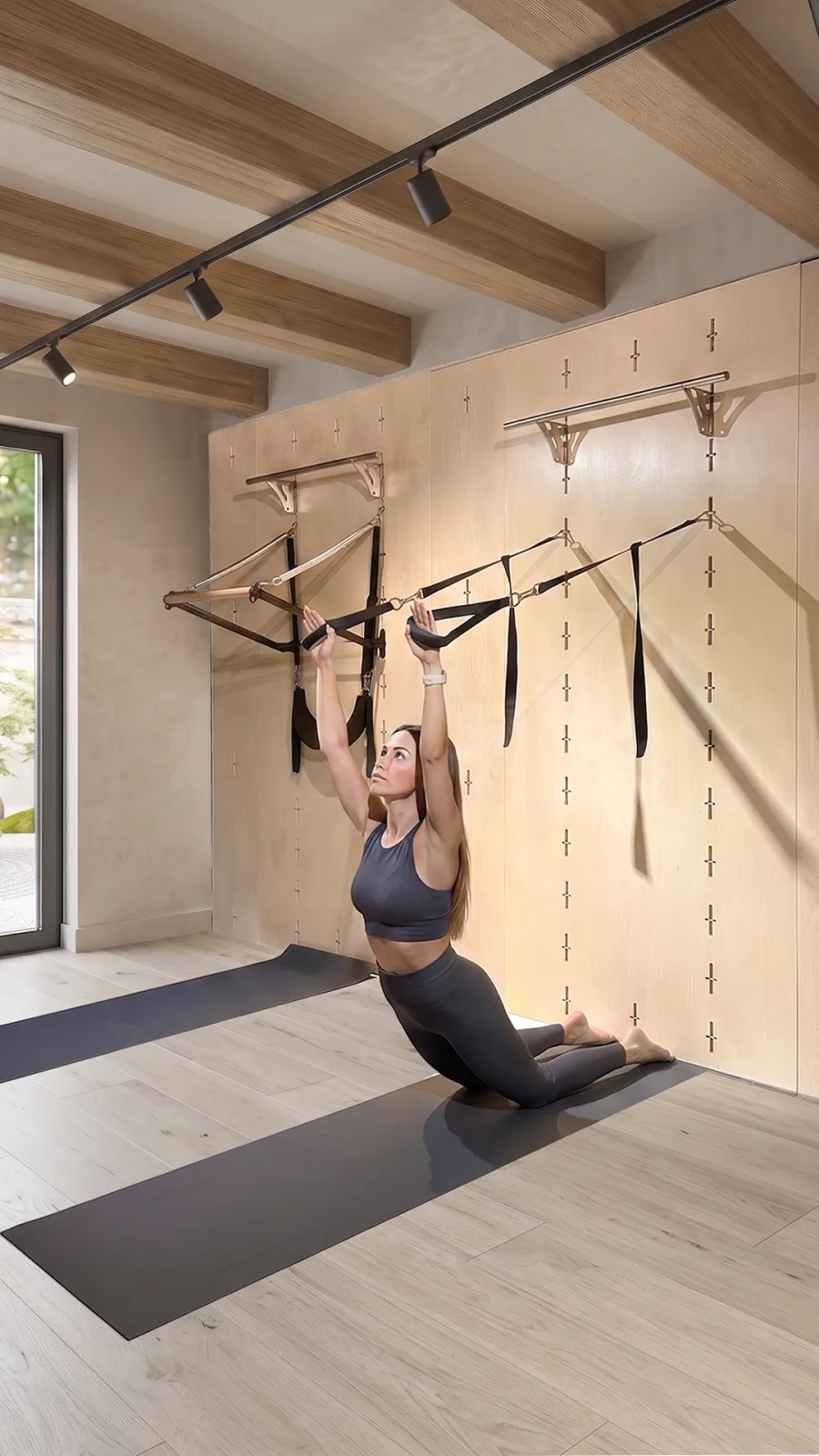
Chest Expansion - Bulgarian Split Squat
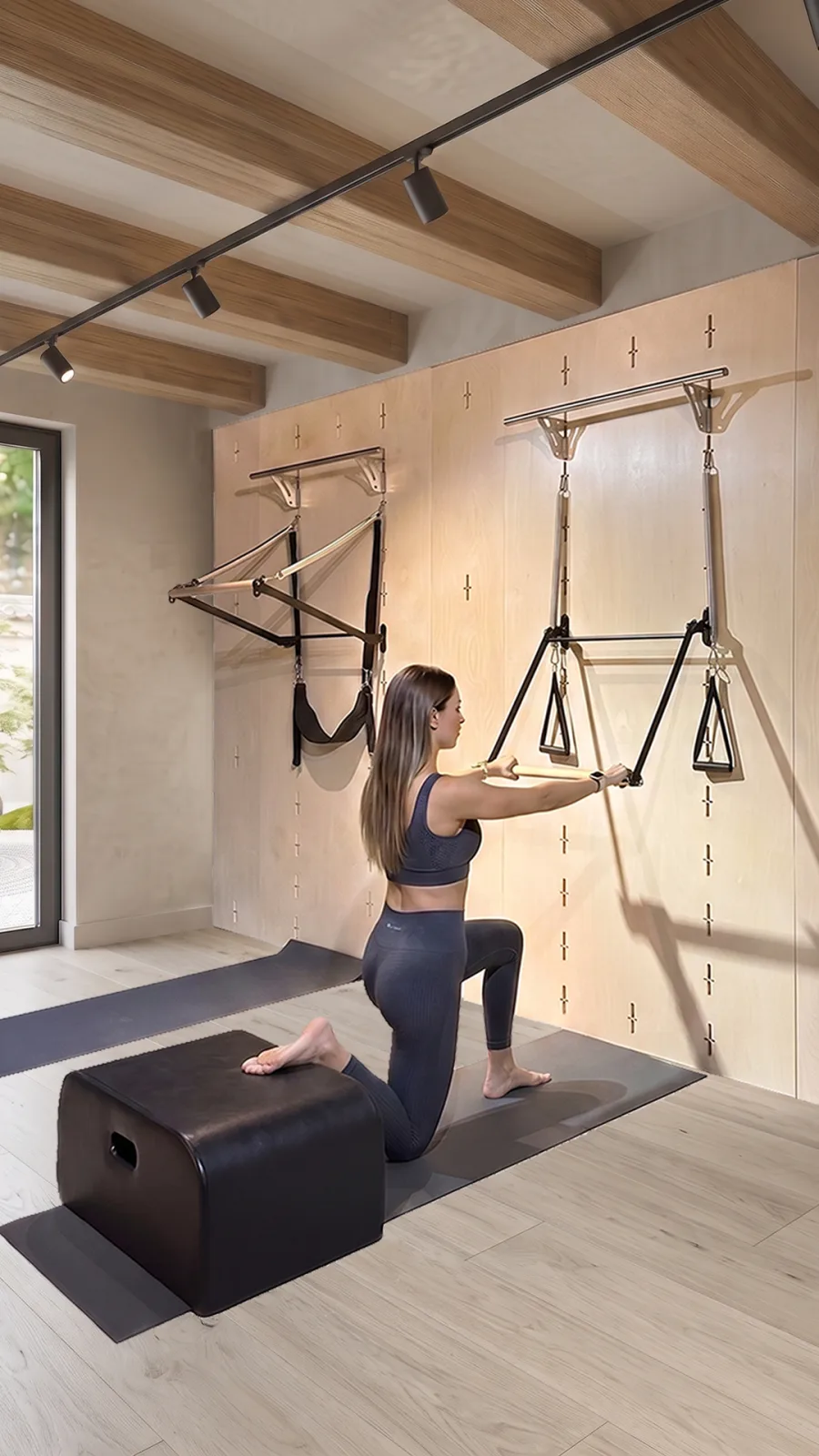
In Pilates: It is a more challenging variation (brought into a lunge position) of the "Chest Expansion" or "Kneeling Arm Springs" series performed on the Cadillac (Trapeze Table), achieved by adding a box for the lower body. At the same time, it shares the mechanics of the "Front Splits" on the Reformer, where the back leg rests against the shoulder blocks, or the lunge variations on the Wunda Chair. In General Fitness: Due to the elevation of the back leg, it incorporates the lower body dynamics of the famous "Bulgarian Split Squat," while combining it with an isometric "Straight-Arm Pulldown" or "Row" movement as the arms hold the bar.
Also known as
- In Pilates — Chest Expansion
- In General Fitness — Bulgarian Split Squat
Muscles worked
- This movement demands a deep stretch and balance in the lower half of the body while requiring the upper half to resist spring tension:
- Stretching Muscles (Back Leg) — The Iliopsoas (hip flexors) and Rectus Femoris (the part of the front thigh connecting to the hip) of the leg resting on the box undergo a very deep and active stretch due to the backward elevation of the leg.
- Active Stabilizers (Front Leg and Glutes) — The Quadriceps (front thigh) and Gluteus Maximus (glutes) of the front leg work isometrically (statically) to carry the body weight and maintain the body's balance in the asymmetrical stance.
- Back and Shoulder Muscles — The Latissimus Dorsi (lats), Rhomboids (muscles around the shoulder blades), and Posterior Deltoids (rear shoulders) actively contract to resist the springs' tendency to pull the bar forward and upward. This action opens the rib cage.
- Core Muscles — While the bar tries to pull the body forward, the Transversus Abdominis (deep abs) serves a key role in maintaining the upright position of the spine and preventing excessive arching of the lower back.
What it gives you
- Deep Hip Flexor Stretch — It very effectively opens up the front hip muscles (psoas), which become shortened and tight from sitting all day. Elevating the back leg with the box takes this stretch to a much more advanced level than versions that can be performed on the floor.
- Upper and Lower Body Integration — Most exercises isolate either the lower body or the upper body. This movement, however, combines planting the legs firmly on the ground and hip flexibility with the back's pulling force on the bar into a single bodily system (fascial chain training).
- Excellent Posture Training — Keeping the back muscles active against the spring resistance draws the shoulders back, while simultaneously opening the front of the hips brings the pelvis into proper alignment. It provides a dual-action correction against hunching and lower back pain issues.
- Asymmetrical Balance (Lumbo-Pelvic Control) — Trying to keep the pelvis facing straight ahead (squared) without tilting it to the right or left in this unstable lunge position significantly increases functional core strength.
Why it is rated Easy
A double-arm bar pull in a stable kneeling position.