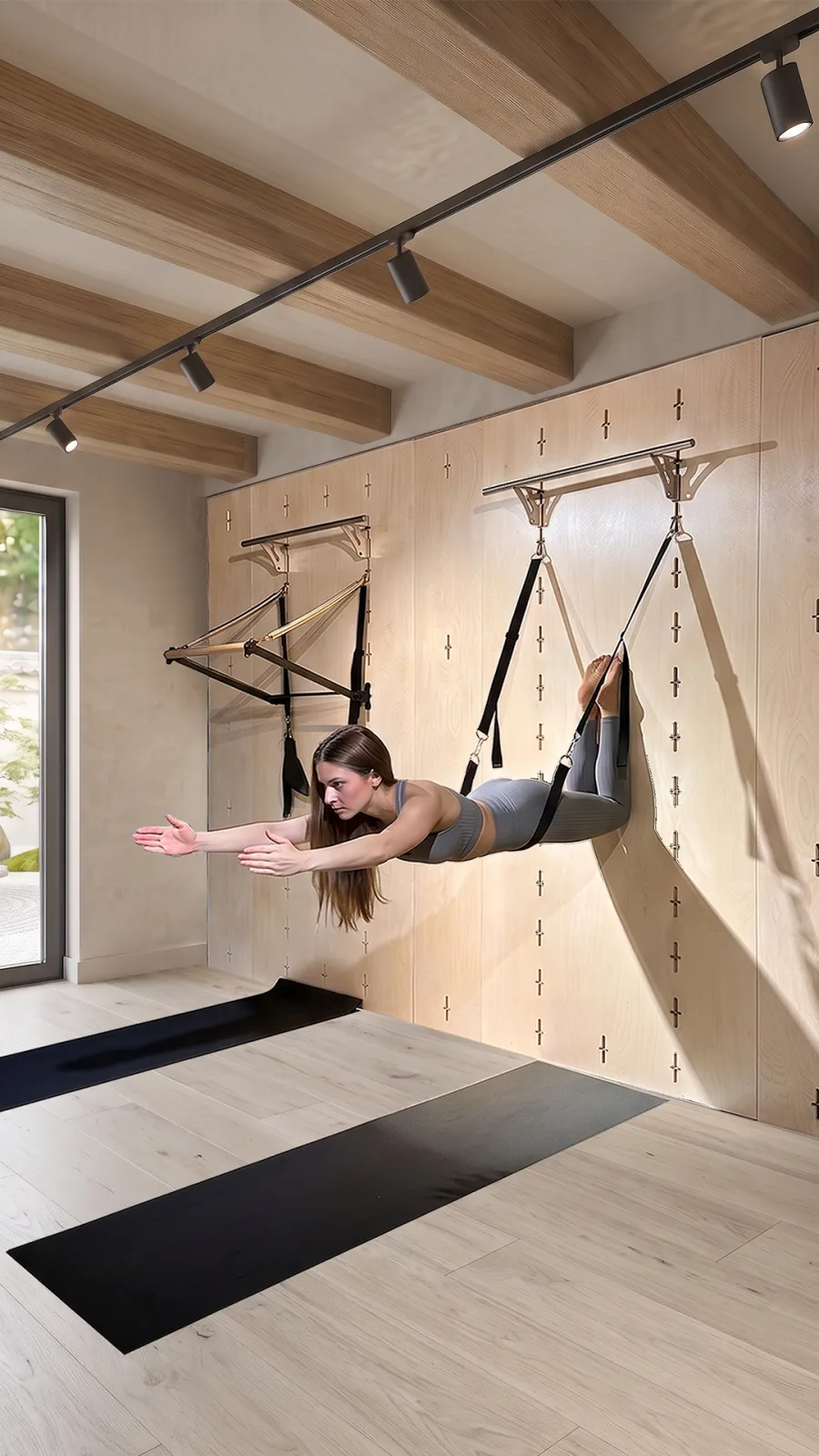
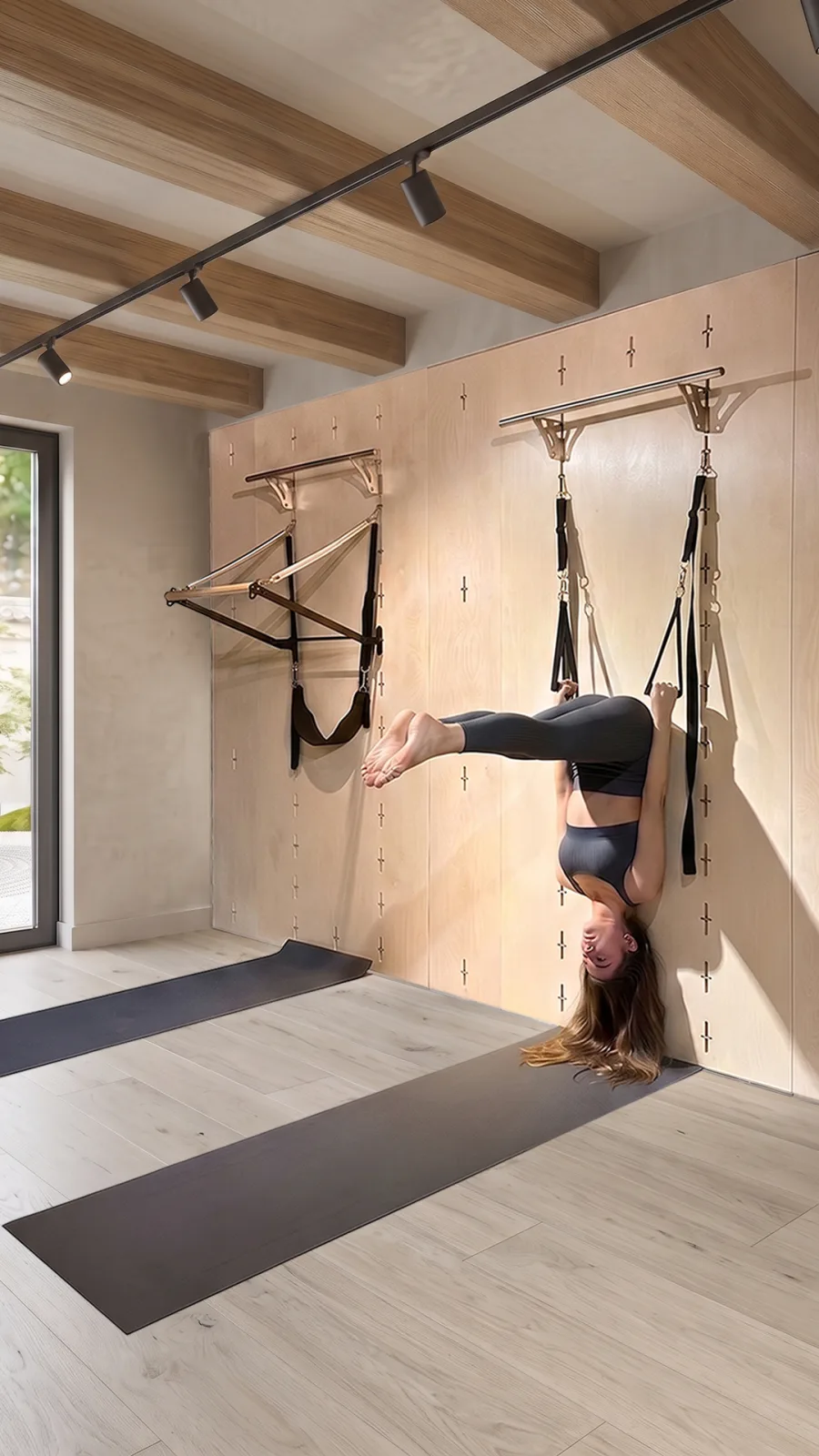
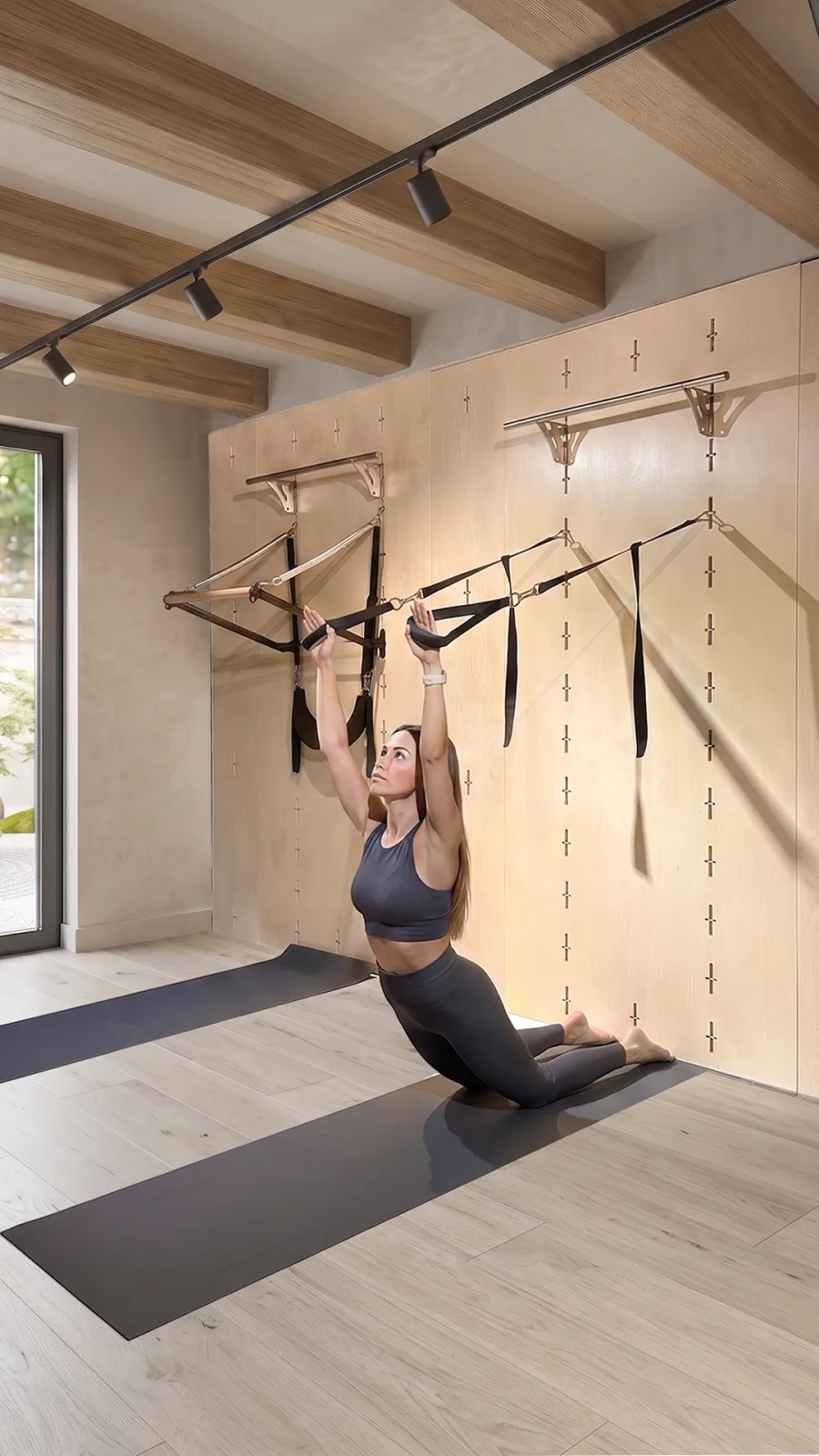
Bridge Pose - Shoulder Bridge
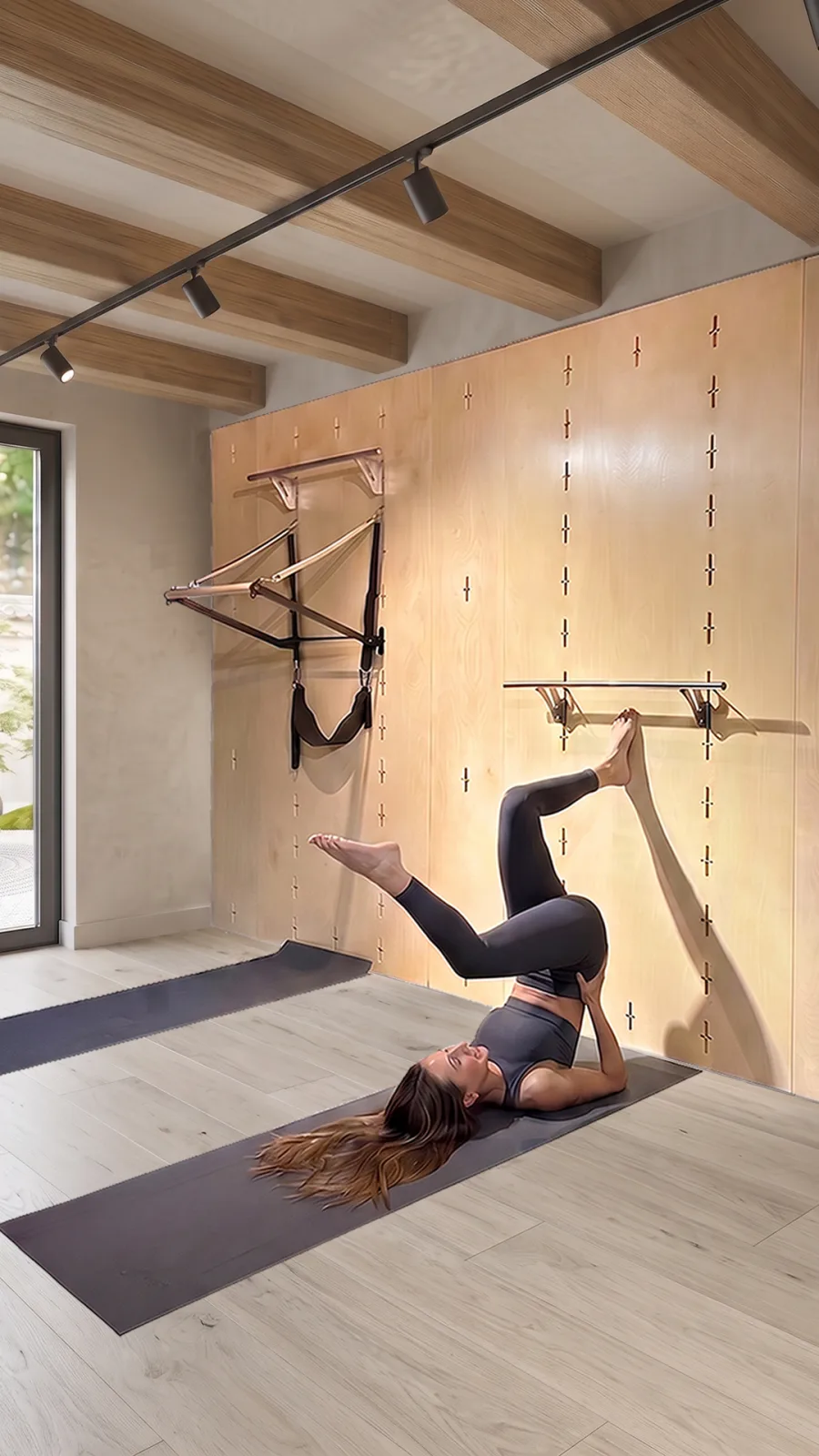
In Yoga: It is a hybrid version of the Setu Bandhasana (Bridge Pose) and Salamba Sarvangasana (Supported Shoulderstand) poses performed using a wall. Additionally, it can be considered a variation of the wall-supported Eka Pada Setu Bandhasana (One-Legged Bridge Pose) practice that deepens the hip angle. In Pilates: It is very similar to the "Bicycle" or "Scissors" series performed in the "Shoulder Bridge" position on the mat. It is the equivalent of the "Bottoms Up" on the Reformer or the asymmetrical bridge movements performed by pushing the pedal with one leg on the Wunda Chair, adapted here with gravity and wall resistance.
Also known as
- In Yoga — Bridge Pose
- In Pilates — Shoulder Bridge
Muscles worked
- This movement requires an asymmetrical (unilateral) pushing force in the lower body while demanding balance and stabilization in the core region:
- Gluteus Maximus (Glutes) and Hamstrings — Pushing against the wall with the foot to keep the hips in the air engages the posterior chain muscles of that leg at a maximum level (concentrically and isometrically).
- Core Muscles — While the pelvis is under an asymmetrical load (one leg pushing, the other in the air), the Transversus Abdominis (deep abs) and Obliques (side abs) work as very intense stabilizers to prevent it from tilting to the right or left.
- Iliopsoas and Quadriceps (Hip Flexors and Front Thighs) — The hip flexors and front upper thigh muscles are engaged to hold the bent, suspended leg (not touching the wall) stable at that angle.
- Shoulders and Triceps (Back of the Arms) — The shoulder girdle and triceps muscles push strongly against the floor to carry the weight of the upper body, lighten the load on the neck, and provide support to the pelvis with the hands.
What it gives you
- Asymmetrical Strength Development — Pushing with only one leg exposes strength imbalances between the right and left legs and helps correct these weaknesses by isolating them.
- Lumbo-Pelvic Stabilization — Although the hips are supported by the hands, the abdominal muscles take on the primary stabilizing function. This teaches the body how to keep the pelvis and lower back safe (stabilization) while on a single leg in daily life (for example, when climbing stairs).
- Safe Inversion and Circulation (Venous Return) — This semi-inverted state, where the hips are higher than the heart, facilitates the return of lymphatic fluid and deoxygenated blood accumulated in the legs back to the heart, relieving the circulatory system.
- Shoulder Bridge that Reduces Neck Pressure — Unlike a full shoulderstand (Sarvangasana), the weight is distributed across the shoulders, arms, and the hips supported by the hands; thus, the neck (cervical spine) is protected from unnecessary compression.
Why it is rated Intermediate
A strap-supported mid-air scissor kick in a supine position; active lower core engagement.