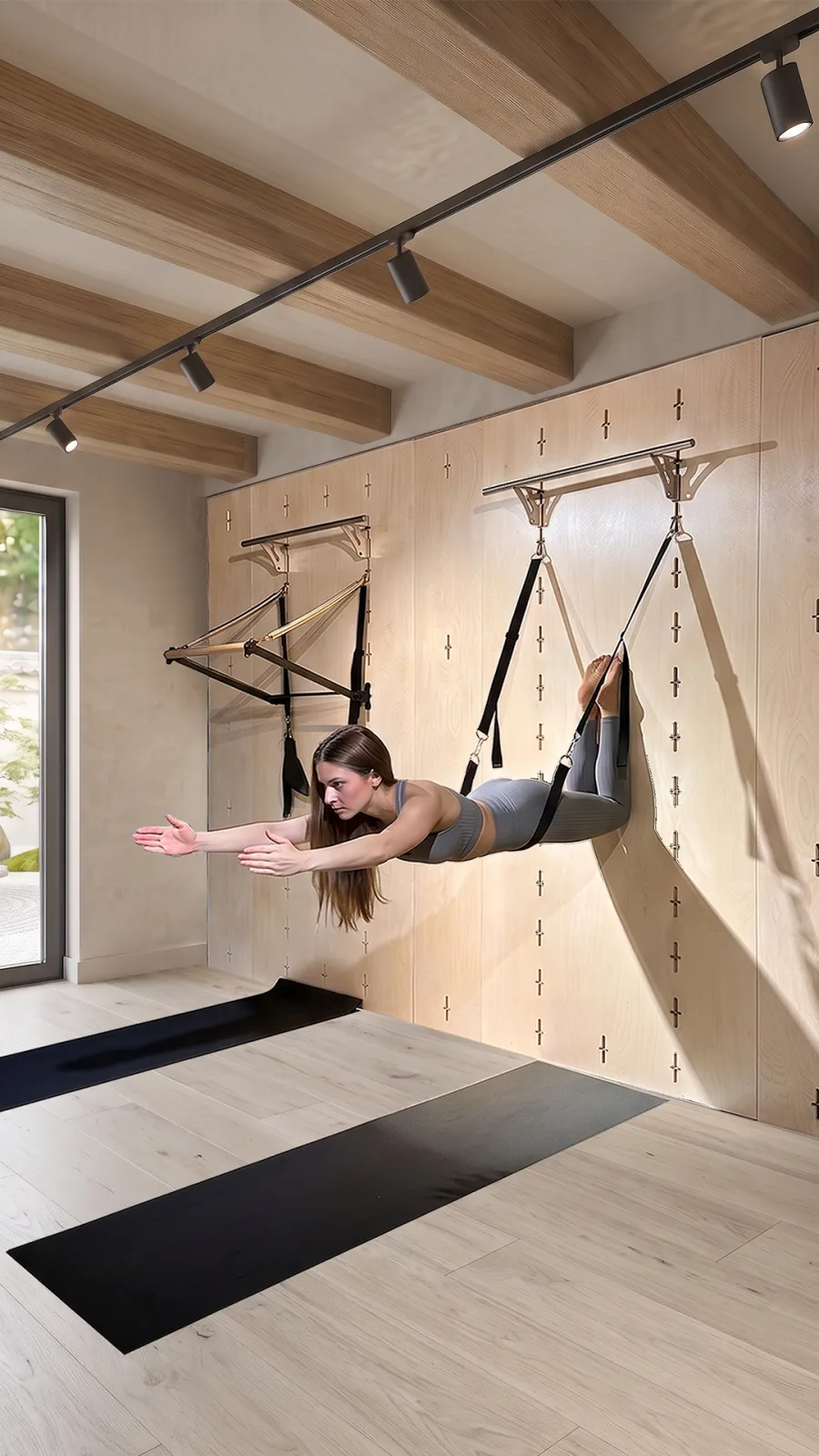
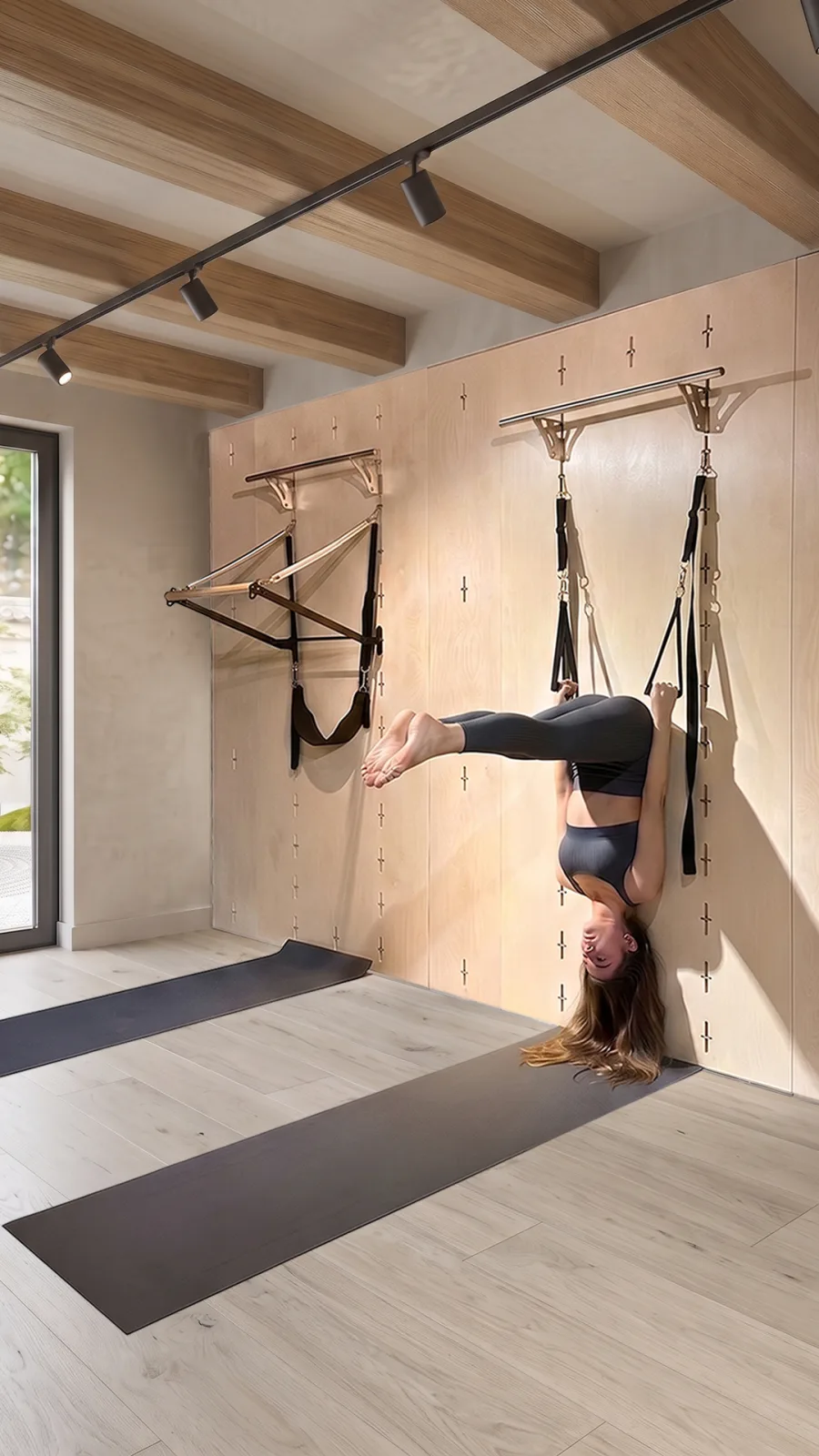
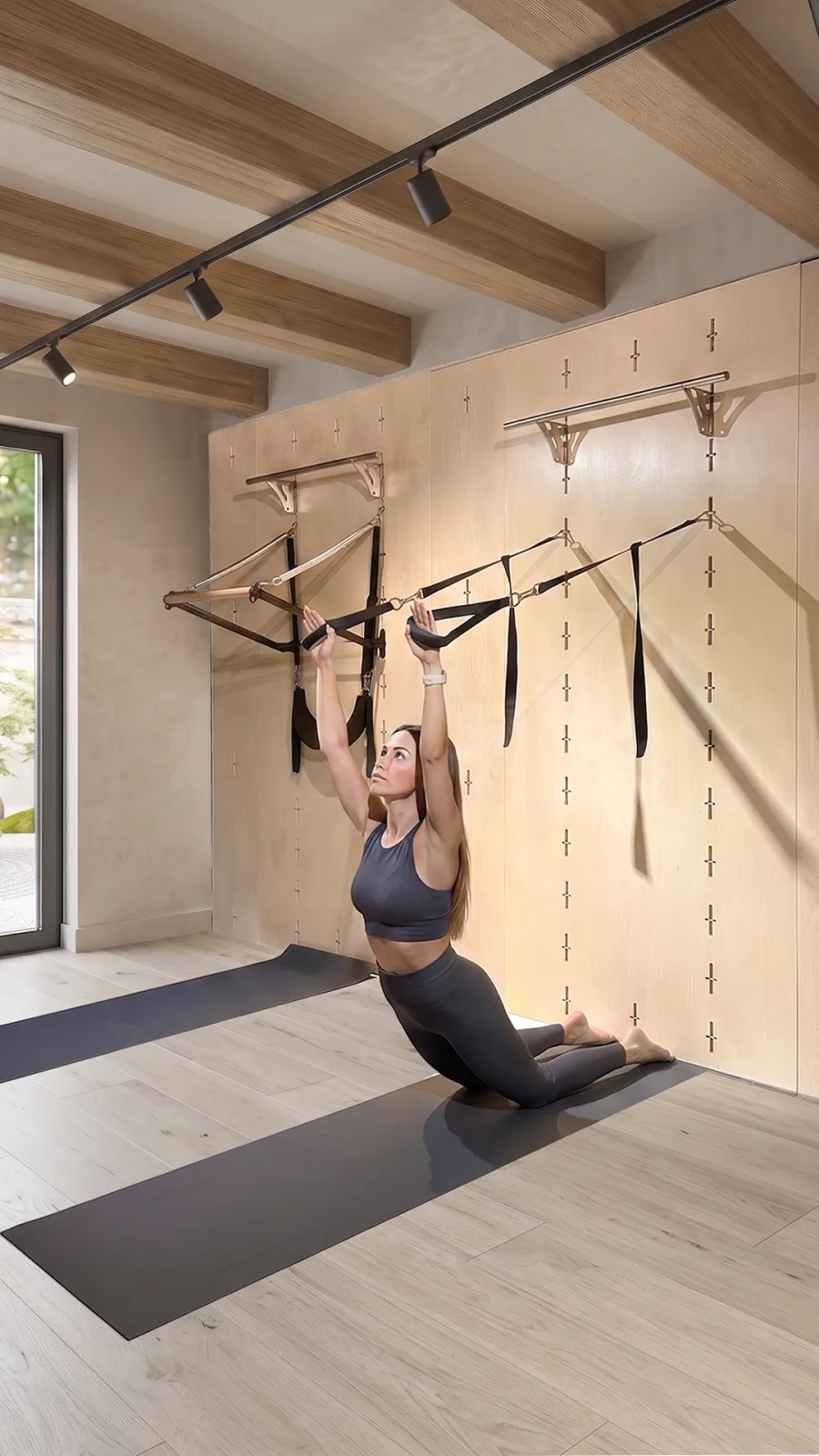
Urdhva Dhanurasana - Hanging Backbend
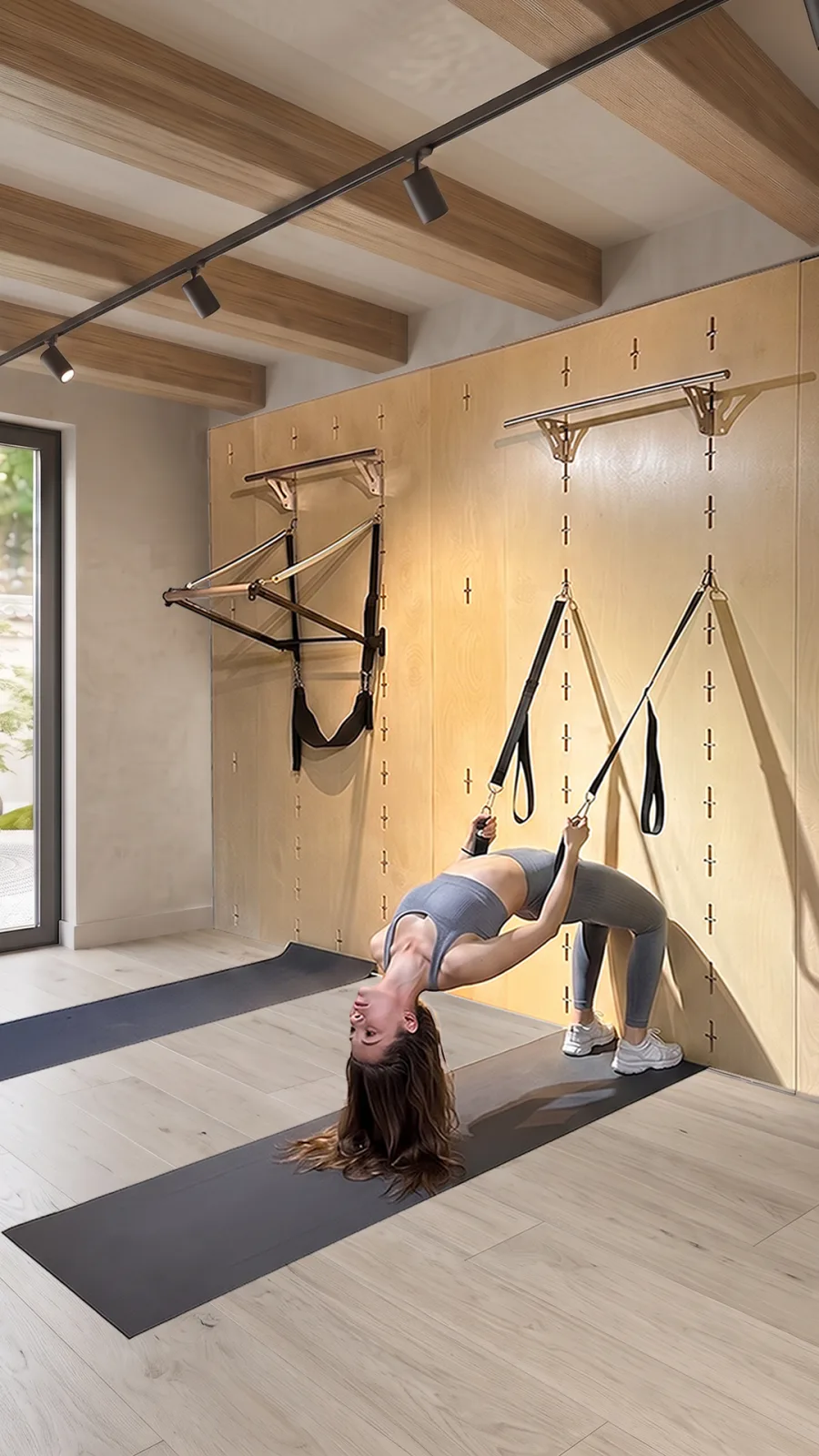
In Yoga: Fundamentally, it is an assisted version of the Urdhva Dhanurasana (Wheel/Full Bridge Pose) and Setu Bandhasana (Half Bridge Pose). Compared to the bridge pose performed on the floor bearing full weight on the wrists and shoulders, the straps allow gravity to pull the upper body down while the hips are pushed up. In Pilates: It is mechanically and in terms of spinal angle quite similar to the "Hanging Backbend" performed on the Cadillac (Trapeze Table) or the advanced "Semi-Circle" and bridging series on the Reformer.
Muscles worked
- This movement actively engages the posterior chain while stretching the anterior chain of the body:
- Gluteus Maximus (Glutes) and Hamstrings — These are the most actively engaged muscle groups to keep the hips in the air and push them upward (hip extension) by pressing the soles of the feet into the ground.
- Erector Spinae (Spinal Erectors) — The back and lower back muscles work isometrically to safely hold the spine in a backward-bending (extended) position.
- Back and Arm Muscles (Latissimus Dorsi, Biceps, Deltoids) — They are actively engaged to control the descent of the upper body and maintain balance by holding onto the straps.
- Stretching and Lengthening Muscles — Rather than contracting, the muscles subjected to maximum stretching in this position are the Pectoralis Major/Minor (chest muscles), Rectus Abdominis (abdominal muscles), and Iliopsoas (hip flexors).
What it gives you
- Deep Chest and Shoulder Opening — The support provided by the straps allows the shoulder joints and rib cage to open up much more than in a standard bridge performed on the floor. It is an excellent antidote to the tendency of "hunching" (kyphosis) brought on by desk work.
- Eliminating Wrist and Shoulder Pressure — The high stress placed on the wrists and shoulders in the traditional full bridge (Urdhva Dhanurasana) is absent in this assisted variation. It allows individuals with wrist sensitivity or limited shoulder mobility to experience a deep backbend.
- Neck and Upper Spine Decompression — Allowing the head and neck to hang freely downward with gravity relieves pressure between the cervical (neck) vertebrae and provides relaxation.
- Hip and Hamstring Strength — While the upper body stretches, the continuous work of the lower body to keep the hips in the air increases the strength and endurance of the glute and hamstring muscles.
Why it is rated Intermediate
A reverse bridge/tabletop pose requiring glute and hamstring strength, along with shoulder mobility.