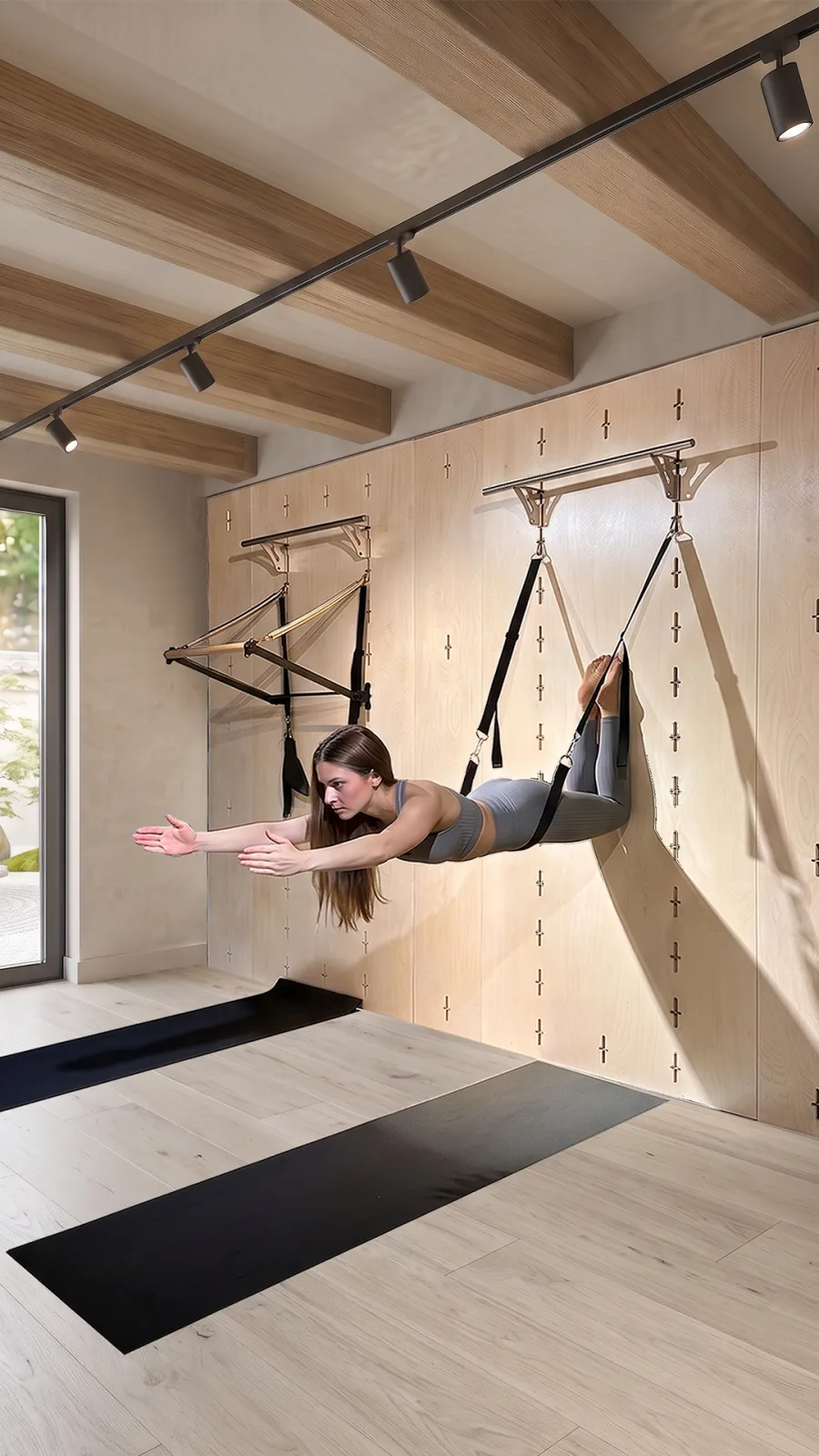
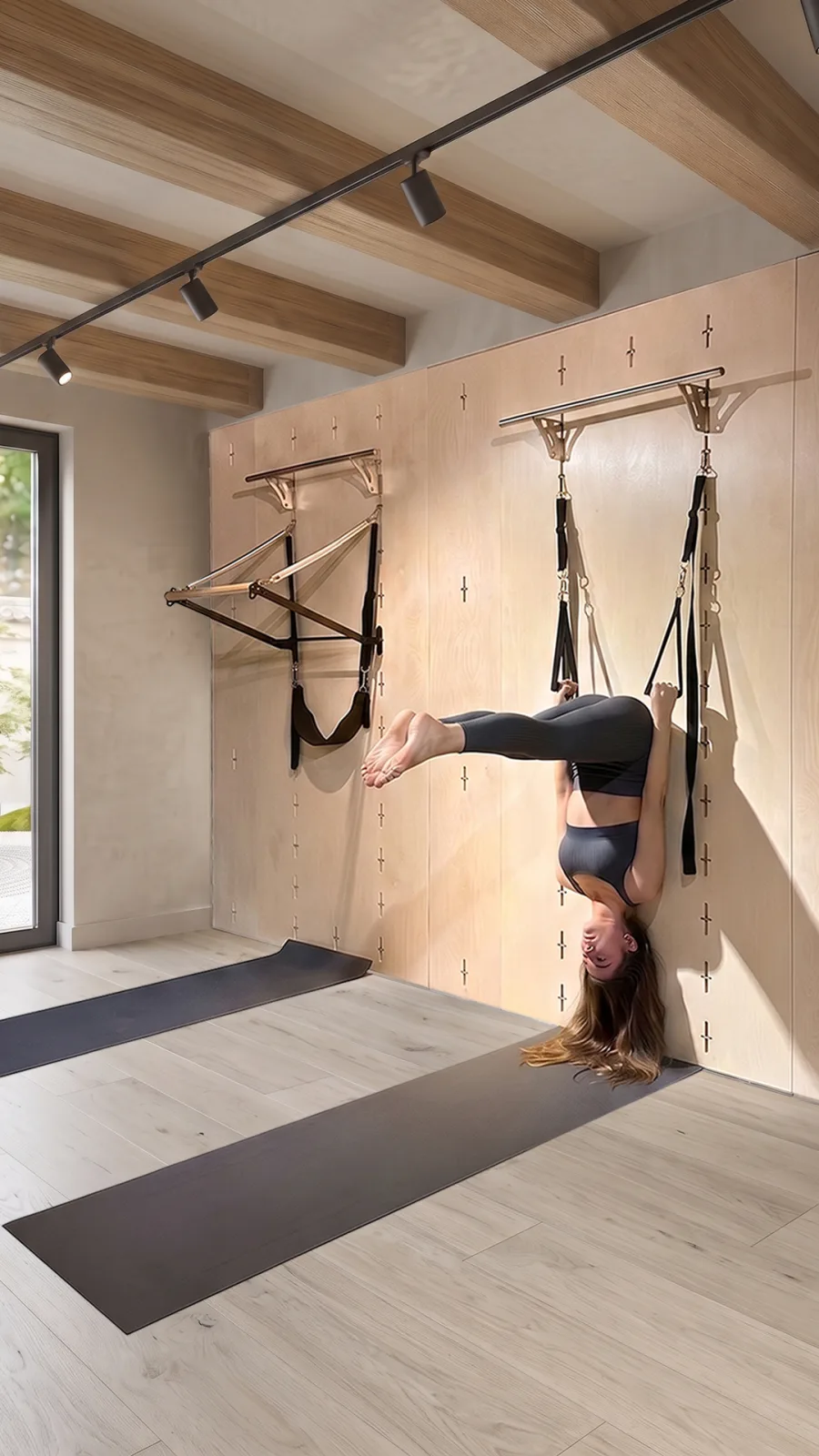
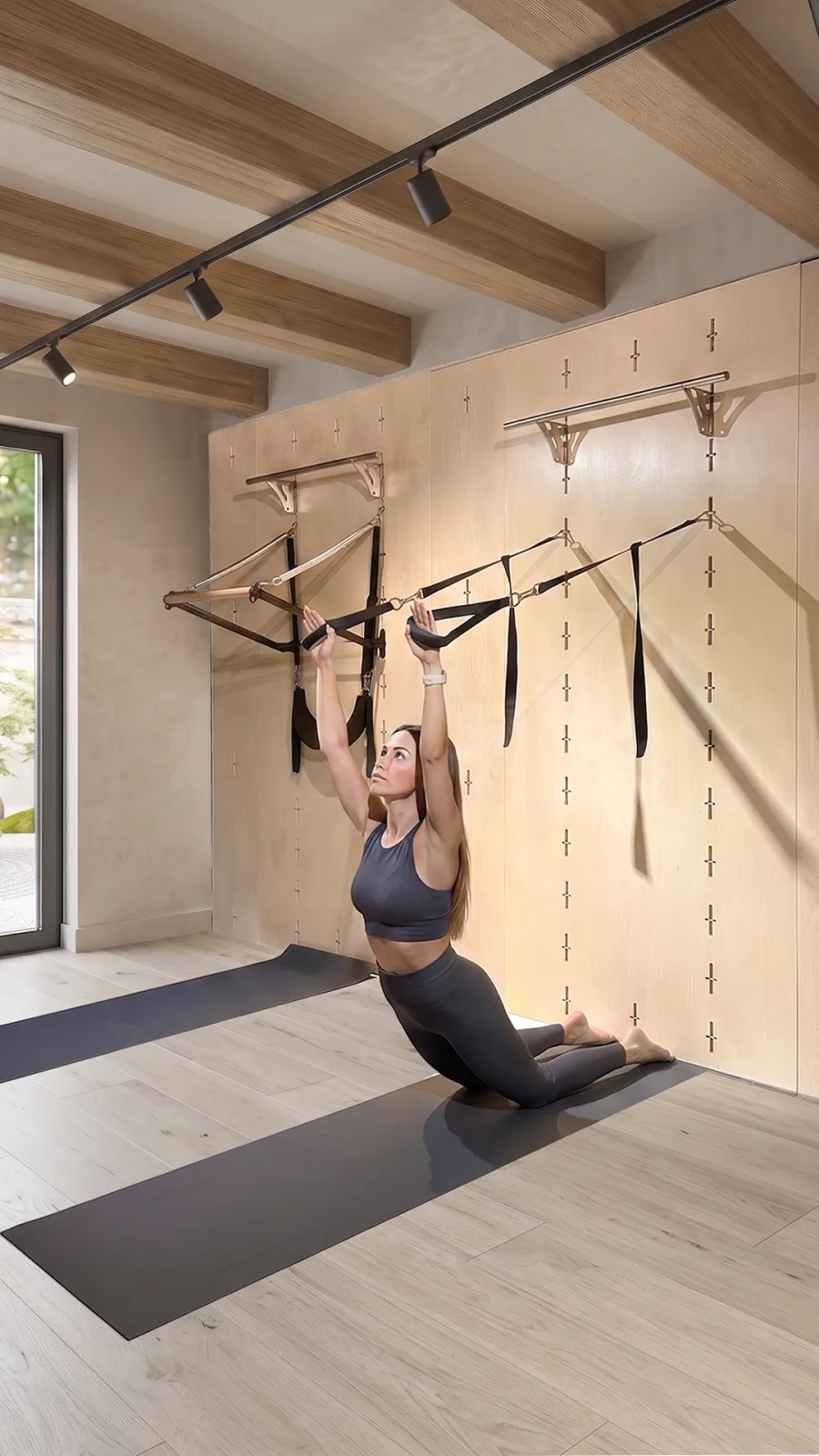
Standing Chest Press - Virabhadrasana III
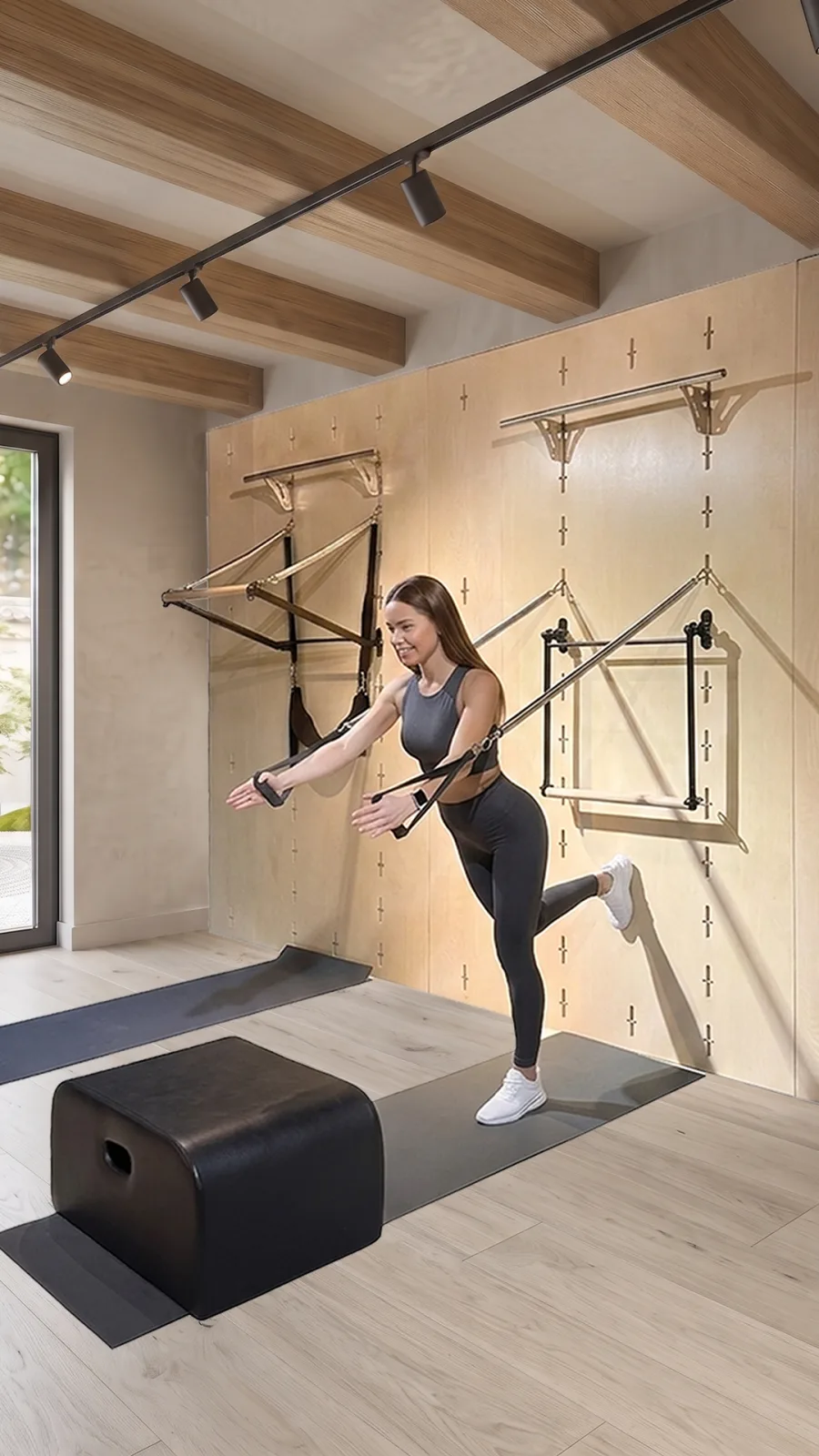
In Pilates: It exactly resembles the "Standing Chest Press" movement performed facing away from the wall on the Cadillac (Trapeze Table) or Springboard. However, resting the back leg against the wall and hinging the torso forward on a single leg (hip hinge) makes this movement just as complicated as the asymmetrical "Standing Lunge" on the Reformer or Wunda Chair balance series. In Yoga: In terms of the lower body's position, the forward alignment of the torso, and the element of balancing on one leg, it is very similar to the Virabhadrasana III (Warrior III) pose. While in yoga the arms are extended forward without support, here there is the action of pushing against the resistance of the springs. The bent back knee also resembles the foundation of Natarajasana (Dancer Pose) preparatory poses.
Muscles worked
- This movement practically divides the body in two; while the upper body performs a dynamic push, the lower body and core region try to keep the body as still as a statue:
- Chest and Arm Muscles (Pushing Force) — To push the springs forward and hold them at torso level, the Pectoralis Major/Minor (chest) and Anterior Deltoid (front shoulder) muscles, along with the Triceps (back of the arm) to lock the elbows, work actively (concentrically and isometrically).
- Core Muscles — This is the most challenging part of the exercise. While the springs want to pull the body backward toward the wall, the Rectus Abdominis (abdominal muscles) and Transversus Abdominis (deep abs) contract extremely hard to prevent the torso from bending backward (anti-extension).
- Grounded Leg (Active Stabilizers) — While the Gluteus Medius (side hip) muscle of the weight-bearing leg prevents the pelvis from tilting, the Quadriceps (front thigh), Hamstrings (back of the thigh), and small stabilizing muscles around the ankle anchor the body to the ground.
- Leg on the Wall — The Gluteus Maximus (glute) muscle of that leg is active to create a closed kinetic chain by pressing the foot against the wall, providing pushing support for the body.
What it gives you
- Full-Body Integration — Most exercises work the lower and upper body separately. This movement, however, requires generating power from the arms while standing and transferring this power to the legs through the torso (core). It is a perfect simulation of real-life pushing actions (such as pushing a heavy object or a heavy door).
- Asymmetrical Balance and Coordination — Working on a single leg exposes strength imbalances between the right and left sides of the body. It extraordinarily improves the proprioception (spatial awareness) capabilities of the grounded ankle and knee.
- Functional Core Strength — Unlike crunch-type exercises performed merely lying on a mat, this position teaches the abdominal muscles "how to protect the spine while standing and in motion."
- Posture Control — It improves upper back and neck mechanics by training the body to prevent the shoulders from rising toward the ears (trapezius tension) during the pushing action.
Why it is rated Intermediate
Single-leg balance (Warrior 3 variation) with active back/pull activation.