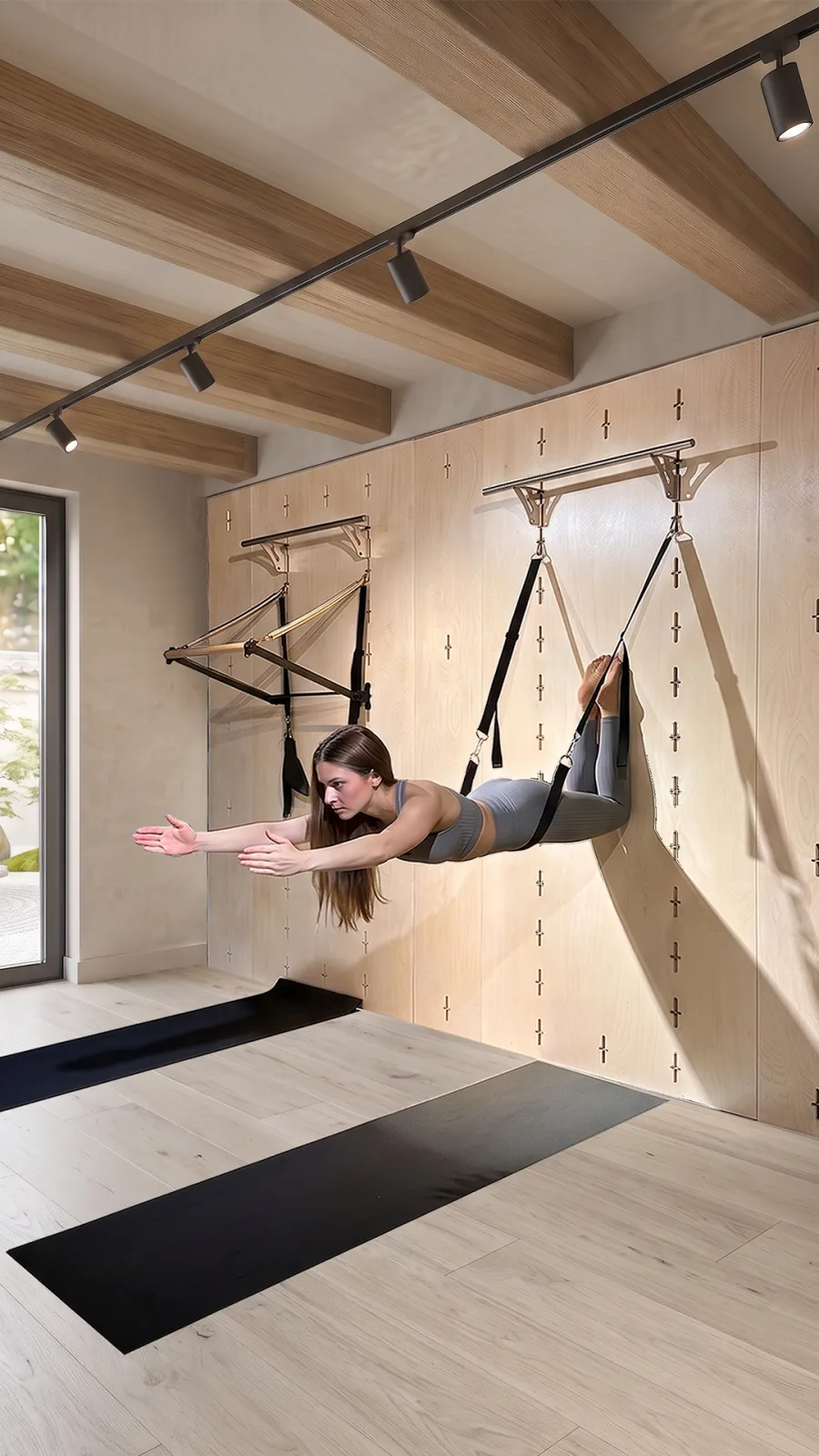
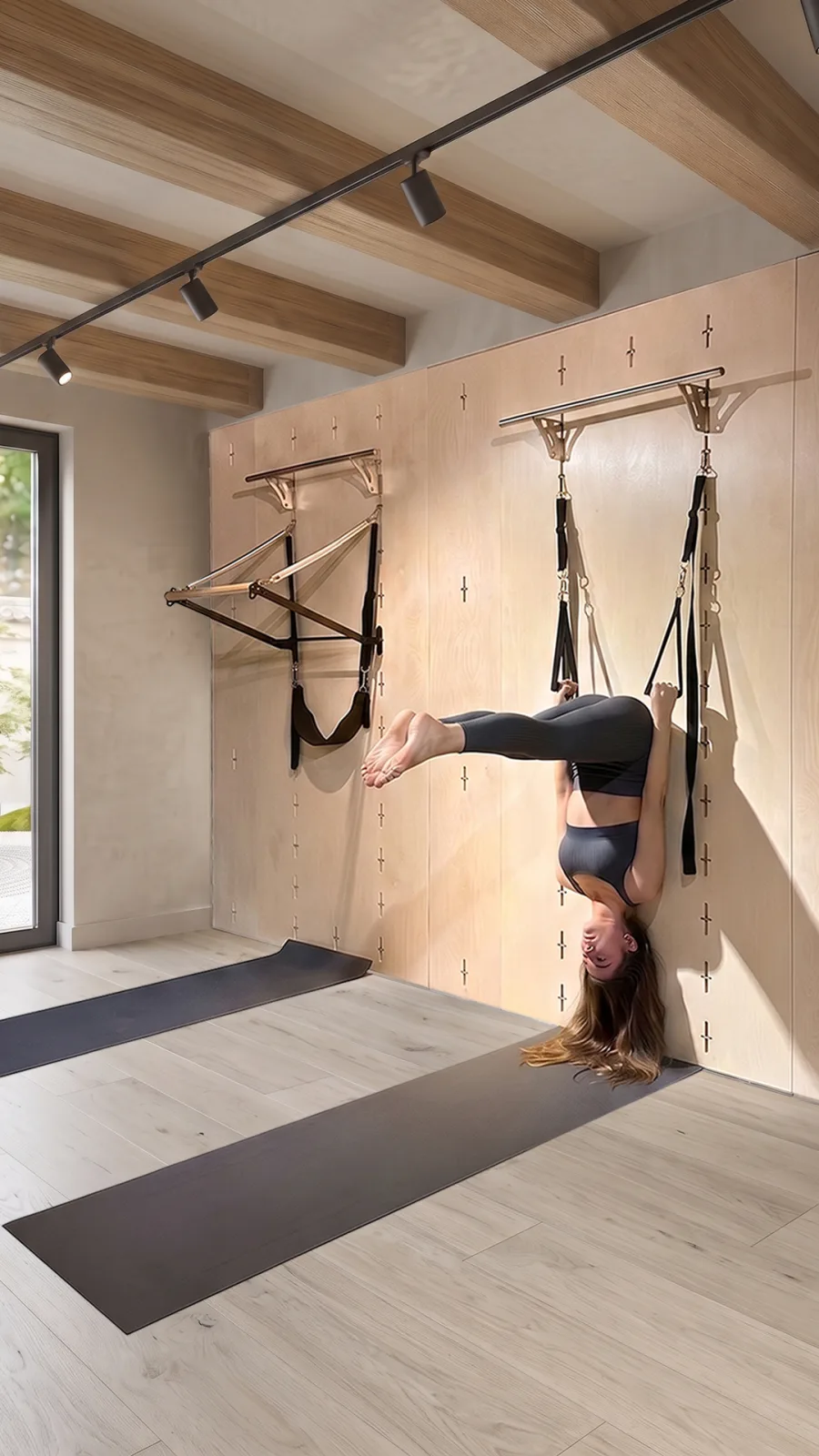
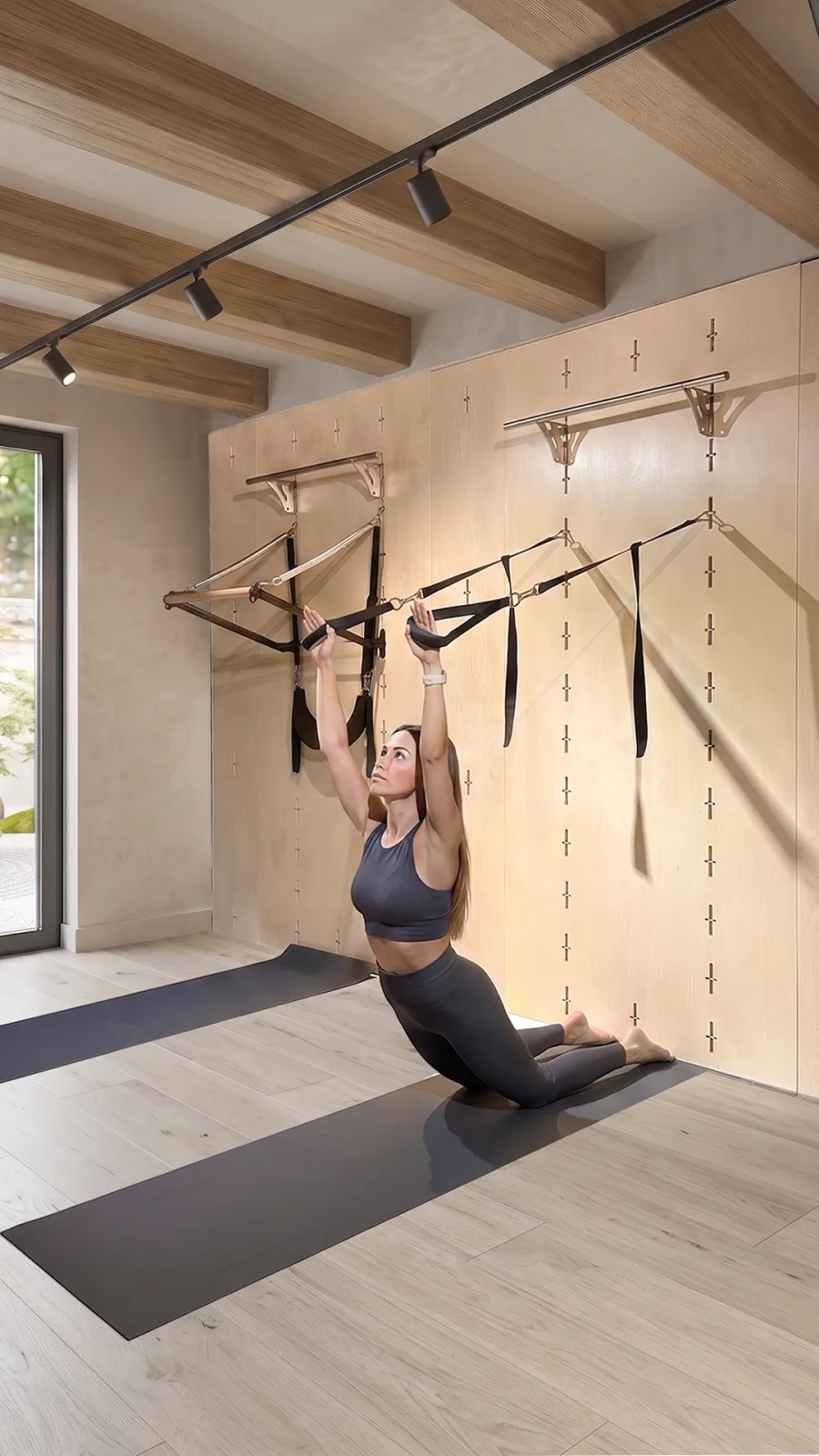
Standing Arm Springs - Tadasana (Mountain Pose)
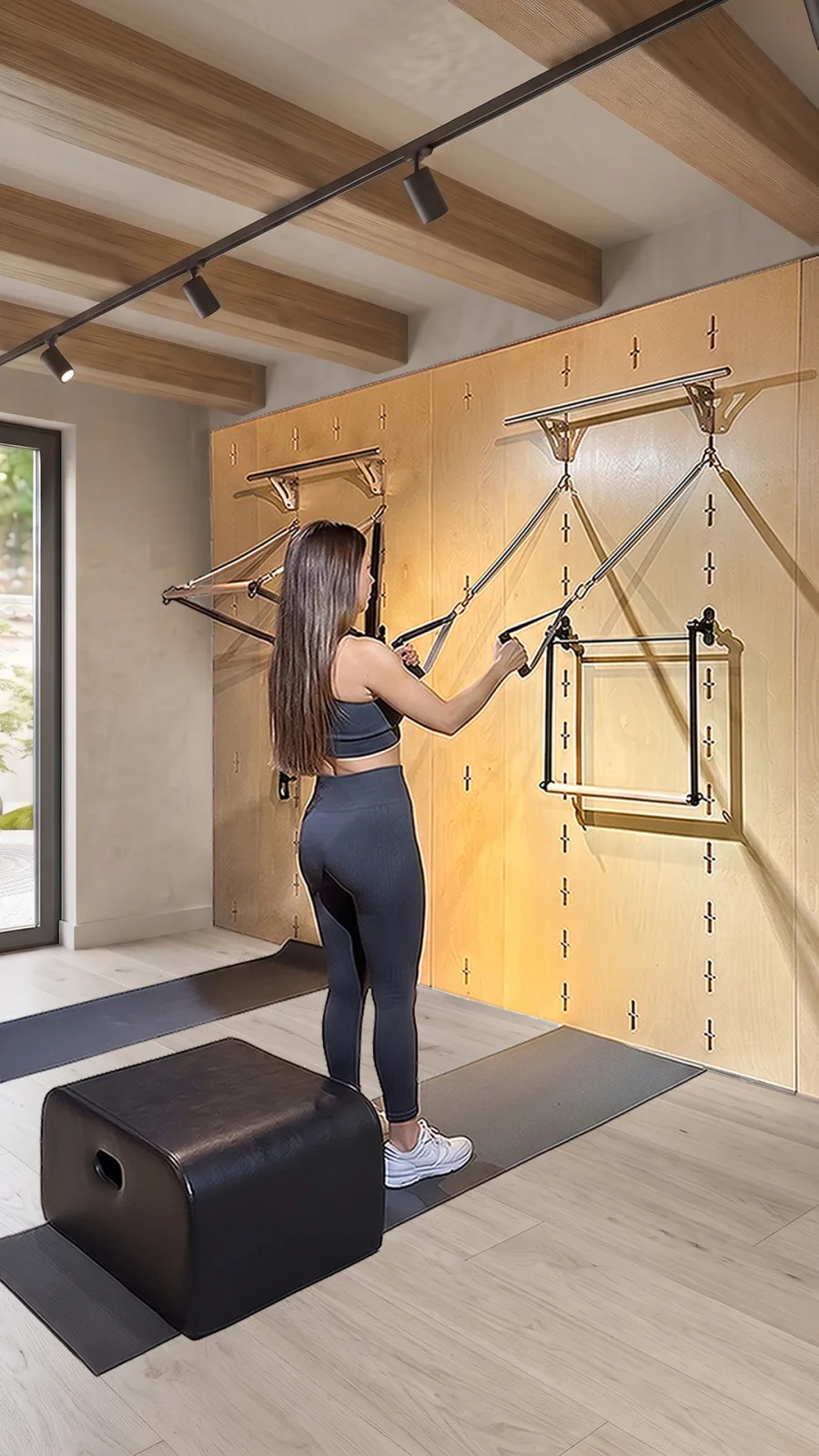
In Pilates: This movement is a fundamental part of the Pilates repertoire. It exactly resembles the "Standing Row" exercise in the "Standing Arm Springs" series performed on the Cadillac (Trapeze Table) or Springboard. Depending on the resistance level and the angle of the arm, it also incorporates the mechanics of the "Chest Expansion" movement. In Yoga: Since there is no external pull resistance in yoga, it does not have a direct equivalent. However, the alignment of the lower body and the spine requires a perfect Tadasana (Mountain Pose). The mechanics of the upper body, based on the principle of opening the chest and drawing the shoulder blades together, are similar to the back activation found in heart-opening poses like Bhujangasana (Cobra Pose).
Muscles worked
- This exercise requires the cooperation of a moving upper body with a lower body and core region that try to keep it stable:
- Back and Scapular (Shoulder Blade) Muscles — While pulling the springs toward oneself, the Latissimus Dorsi (lats), Rhomboids (muscles that draw the shoulder blades together), and Trapezius (middle and lower sections) work very intensely as the primary source of power.
- Shoulder and Arm Muscles — The Posterior Deltoids (rear shoulders) and, because it bends the elbows, the Biceps Brachii act as secondary pulling muscles.
- Core Muscles — They are the unsung heroes of the exercise. As the springs try to pull the body toward the wall, the Transversus Abdominis (deep abs) and spinal erector muscles contract isometrically (statically) to prevent the person from leaning forward and the lower back from arching.
- Lower Body Stabilizers — To stand upright and grip the ground firmly, the Gluteus Maximus (glutes) and Quadriceps (front thighs) anchor the body to the floor like an anchor.
What it gives you
- Excellent Posture Corrector — It is one of the most effective movements against the problems of "rounded shoulders" and "hunching" (kyphosis) that develop in desk workers or due to phone/computer use. While strengthening the weakened back muscles, it allows the shortened chest muscles to open up.
- Functional Standing Stabilization — Many back exercises are performed seated or lying down. This standing version develops the ability to "generate power without losing balance while standing" (functional strength), which a person needs in daily life (for example, when pulling a heavy door).
- Scapular (Shoulder Blade) Control — For the shoulder joint to remain healthy, the shoulder blades must move correctly. This movement improves shoulder girdle mechanics and reduces neck pain by teaching how to draw the shoulders back without shrugging them upward (toward the ears).
- Full-Body Integration — It requires not only the arms and back but the entire body, from the soles of the feet to the crown of the head, to work in harmony (with fascial integrity).
Why it is rated Easy
A standing bar-supported lean back and transition into a slight squat.