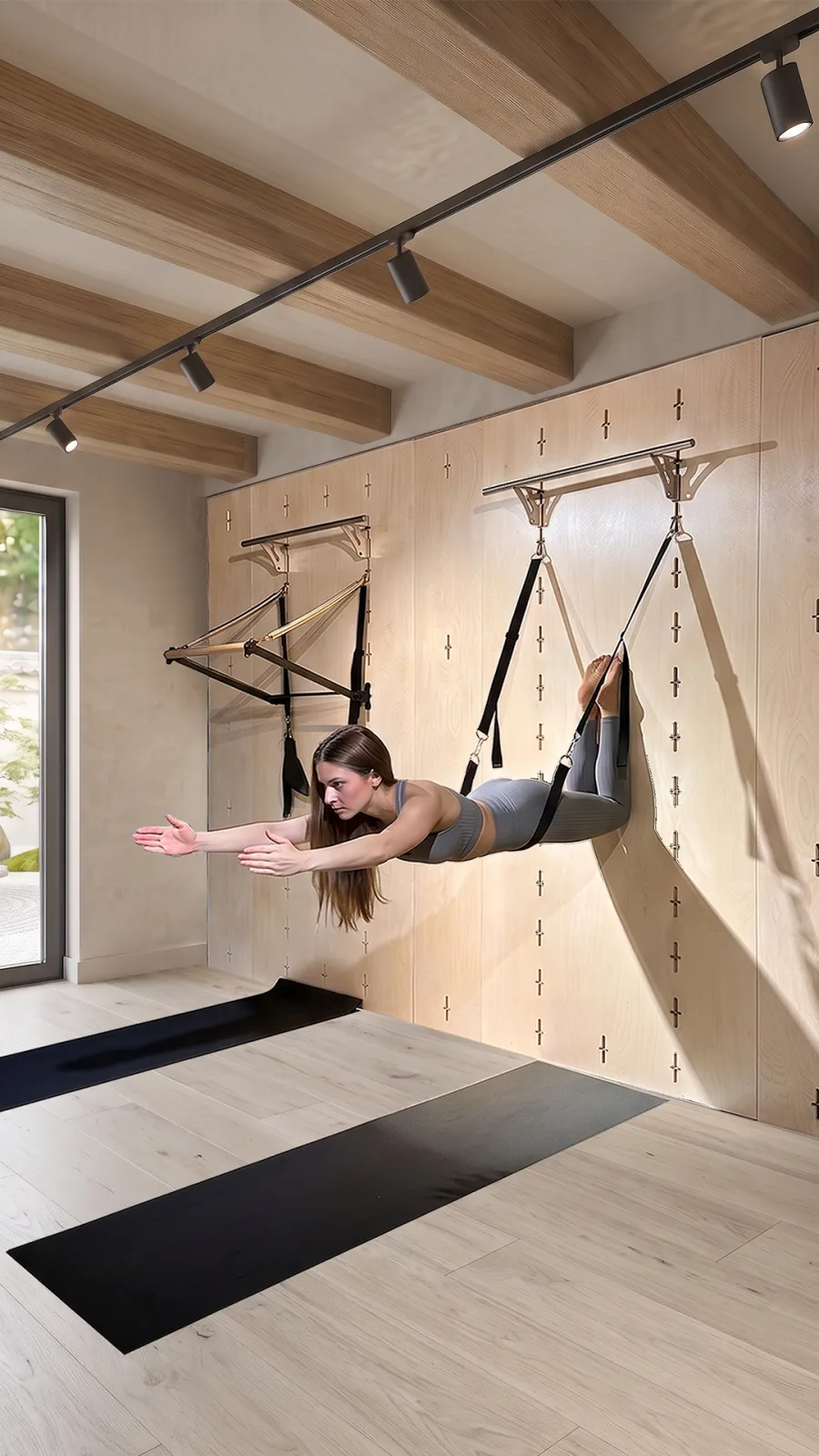
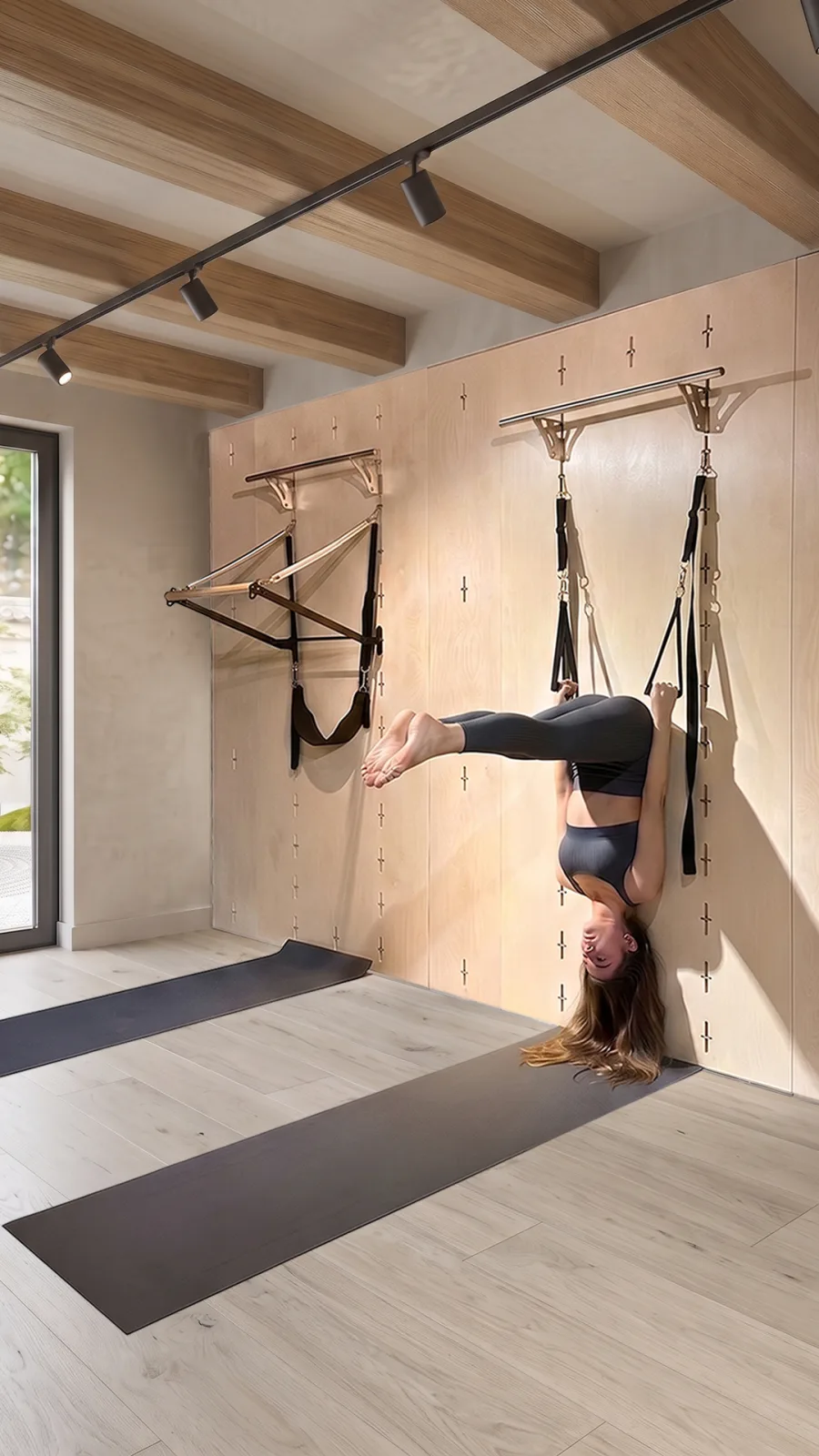
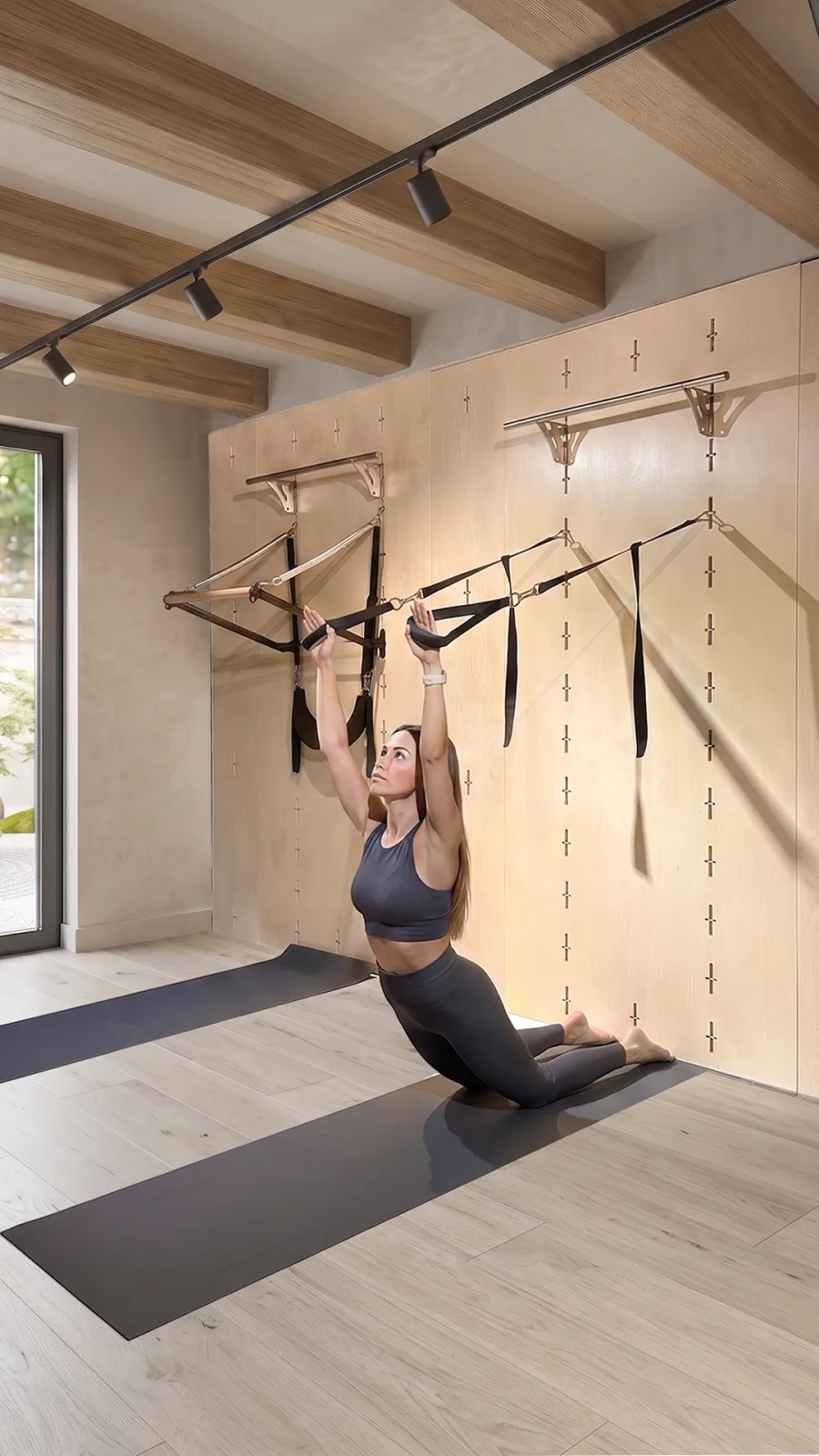
Kneeling Arm Springs - Anjaneyasana
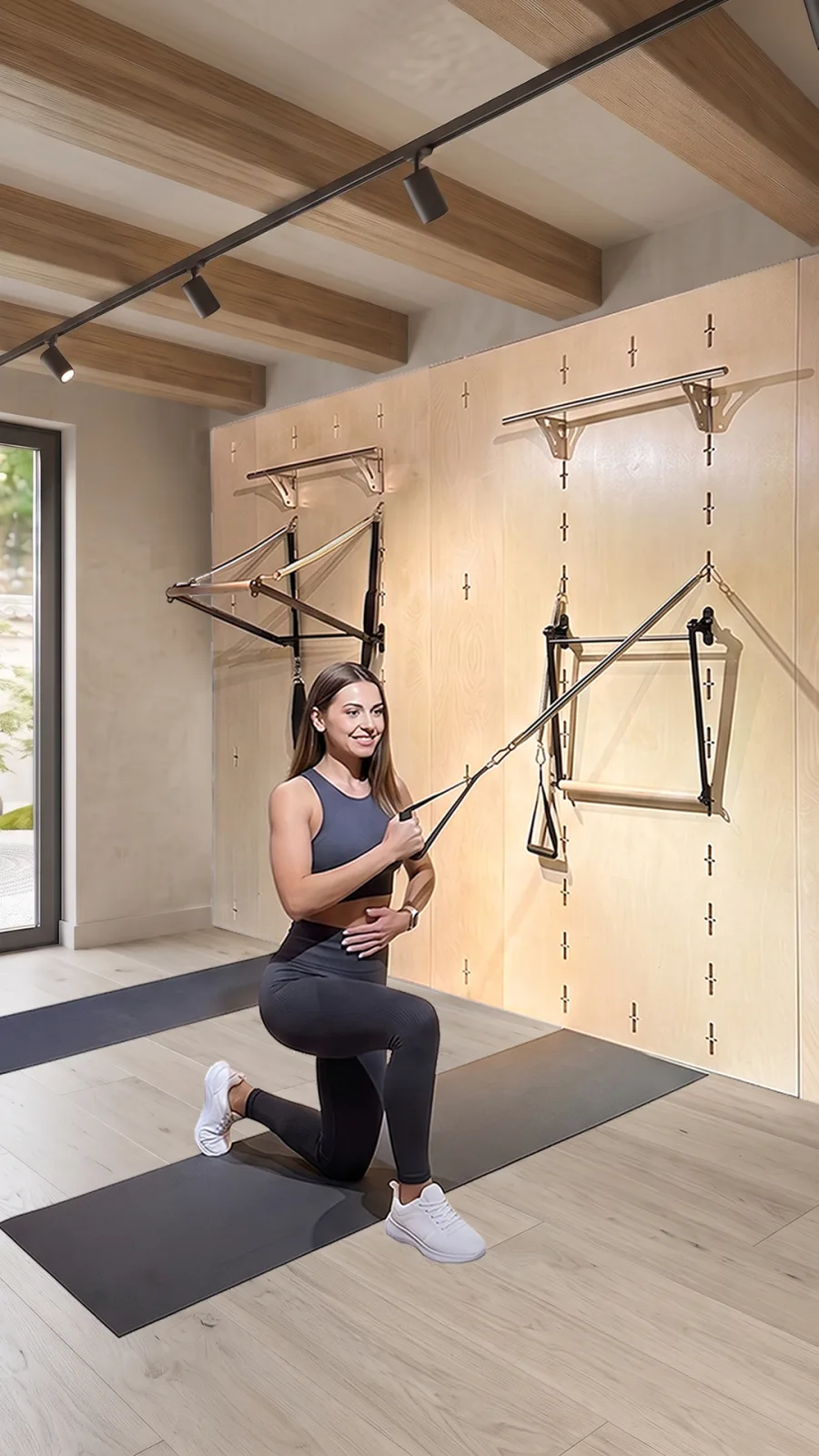
In Pilates: It exactly resembles the "Kneeling Arm Springs" series performed on the Cadillac (Trapeze Table) or Springboard, specifically the single-arm row and torso stabilization exercises. Since it involves resisting the tension that tries to rotate the body, it is essentially a Pilates-adapted "Pallof Press" or an anti-rotation control movement. In Yoga: In terms of the lower body stance, it is a more upright variation of the Anjaneyasana (Low Lunge) pose, aligned at 90/90 degree angles (half-kneeling). Although there is no pull resistance in yoga, the philosophy of keeping the core stable in an asymmetrical stance is based on the same foundation as balancing asanas.
Muscles worked
- This movement is a functional "full-body" integration that combines lower body stabilization with the push/pull mechanics of the upper body:
- Back and Arm Muscles — The Latissimus Dorsi (lats), Rhomboids (muscles that draw the shoulder blades together), and Biceps work intensely in the arm pulling the spring towards itself (or holding it static).
- Core and Obliques (Side Abs) — This is the real highlight of the exercise. While the spring tries to rotate the torso toward itself (the wall), the individual intensely contracts the Transversus Abdominis and Oblique muscles isometrically (anti-rotation) to keep the torso upright and facing forward.
- Gluteus Medius and Pelvic Stabilizers — The "half-kneeling" position makes it very difficult to keep the pelvis balanced. The hip muscles on the side of the grounded knee (especially the Gluteus Medius) remain active to prevent the torso from tilting sideways.
What it gives you
- Anti-Rotation Strength and Lower Back Health — It develops the ability to "resist involuntary rotations," which is one of the most critical skills for spinal health. By strengthening the lumbar region, it reduces the risk of injuries that can occur during sudden rotational movements.
- Asymmetrical (Unilateral) Balancing — Working only one arm along with the asymmetrical stance of the legs exposes strength and balance disparities between the right and left sides of the body and helps correct them.
- Posture Improvement — By strengthening the back muscles and drawing the shoulder blades back, it corrects the forward rounding of the shoulders (hunching) caused by desk work habits.
- Functional Core Utilization — Unlike abdominal exercises performed lying on your back on the floor, this position teaches the nervous system how to use the core muscles in real-life situations (while standing, walking, or pulling something).
Why it is rated Easy
A basic single-arm pull exercise in a stable kneeling position.