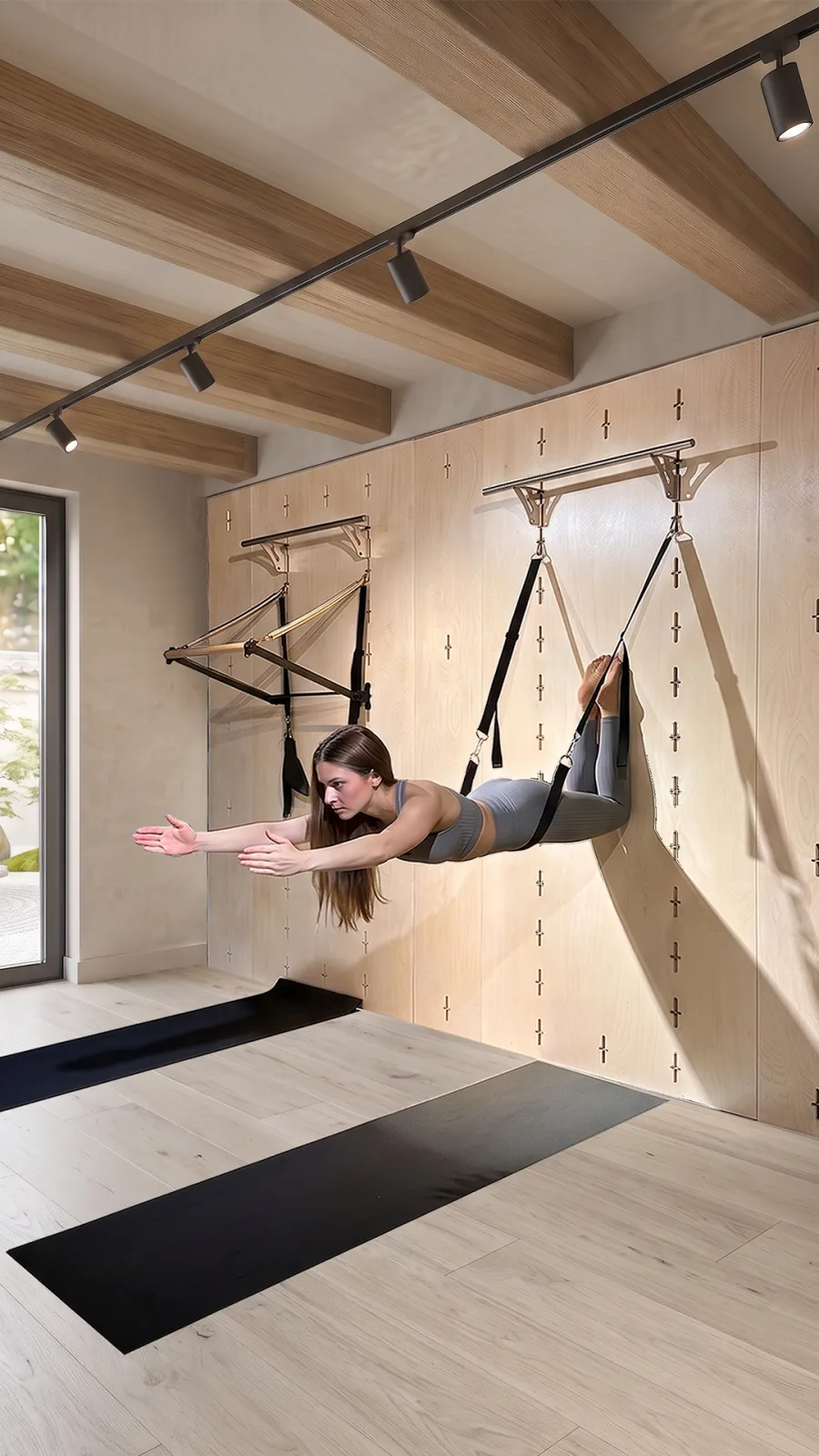
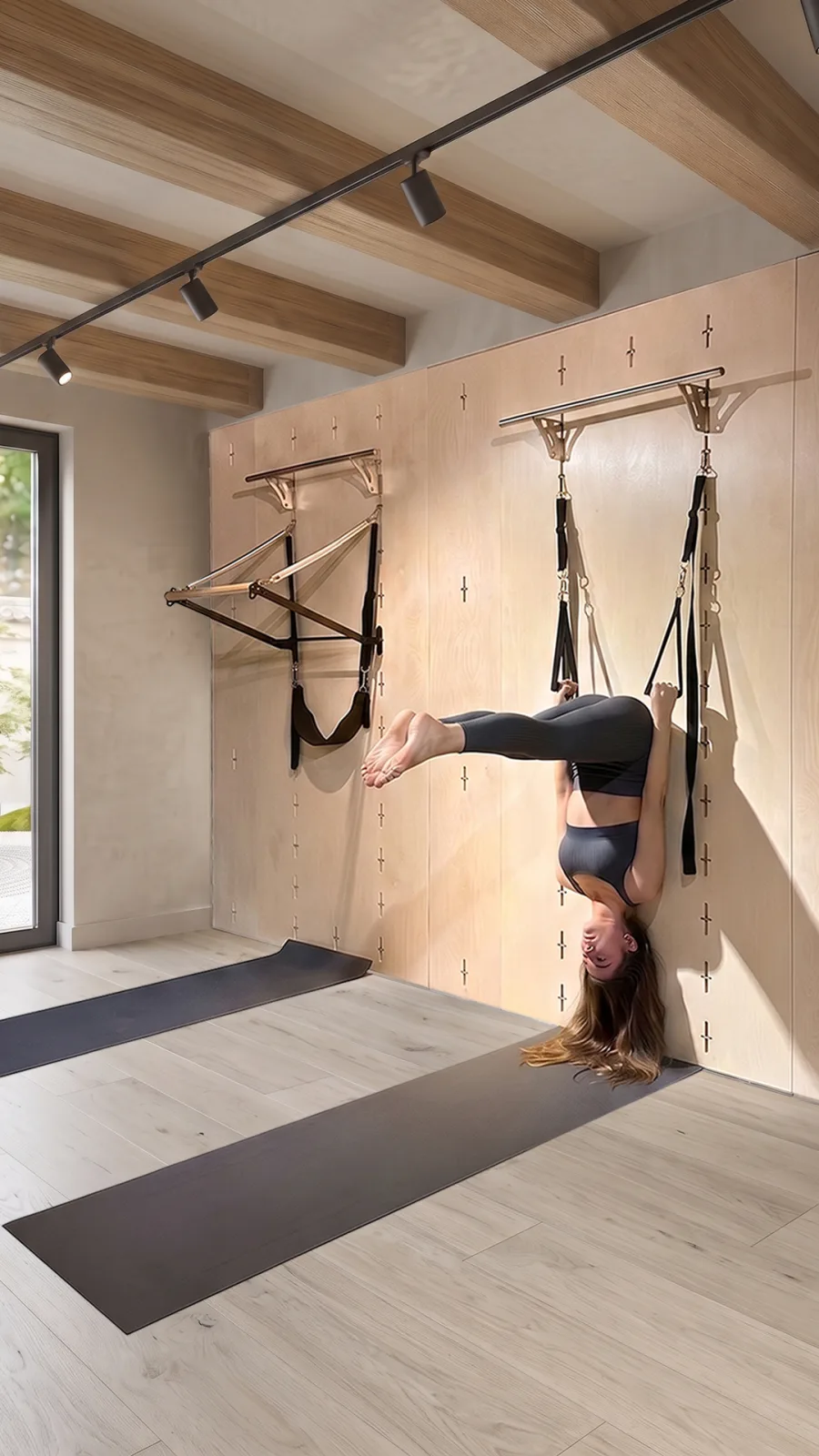
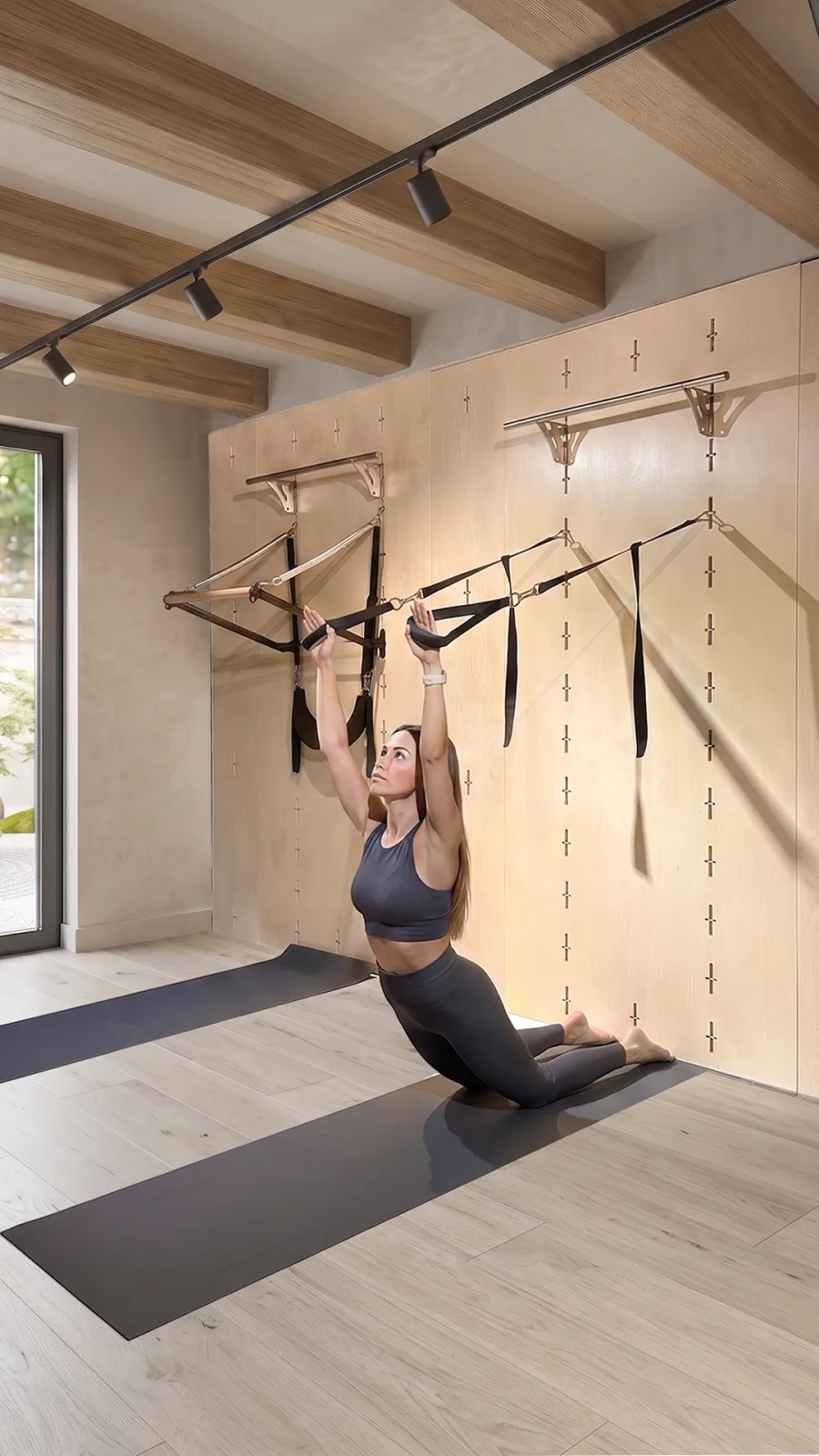
Feet in Straps - Urdhva Prasarita Padasana
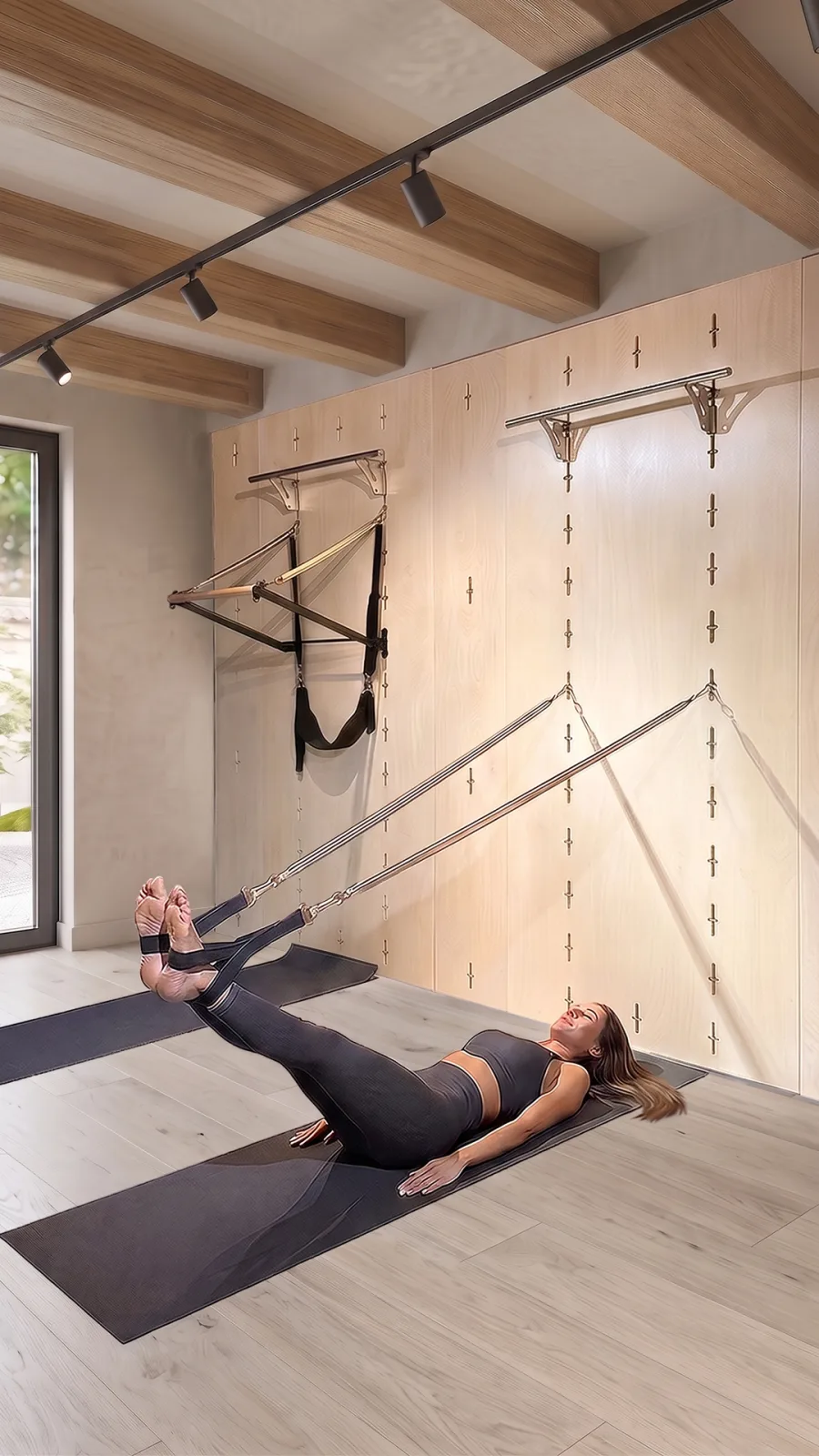
In Pilates: This movement belongs directly to the Pilates repertoire. It is a wall-adapted version of the well-known "Feet in Straps" series (specifically Leg Lowers/Lifts or Leg Circles) performed on the Reformer. Furthermore, it shares the exact same mechanics as the "Leg Springs" exercise series performed on the Pilates Cadillac or Springboard. In Yoga: It is similar to Urdhva Prasarita Padasana (Supine Double Leg Lifts/Lowers), which is performed lying flat on the back on a mat, raising and lowering the legs completely straight. However, while gravity is the only source of resistance in yoga, this version involves dynamic resistance created by the springs.
Muscles worked
- Because this movement requires keeping the spine and pelvis stable (lumbo-pelvic stabilization) while moving the lower body, it is an excellent core exercise:
- Core Muscles — Transversus Abdominis (the deepest abdominal muscle) and Rectus Abdominis. As the legs lower down against the resistance of the springs, the abdominal muscles work very intensely to prevent the lower back from arching and to keep the spine pressed flat against the mat.
- Hamstrings and Gluteus Maximus (Glutes) — The hamstring and glute muscles actively contract (concentrically) as they push the legs downward (towards the floor) against the resistance of the springs.
- Iliopsoas and Quadriceps (Hip Flexors and Front Thighs) — As the legs rise upward, they work to keep the legs straight and to prevent the springs from suddenly pulling the body back (eccentric control).
- Adductors (Inner Thigh Muscles) — The inner thigh muscles remain constantly active to keep the legs tightly together, as if zipped up.
What it gives you
- Abdominal Workout Without Neck Strain — Unlike traditional abdominal exercises such as crunches, the head, neck, and shoulders are completely supported and relaxed on the mat. It offers a very safe way to strengthen the deep core muscles for those with neck hernias or sensitivity.
- Lumbo-Pelvic Stabilization — It teaches the body to keep the pelvis and lower back stable while the legs are in motion. This is one of the most fundamental rules for preventing lower back pain in daily life and building healthy spinal mechanics.
- Eccentric Strength and Control — The biggest advantage of spring-based systems is that they strengthen muscles even as they lengthen. Resisting the spring as it pulls the leg upward creates a long and lean contraction (eccentric force) in the muscles.
- Joint Decompression and Flexibility — As the springs pull the legs upward, they create a soothing pulling (traction) sensation in the hip joint while also allowing the hamstrings to stretch safely.
Why it is rated Intermediate
A supine core exercise under suspension resistance, leg raise.