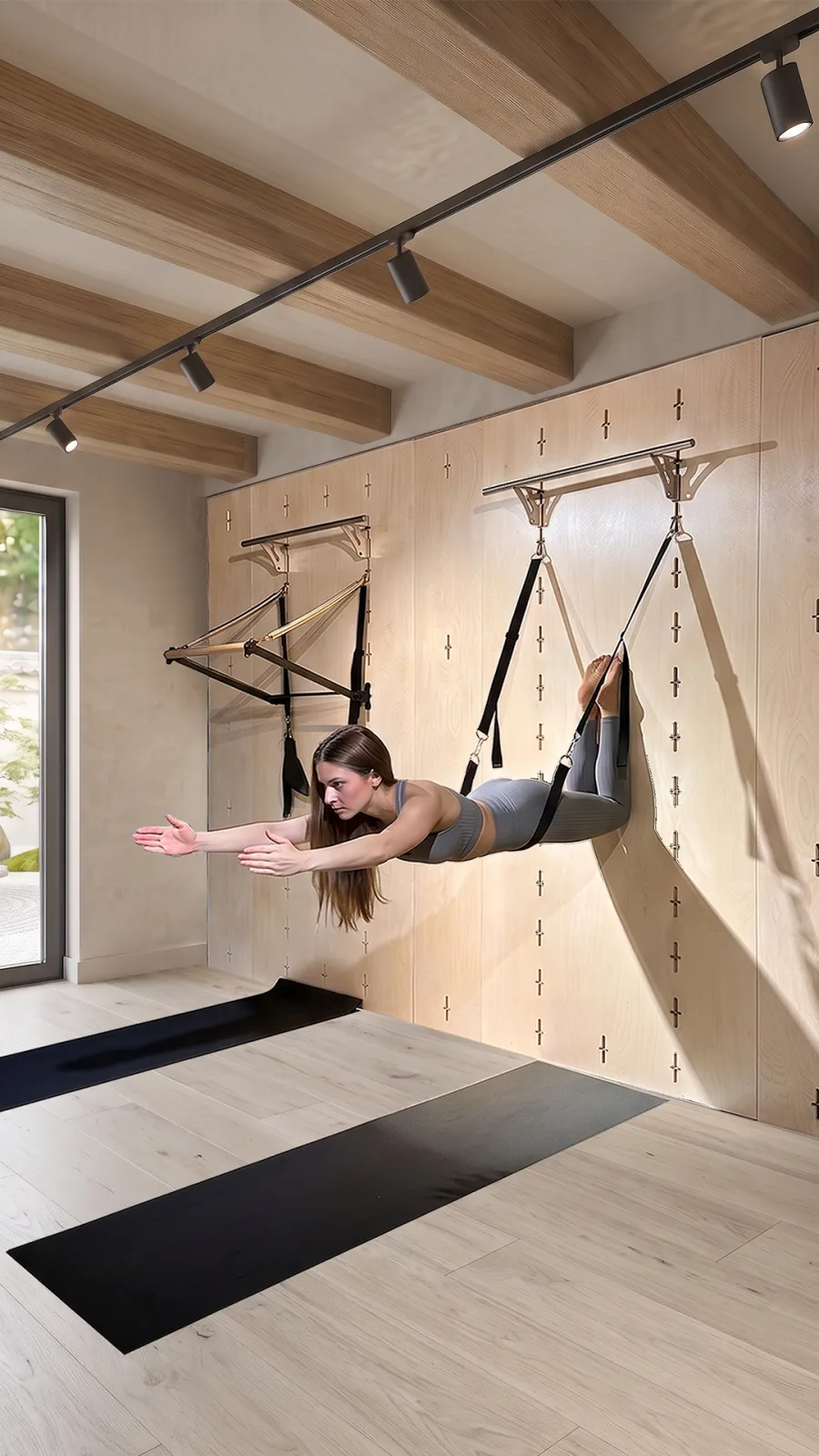
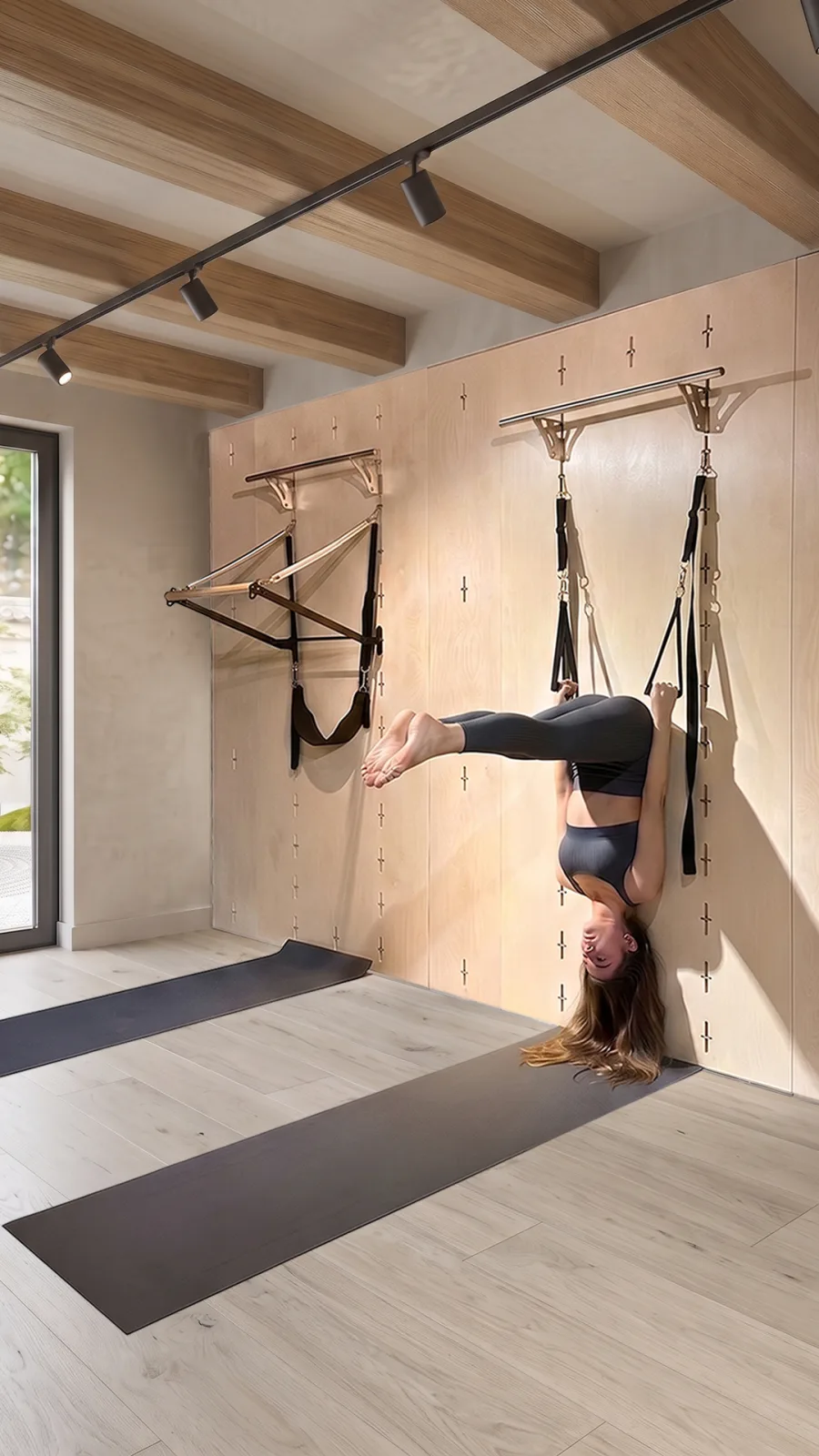
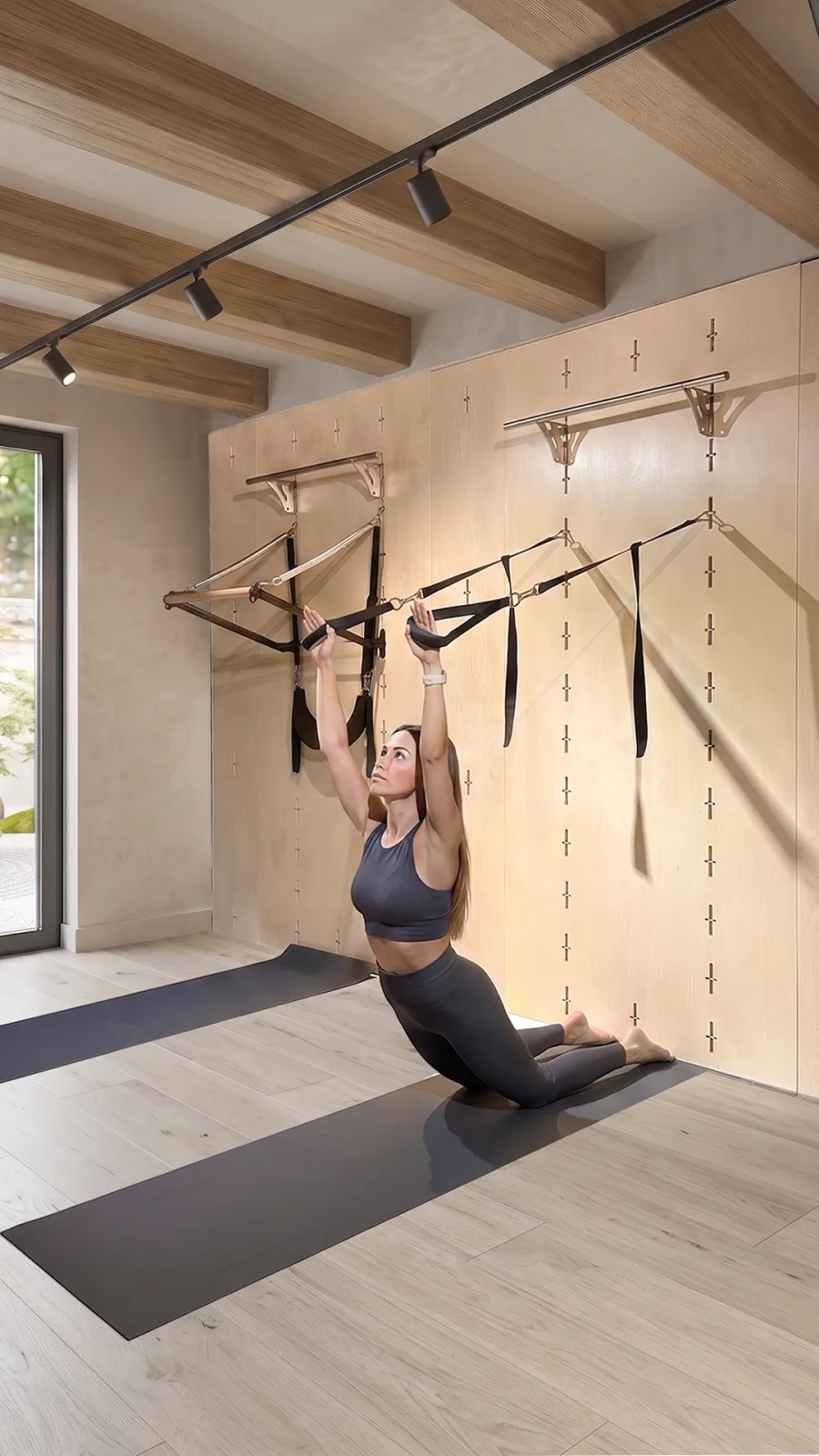
Ardha Hanumanasana - Front Splits
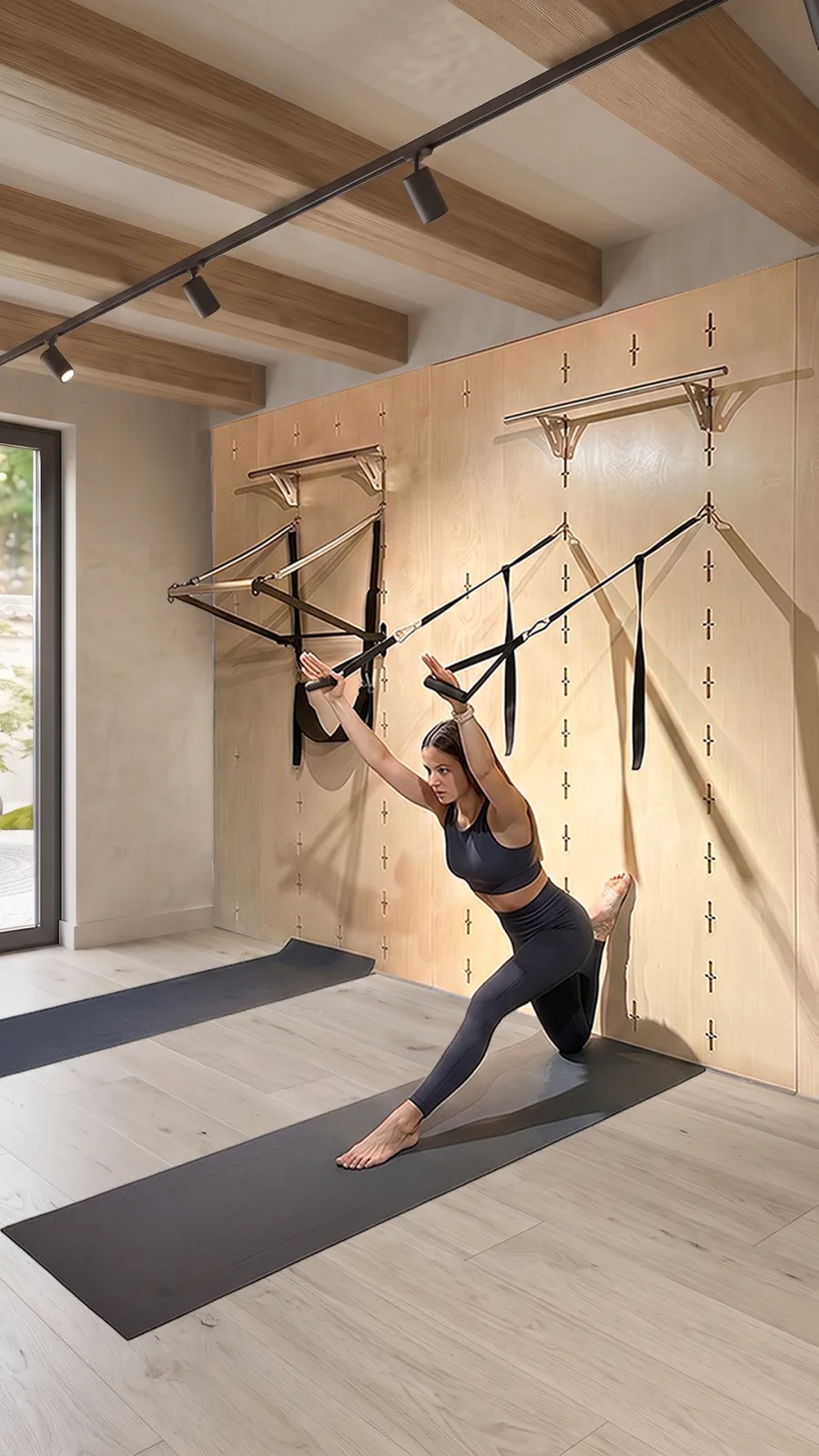
In Yoga: Fundamentally, it is a combination of the Ardha Hanumanasana (Half Monkey Pose / Half Split) and the King Arthur Pose (Couch Stretch) performed against a wall to open the front of the hips. This hybrid pose, typically supported by blocks in yoga, is transformed here into a much more "suspended" and spine-elongating form using wall straps. In Pilates: It is mechanically exactly identical to the famous "Front Splits" series performed on the Reformer. While the back knee rests on the carriage on the Reformer, here it rests against the wall. Furthermore, it is an upright and more stable version of the suspended leg stretches performed by holding the springs on the Cadillac.
Muscles worked
- This exercise creates two different and very intense stretches (fascial elongation) in the lower body simultaneously, while requiring balance and stabilization in the upper body:
- Maximum Stretching Muscles (Back Leg) — The Quadriceps (front thigh) and Iliopsoas (hip flexors) muscles of the back leg, which has its shin resting against the wall and the knee bent. Thanks to the barrier of the wall, one of the deepest possible openings in this region is experienced.
- Maximum Stretching Muscles (Front Leg) — The Hamstrings (back of the leg) and Calf muscles of the leg extended straight forward lengthen intensely in the direction of traction.
- Active Stabilizers (Core and Back) — The Erector Spinae (spinal erectors) and Core region are engaged to prevent the torso from collapsing forward (hunching) and to keep the spine straight on a diagonal axis.
- Shoulder and Arm Muscles — The Latissimus Dorsi (lats), Deltoids (shoulders), and muscles around the shoulder blades, which lighten the body's weight and keep the chest open by taking support from the straps, work isometrically (statically).
What it gives you
- Dual-Directional Deep Hip Mobility — While most stretching movements focus on a single area, in this position, one side of the pelvis (front leg) stretches from the back while the other side (back leg) stretches from the front. This dual-directional opening is the most efficient biomechanical practice to achieve the goal of a full split (Hanumanasana).
- Spine-Friendly Alignment (Posture) — In unsupported split practices performed on the floor, individuals often cheat by rounding their spine to escape the tension in their legs. The straps held from above force the chest to remain open and the spine to stay long, ensuring excellent posture.
- Eliminating Knee and Joint Pressure — To prevent the direct crushing of the back kneecap, the majority of the weight is transferred to the straps in the hands and the shin resting against the wall. This allows the thigh region to be safely stretched without placing a load on the knee joint.
- Correcting Asymmetrical Imbalances — This movement, which clearly reveals the flexibility differences between the right and left legs, is a wonderful restorative tool for equalizing asymmetries in the pelvic region.
Why it is rated Easy
A strap-supported chest and hip flexor stretch in a kneeling lunge position.