How to Choose a Pilates Reformer: Buyer's Guide
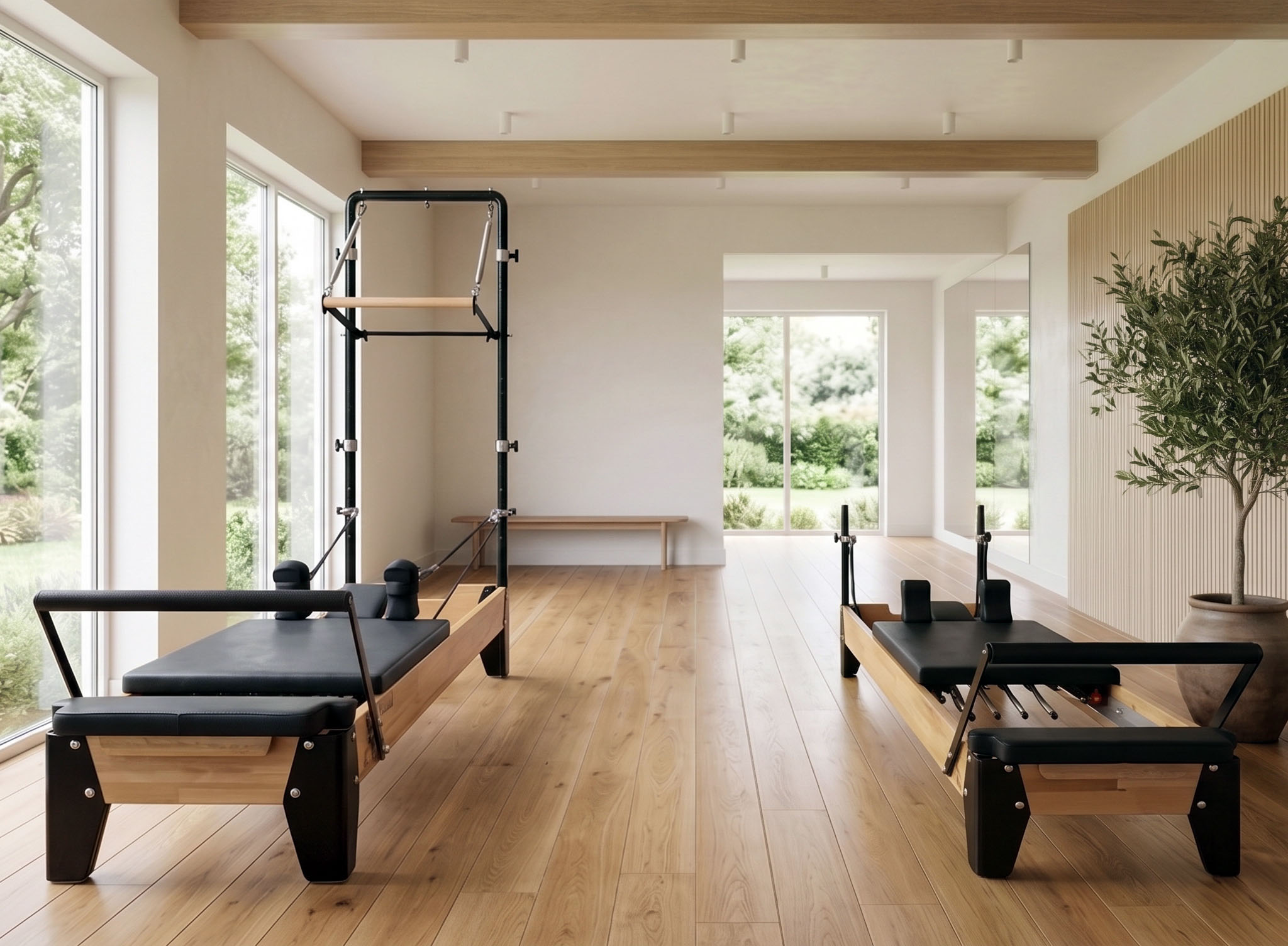
A reformer is one of the most expensive pieces of equipment a studio or a home practitioner will ever buy — and one of the few you can't really test-drive at the gym down the street. Once it's assembled, it's shaping how you, or your clients, move for years. That's worth slowing down for. Here's what actually separates a reformer that holds up for a decade from one that starts creaking, drifting, or feeling "off" within a year.
Start With Where It Will Live: Studio or Home
Before comparing spec sheets, settle a more basic question: is this machine serving one person in a spare room, or dozens of clients a day across rotating classes? A home reformer mostly has to answer to space and quiet — does it fold away, does it fit the room, will the downstairs neighbours hear the carriage. A studio reformer answers to a different pressure entirely: different bodies and settings every hour, instructors adjusting between clients in seconds, and years of near-continuous use. If floor space is the real constraint, a wall-mounted system like PiWall is worth a look before you rule out a home setup altogether. Buying studio-grade equipment for a serious home practice rarely goes to waste; buying home-grade equipment for a studio usually shows up as a repair bill within the first year.
Frame Material: Why Wood-and-Steel Still Wins
Reformer frames are typically built from wood, aluminum, or a combination of the two, and the difference is more than cosmetic. Aluminum is lighter and easier to move, which matters for foldable or frequently relocated setups. Solid hardwood — beech is the industry standard — absorbs vibration differently than metal, which tends to mean a quieter, more planted feel under load, especially at the top and bottom of a stroke. Some manufacturers reinforce a hardwood frame with a steel understructure specifically to get both: the stability and quiet of wood, with the load-bearing consistency of steel. When you're comparing frames, ask what the frame is doing under tension — not just what it's finished in.
Springs and Resistance Range
The spring system is the actual engine of a reformer, and it's where cheaper machines cut corners in ways that aren't obvious until you're using the equipment. Look at two things: how many distinct resistance combinations the springs can produce, and how evenly that resistance is tuned across the range. A narrow spread means jarring jumps between settings — fine for one body, awkward for the next. A wide, evenly tuned range is what lets a single machine serve a first-time client and an advanced practitioner's hardest session without either one fighting the equipment. For a studio with varied clientele, this is arguably the single highest-leverage line on the spec sheet.
Carriage, Footbar, and Adjustability
A reformer built for one body is a reformer that fails half your clients. Carriage width affects how secure larger or smaller frames feel during footwork and stretches. The footbar mechanism matters more than people expect — a pull-release footbar that adjusts in one motion is the difference between a smooth class transition and an instructor wrestling with a stuck pin between clients. Headrest and shoulder-rest positions — ideally several of each, including a negative-incline option for certain rehab and mobility work — determine whether the machine adapts to the person, or the person adapts to the machine. None of this shows up in a product photo. It only shows up in the fine print, so read it closely.
Reformer, Tower Reformer, or Both?
A standard Reformer covers the full classical repertoire on its own. A Tower Reformer adds an integrated vertical frame with a trapeze and pulley system, opening up standing, kneeling, and overhead work a flat reformer can't reach. The honest way to decide: if your programming — or your own practice — leans on mat-adjacent, standing, or rehab-style work, the tower earns its extra footprint. If you're mainly running classical reformer repertoire, a standard reformer with a Cadillac-convertible frame keeps that upgrade path open without paying for it upfront. Studios building a varied class schedule usually end up wanting at least one tower unit, even if the rest of the room is standard reformers.
Noise and Long-Term Durability
Noise is an underrated deal-breaker. In a studio, a squeaky carriage or a clanking spring bar is distracting for an entire class, not just one client; at home, it's the difference between an early-morning session and waking the house. Noise usually traces back to two things: how the pulley system is engineered — sealed, aligned components versus basic hardware — and how tightly the frame tolerances are held. Ask specifically about trapeze and pulley noise when you're evaluating a floor model, not just the carriage glide. On durability, check weight capacity against your heaviest expected user with margin to spare; a machine running near its rated limit daily will show wear far sooner than one with headroom.
Reformer Cost: What You're Really Paying For
Reformer prices vary widely, and the gap isn't always brand markup — it's usually frame construction, spring engineering, and after-sale support: spare-parts availability, warranty length, and whether a technician can actually service the machine locally. A reformer used several times a week for ten years costs very little per session, even at a premium price point. The same machine needing replacement in year three because of a stripped pulley or a warped frame is the expensive option, regardless of its sticker price. When you're comparing quotes, ask what the warranty actually covers and how spare parts are supplied — that answer tells you more than the headline number.
Quick Checklist Before You Buy
Measured the space, including walk-around room, not just the machine's footprint Confirmed the spring range covers your lightest and heaviest expected user Checked frame construction, not just the finish Tested footbar and headrest/shoulder-rest adjustability by hand, if possible Asked about pulley and trapeze noise, not just carriage glide Confirmed warranty length and how spare parts are supplied Decided whether a tower or Cadillac-convertible frame fits your programming now or later Frequently Asked Questions
Do I need a Tower Reformer, or is a standard Reformer enough to start? A standard reformer covers the full classical repertoire on its own. Add a tower once your programming, or your own practice, starts leaning on standing, kneeling, or overhead work that a flat reformer can't reach.
What's the real difference between a home and a studio reformer? Mostly duty cycle. A studio machine needs to hold its tolerances through dozens of different bodies and settings changes a day; a home reformer mainly needs to serve one or two users consistently. Frame and spring quality matter in both cases — the gap shows up in how long the machine holds up, not in the workout itself.
How long should a well-built reformer last? With correct use and basic maintenance, a well-engineered reformer — solid frame, quality springs, a serviceable pulley system — should comfortably run for a decade or more, in a studio or at home.
Is a heavier machine always the better one? Not necessarily. Weight is a side effect of frame material and reinforcement, not a spec in its own right. A well-engineered lighter frame can outperform a heavy one with poor tolerances. Judge the frame by its construction and stability under load, not by how much it weighs.
Every one of these questions is one we hear directly in our own workshop, which is part of why we design around them rather than around a spec sheet. If you're outfitting a studio or building a serious home practice, explore the collection or get in touch and we'll help you think through what fits your space.